

Learn History the fun way.
This is a preview. Paid subscribers get the full story.
You’ll also get:
6 new stories / month
The full archive
Comment, ask questions, DM me anytime
iPhone user? Subscribe at coolstoriesabouthistory.com, not via the app. Apple adds +30% to the price.
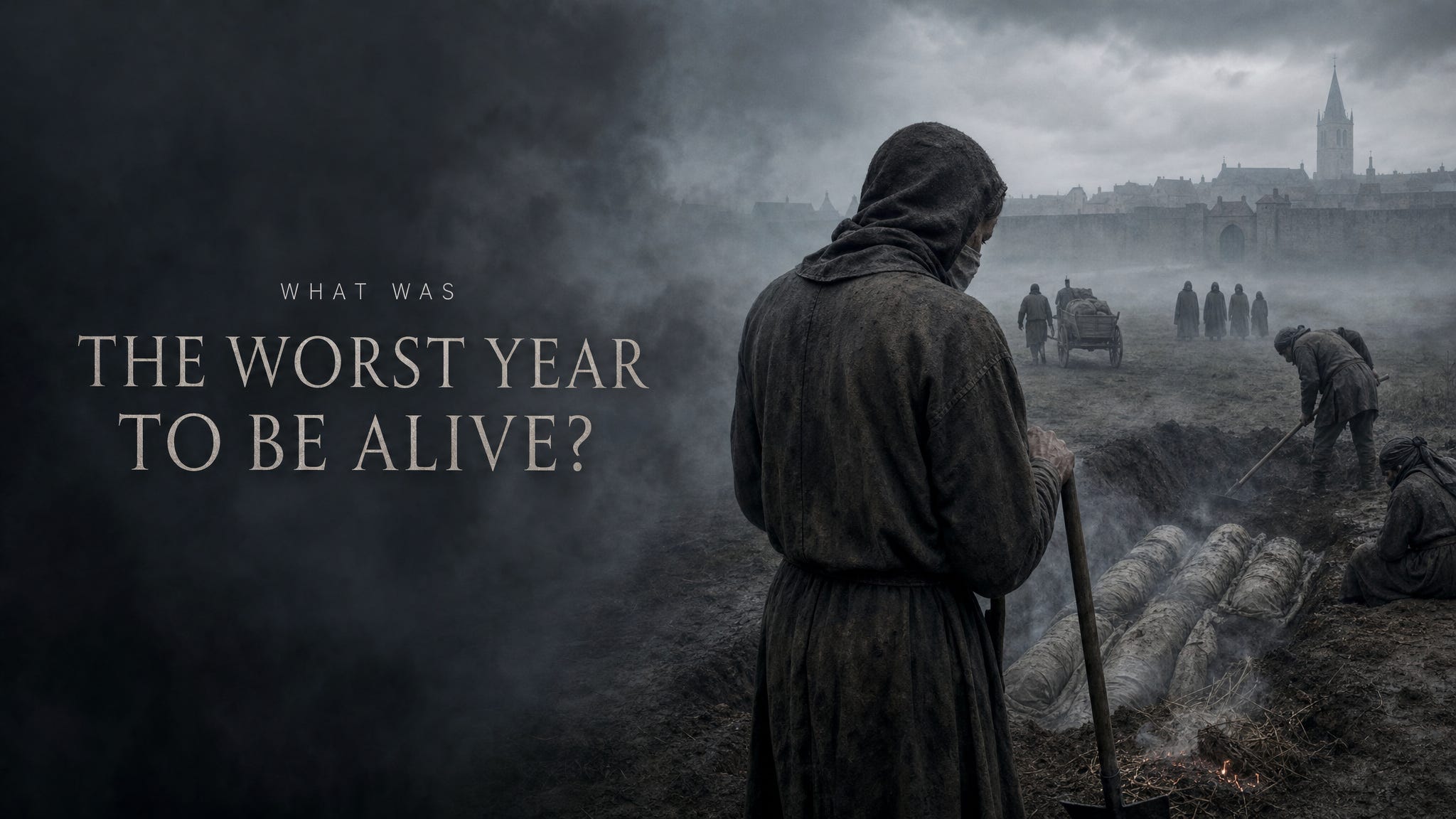
When the World Seemed to End
For nearly all of history, most human lives have hung on very little: a harvest that comes in, an epidemic that stays far away, an army that never reaches the village. In a bad year, families eat less.
In a very bad one, they bury their children. And a few times in history, hunger, disease, or war has struck so hard that the survivors believed they were watching the end of the world.
Which of those years was the worst to be alive? Naming it takes a yardstick, and the fairest one is also the simplest: the year in which the largest share of the people then alive died. Fear, misery, and grief cannot be counted.
The dead can. When hunger, disease, or war becomes unbearable, it kills, and the death toll shows how far it reaches.
The ranking measures deaths as a share of humanity, not as a raw count, because a million deaths do not carry the same weight in a medieval world of some 400 million people as in a twentieth-century world of several billion.
For each catastrophe, the ranking counts only its deadliest year. It begins around 500 BC; before that, no catastrophe can be dated to the exact year.
Before the twentieth century, death tolls are rough estimates, and when two years are too close to call, the better-documented one ranks higher.
Of course, every ranking is relative, and partly subjective: this one is simply a way of looking at history.
10. 1770: The Bengal Famine
In Bengal, on the Ganges delta in eastern India, to live is to grow rice. The province ranks among the richest in India, with 20 to 30 million people, more than England.
Every summer, peasant families wait for the monsoon, the great rains that flood the paddies and decide the year's harvest. When the monsoon comes, rice feeds the province until the next summer. When it fails, nothing takes its place.
Part of that harvest goes to taxes. For five years now, the tax has been paid not to the nawab, the prince of Bengal, but to an English trading company, the East India Company, which the Mughal emperor has put in charge of collecting it.
A handful of Englishmen, backed by Indian tax collectors, now keep the accounts of a province more populous than their own country.
Seen from Calcutta, Bengal is a column of figures: so much rice harvested, so much tax collected, a million and a half pounds sterling a year.
At the end of the summer of 1769, the rains stop too early. The rice withers in the fields before it can ripen, and the paddies look like fields of straw. Through the winter, the village stores run out one by one.
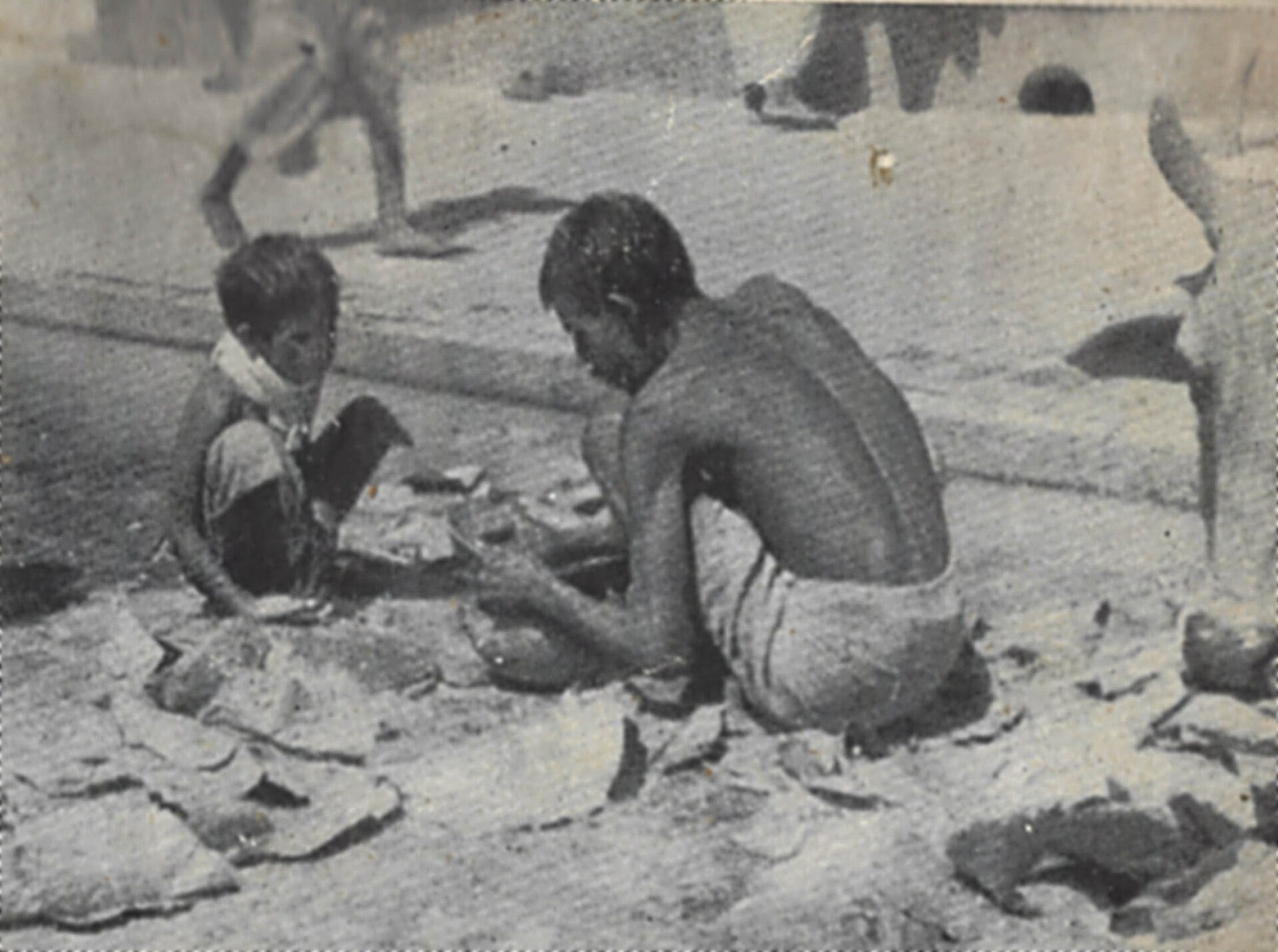
By spring, the peasants are eating tree leaves and field grass. They sell their cattle, then their tools, then their sons and daughters, for a little rice, until no one is buying children anymore.
At that very moment, in Calcutta, the Company's council makes its decision: the land tax will rise by 10 percent the following year. The nawab's Indian finance minister has recommended the increase, and the collectors keep making their rounds through the starving villages.
The Company spends a few thousand pounds on relief. The province brings it a million and a half every year, and in the year of the famine, collections actually rise over the year before.
Smallpox strikes people already weakened by hunger. In Murshidabad, the nawab's capital, the streets are choked with heaps of the dying and the dead. A Company agent writes that the living are feeding on the dead.
Those who still have the strength abandon their villages and flee.
No one counts the dead. The Calcutta council reports that a third of the inhabitants of one northern district have perished. A century later, a British official extends that third to the whole province and arrives at ten million dead, a figure still repeated today.
The real toll is lower, somewhere between one and several million, because many people fled rather than die where they were. Even at the low end, the famine kills more than one out of every 1,000 people on Earth.
Bengal does not forget.
In 1882, a Bengali writer, Bankim Chandra Chatterjee, publishes Anandamath, a novel set during the famine: a peasant couple leaves their starving village, and rebels rise against the Company singing a hymn to the motherland, "Vande Mataram." The song becomes the anthem of India's independence fighters.
Since 1950, it has been India's national song.
9. 1316: The Great Famine
At the start of the fourteenth century, northern Europe has more people than ever before. From Ireland to Poland, through England, France, Flanders, and Germany, the villages nearly touch, and every field is under the plow. That abundance hides a weakness.
A peasant family lives from one harvest to the next: summer's wheat becomes winter's bread, and no one keeps anything back for the following year. A single bad harvest is enough to bring hunger.
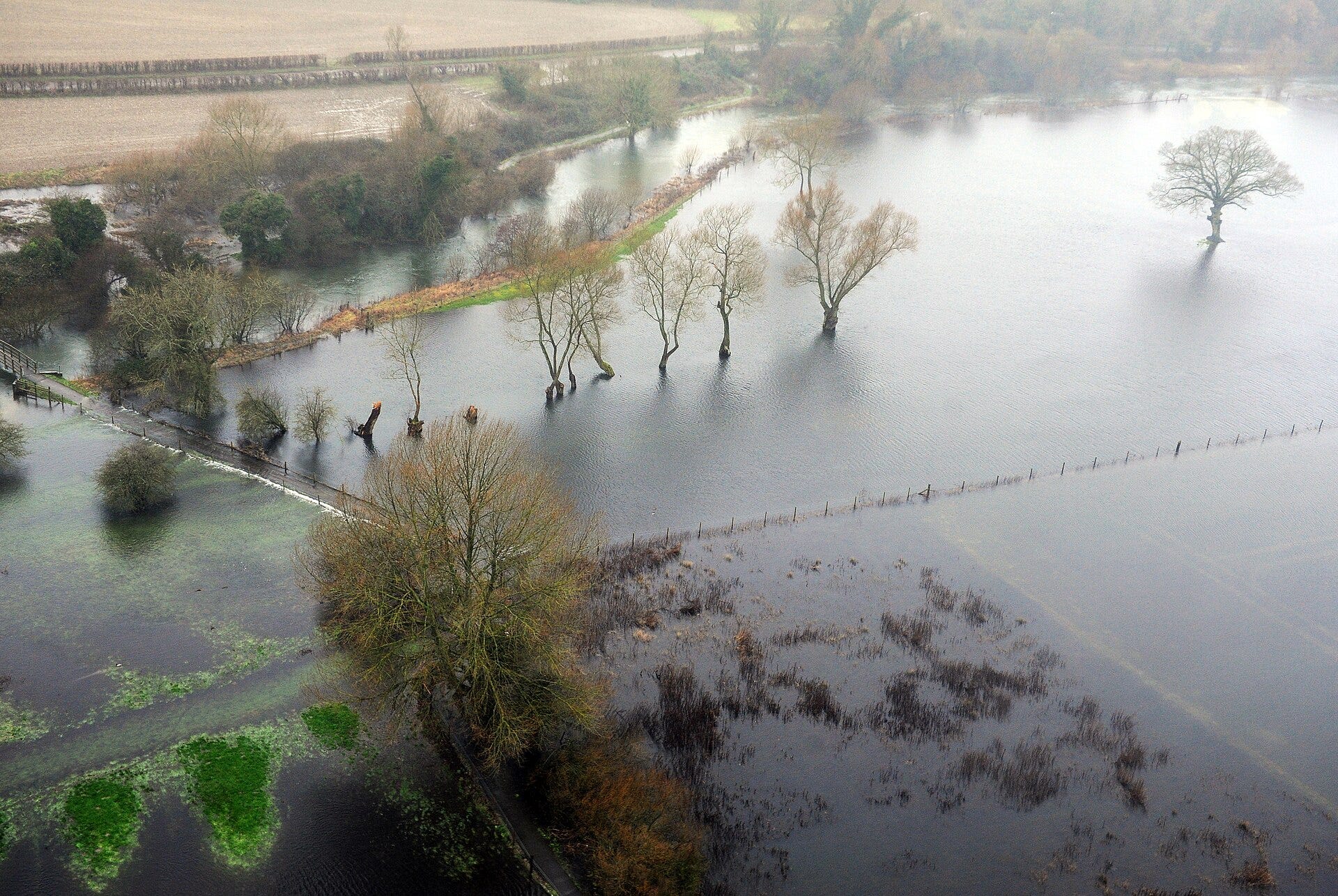
In the spring of 1315, around Pentecost, it starts to rain. The peasants wait for a break in the clouds. None comes. It rains in June, July, and August, then all through the fall. Wheat needs sun to ripen, and it must dry to keep.
That year, it gets neither. The fields turn to mud, the ears stay green, and whatever the peasants manage to bring in rots, sodden, in the barns. By the end of summer, bread is short everywhere, even at the king of England's table.
Families get through the winter on their last reserves. They eat less, sell one animal, then another. By spring, they have one hope left: the next harvest.
The following summer, it rains again.
This time, no one has anything left in reserve, and shortage turns to famine. Wheat is now a luxury: in England, it sells for up to eight times its usual price.
In more than six centuries of English wage records, no year is harder on a farm laborer than this one. Peasants with nothing left abandon their villages and walk to the cities of Flanders, the richest in Europe, hoping for bread. They find almost none.
In the shops, loaves shrink month after month; the starving eat dogs and cats, then die in the streets. From Ireland to Poland, the same rain, the same mud, the same hunger.
Across northern Europe, the famine kills some three million people in three years: about 3 out of every 1,000 people on Earth in its worst year, 1316.
Know someone who’d love history through these stories? Gift them a subscription. 🎁
What the rest of the ranking reveals:
Where World War II ranks.
What kills the most: war, disease, or hunger.
The year the sun disappeared.
The year that killed the largest share of humanity.
The worst year in history to be alive.