

Learn History the fun way.
This is a preview. Paid subscribers get the full story.
You’ll also get:
4 new stories / month
The full archive
Comment, ask questions, DM me anytime
iPhone user? Subscribe at coolstoriesabouthistory.com, not via the app. Apple adds +30% to the price.
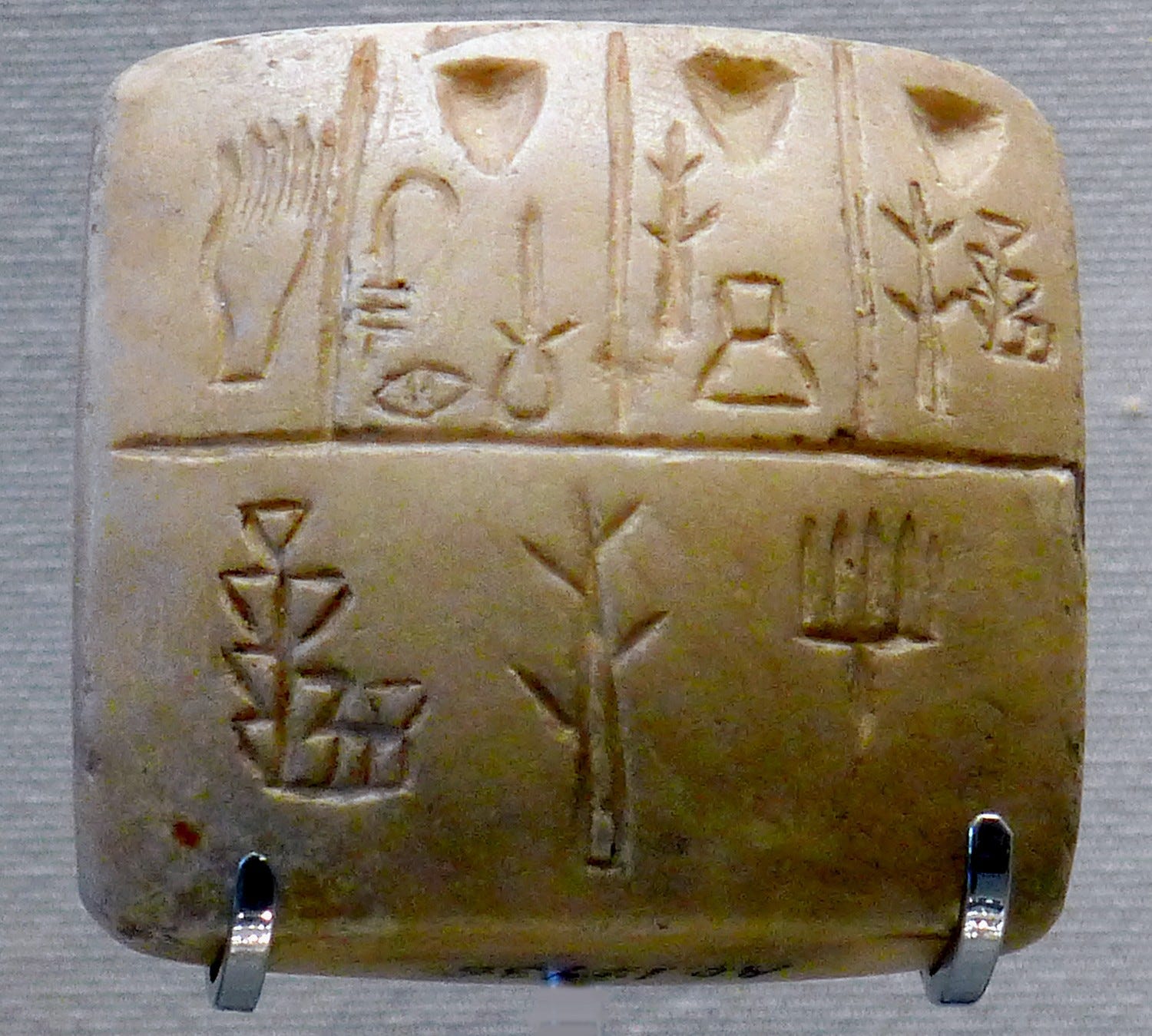
More than 5,000 years ago, in the Mesopotamian city of Uruk, in what is now Iraq, a scribe holds a tablet of still-soft clay in his palm.
He is in the back of a temple storeroom, among sacks of barley and jars of beer, and the tip of his reed stylus presses signs into the clay. An ear of grain. The head of an ox. Round impressions, for counting.
Writing is brand new, and it keeps the temple's books.
On a few of the tablets, one name keeps turning up: Inanna, lady of the city, goddess of love and war, whose festivals call for offerings. The Sumerians, who invented these signs, pray to dozens of gods. The sky has a god, and so do the moon and fresh water. Even beer has a goddess of its own.
Elsewhere, and later, the heavens are just as crowded. In Greece, Zeus rules over a whole family of jealous gods on Olympus, and in Mexico the Aztec sun rises each morning only if the Aztecs have fed it blood.
For thousands of years, polytheism, the belief in many gods, rules the entire world. Monotheism, the conviction that only one god exists, is a latecomer to human history.
Today, more than 4 billion people call themselves followers of a single God. So who invented the one God?
Gods of Clay
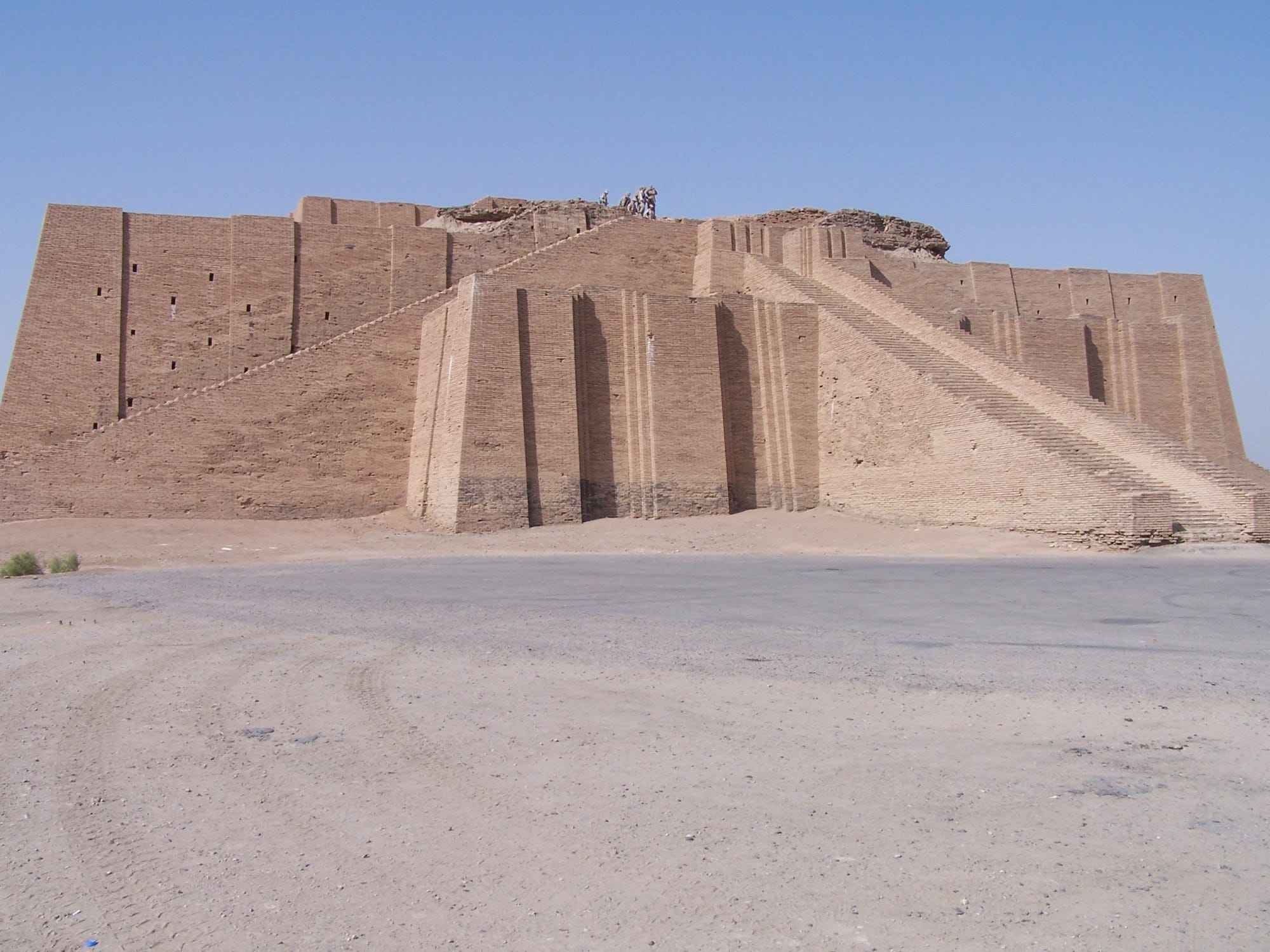
A thousand years pass over the tablets of Uruk. The cities of Sumer now answer to a single king, and his capital is Ur: mud brick, canals, a harbor on the Euphrates, not far from the Persian Gulf.
A stepped tower more than 65 feet high rises over the rooftops, with the shrine of the moon god, the city's protector, at the top. Down below, in the houses, the gods are closer at hand: small clay figurines tucked into wall niches, where families set out food for them.
In one of these houses lives a man named Abram, with his father and his wife. She has borne him no children.
One day the father leads his son, his daughter-in-law and the flocks out of Ur and some 600 miles northwest, upriver, to Harran, near the present-day border between Turkey and Syria. There, too, people pray to the moon god.
In Harran, a voice speaks to Abram. It comes from no statue, no niche, no temple, but from a God unlike any of his father's gods.
"Go from your country, your kindred and your father's house, to the land that I will show you. I will make of you a great nation."
Abram is 75 years old. He gathers his servants, his wife and his flocks, turns his back on his father's house and the gods who live in it, and heads southwest without knowing where the road leads.
It leads to Canaan, a strip of land wedged between the sea and the desert, roughly where Lebanon, Israel and Palestine lie today. Near a great oak, God comes to him again.
"To your offspring I will give this land."
Abram lives in a tent, and wherever his flocks stop, he piles stones into an altar for this faceless God.
A Raised Knife
Years pass in tents and pastures, and still no child by his wife. At last Abram complains to his God.
One night, God draws him out of the tent.
"Look toward heaven, and count the stars, if you are able to count them. So shall your offspring be."
Abram believes him.
When Abram is 99, God proposes a covenant: he will remain the God of Abram and his descendants forever, and Abram will be faithful to him in all things. Then God gives him a new name.
"No longer shall your name be Abram, but your name shall be Abraham, for I have made you the father of a multitude of nations."
Abram means "exalted father." Abraham means "father of a multitude."
And the pact is cut into the flesh.
"Every male among you shall be circumcised. It shall be a sign of the covenant between me and you."
Abraham is circumcised that very day, along with every man in his household, and a year later his wife gives birth to a son, Isaac. She is 90.
Isaac grows up. God tests Abraham.
"Take your son, your only son, whom you love, Isaac."
The whole promised line must pass through this son, and God wants Abraham to lead him up a mountain and sacrifice him like a lamb. Abraham does not argue. Early in the morning he saddles his donkey and sets out with Isaac.
Three days' walk. When he sees the mountain, Abraham lays the firewood on Isaac's shoulders, takes the fire and the knife himself, and they climb together.
"Here is the fire and the wood, but where is the lamb?"
"God will provide, my son."
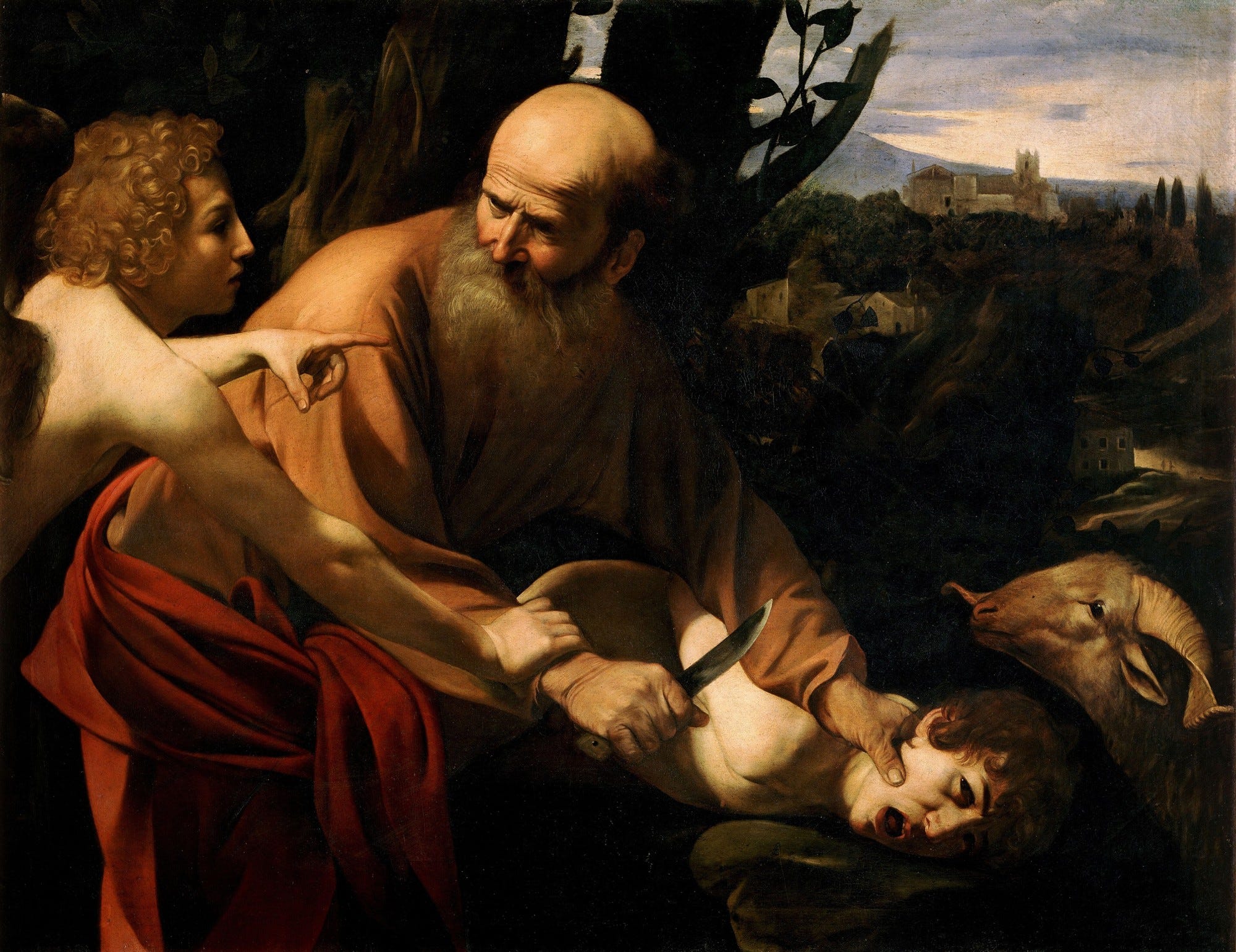
At the top, Abraham builds the altar, arranges the wood, binds his son and lays him on it, and raises the knife.
An angel cries out Abraham's name from heaven. The hand stops.
"Do not lay your hand on the boy or do anything to him, for now I know that you fear God, since you have not withheld your son, your only son, from me."
Abraham looks up. A ram is caught by its horns in a thicket, and it is the ram that goes on the altar. Because Abraham obeyed, God does more than promise. He swears by himself to give Abraham descendants as numerous as the stars and as the sand on the seashore, and through them a blessing for every nation on earth.
Today, Jews honor Abraham as the father of their people, Christians as the father of all who believe, Muslims as the friend of God. Three religions, and one image of him: the man who left his father's gods for a single God.
The Silent Ground
The oldest text to tell this story is Genesis, the book that opens the Bible. Outside that book, the ground has yielded nothing that mentions Abraham: no inscription, no object from his time.
And these pages were not written in his lifetime. More than 1,000 years separate the era in which they place Abraham from the time they were written.
They show a man who serves one God and obeys him in everything. But serving one god is not the same as denying the others. A man can leave his father's gods behind and still believe they are real, back there, next door, in the house he walked out of.
Monotheism is the conviction that no other god exists. Abraham never voices it. In Genesis, his God speaks, promises, puts him to the test, and nowhere does Abraham say that other people's gods are nothing.
But long before the Bible was written, another man did say it: there is only one god.
He lived in a land next door to Canaan.
And he imposed that one god on his entire country.
What you’ll discover:
Who this man is, and which god is his.
Why the first single god vanished almost at once.
Who the God of the Bible was before the Bible.
Who really invented the monotheism we know.