

Learn History the fun way.
This is a preview. Paid subscribers get the full story.
You’ll also get:
4 new stories / month
The full archive
Comment, ask questions, DM me anytime
iPhone user? Subscribe at coolstoriesabouthistory.com, not via the app. Apple adds +30% to the price.
For as long as humans have left traces, they have left weapons. For land, for a throne, for a god, people have never stopped fighting, and war has shaped the world: it has drawn borders, founded nations, and inspired paintings, national anthems, and a good share of our books and films, from the Iliad, the first great story of the West, to Tolstoy's War and Peace.
Every nation takes pride in its wars. London raises Nelson's Column above Trafalgar Square. Paris carves the names of 128 battles into the Arc de Triomphe. Just outside Washington, bronze Marines plant the American flag on Iwo Jima.
In country after country, streets, squares, and train stations are named for victories, and whole cities for victors, from Washington, D.C., to Alexandria, Egypt.
So which country has really won the most battles? The internet is full of answers: rankings that claim to count every last victory, without a single source, and that weigh a skirmish between fifty men the same as Stalingrad.
The ranking below rests on the largest census of battles ever compiled, published in 2023 by two Australian researchers and hosted by Harvard University: 8,874 clashes, each with a winner and a loser, from the first battle recorded in detail, fought by an Egyptian army at Megiddo, in present-day Israel, around 1468 BC, to the invasion of Iraq in 2003.
Of course, every ranking is partly subjective, and this one is no exception. Treat it as a way of looking at history, not a verdict. Three rules shape it.
We count only major battles, those in which at least one army numbered more than 20,000 men. Below that line, most fights are raids, ambushes, and skirmishes, so poorly recorded that for nearly half of all the clashes in the census, no one even knows how many men took part.
Civil wars are left out, since the same country ends up both winner and loser.
And because borders never stopped moving, each country inherits the victories of the states that came before it on its soil: Italy inherits Rome's, Iran inherits Persia's, Germany inherits Prussia's.
12. China
31 major victories, 54 defeats
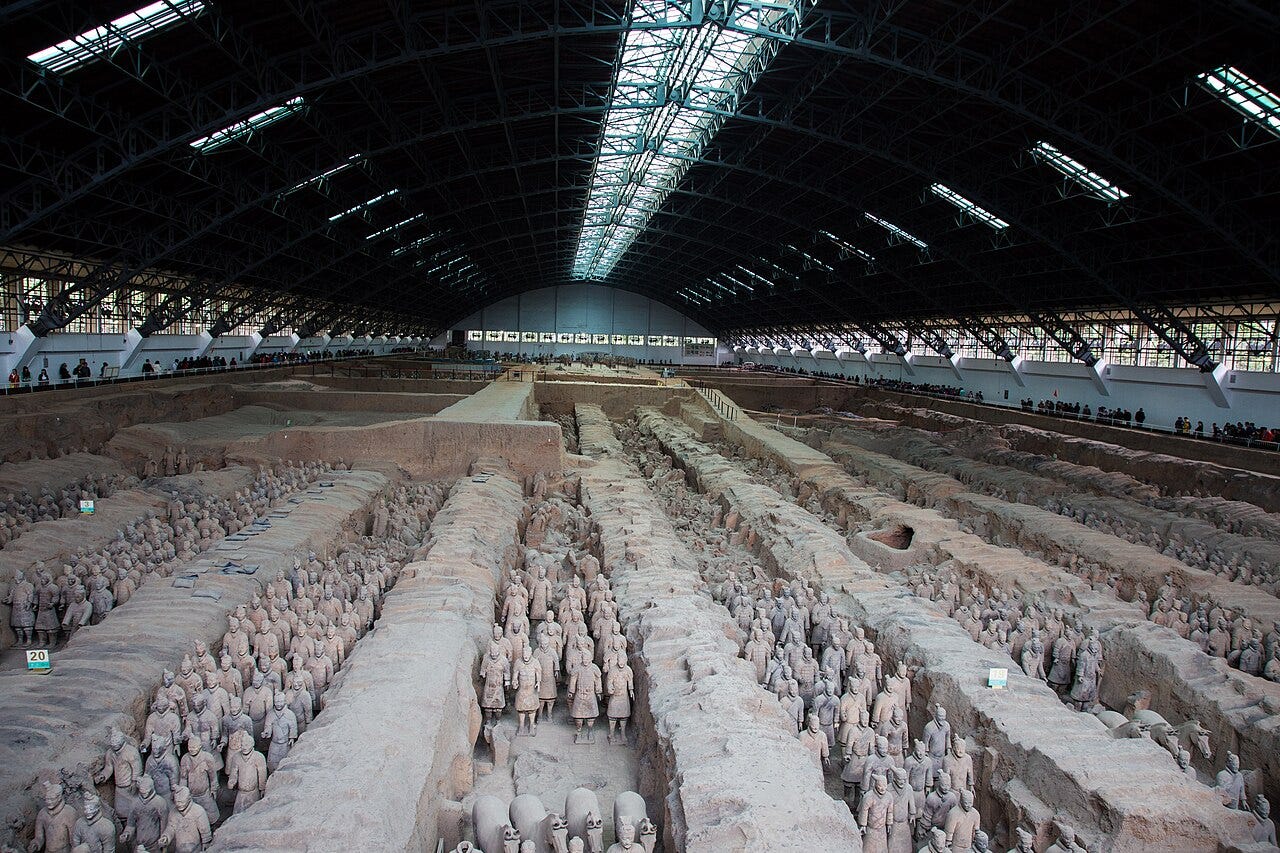
Twelfth place goes to China, one of the oldest civilizations on Earth. Its deadliest wars were fought against itself. The worst broke out in the nineteenth century.
A scholar who had failed the imperial exams several times became convinced, in a dream, that he was the younger brother of Jesus. He led southern China into revolt in the name of a "Heavenly Kingdom of Great Peace," and the Taiping Rebellion killed between 20 and 30 million people in fourteen years.
Against the horsemen of the steppes, by contrast, China's emperors long preferred to avoid a fight. They sent them princesses as brides, along with silk and grain, and they built walls that each dynasty linked and extended until they became the Great Wall.
Sun Tzu had turned this caution into a principle in The Art of War: the height of skill is to subdue the enemy without fighting.
China's great victories over foreign enemies therefore came late, in the twentieth century, with a modern army: first against Japan, which had invaded it, then in Korea.
In the winter of 1950, around the Chosin Reservoir, in temperatures near 20 below zero, waves of Chinese soldiers, poorly equipped for the cold, surrounded American troops and forced them into a retreat that ended in an evacuation by sea.
11. Iran
32 major victories, 29 defeats
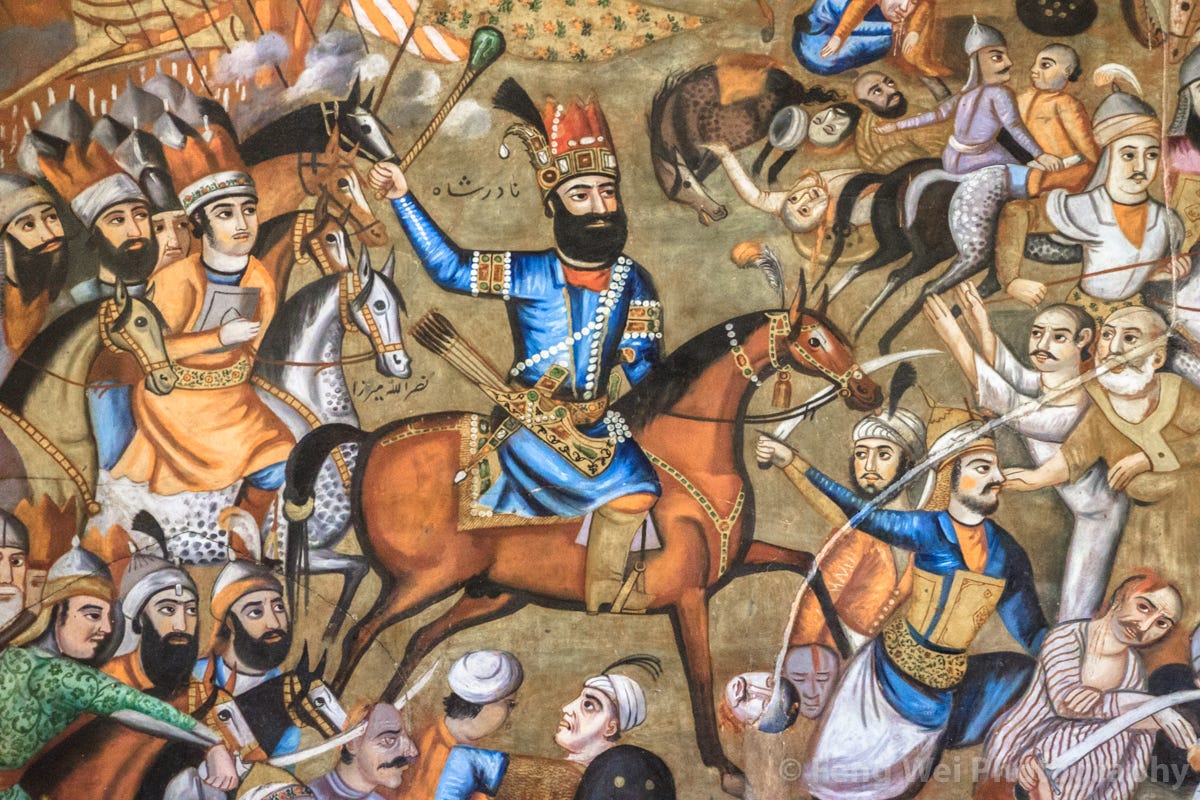
Next comes Iran, heir to Persia. Its most famous victory has been told on screen from the side of the Greeks, who lost.
In 480 BC, the Persian king Xerxes invaded Greece. At the pass of Thermopylae, the Spartan king Leonidas, his 300 soldiers, and a few thousand allies held him off for three days.
On the last day, the Spartans died to the last man. The film 300 turned them into comic-book heroes, but the battle remains a Persian victory.
Persia was then one of the first great empires in history, stretching from Egypt to the Indus. Alexander the Great brought it down.
The Persian dynasties that followed held Rome at bay for centuries, and one of them, the Sassanids, even captured a Roman emperor, but their battles are too poorly known to be counted. In the seventh century, Arab armies swept them away, and for nearly a thousand years Iran won almost no major victories.
Then, in the eighteenth century, a single man delivered nearly half of Iran's major victories. Nader, born into a humble family of the Turkmen Afshar tribe, drove out the Afghans and Ottomans who were carving up the country, had himself crowned shah, and marched on India.
In 1739, at Karnal, north of Delhi, he routed the Mughal emperor's army in three hours. He went home with the Peacock Throne and a diamond, the Koh-i-Noor, now set in a British royal crown.
But Nader was murdered by his own officers, and his empire fell apart at once: its power had rested on a single man.
In the twentieth century, Iran fought mostly to defend its borders, most notably in eight years of war against Saddam Hussein's Iraq, a war the Islamic Republic turned into its great story of resistance.
10. Spain
46 major victories, 54 defeats
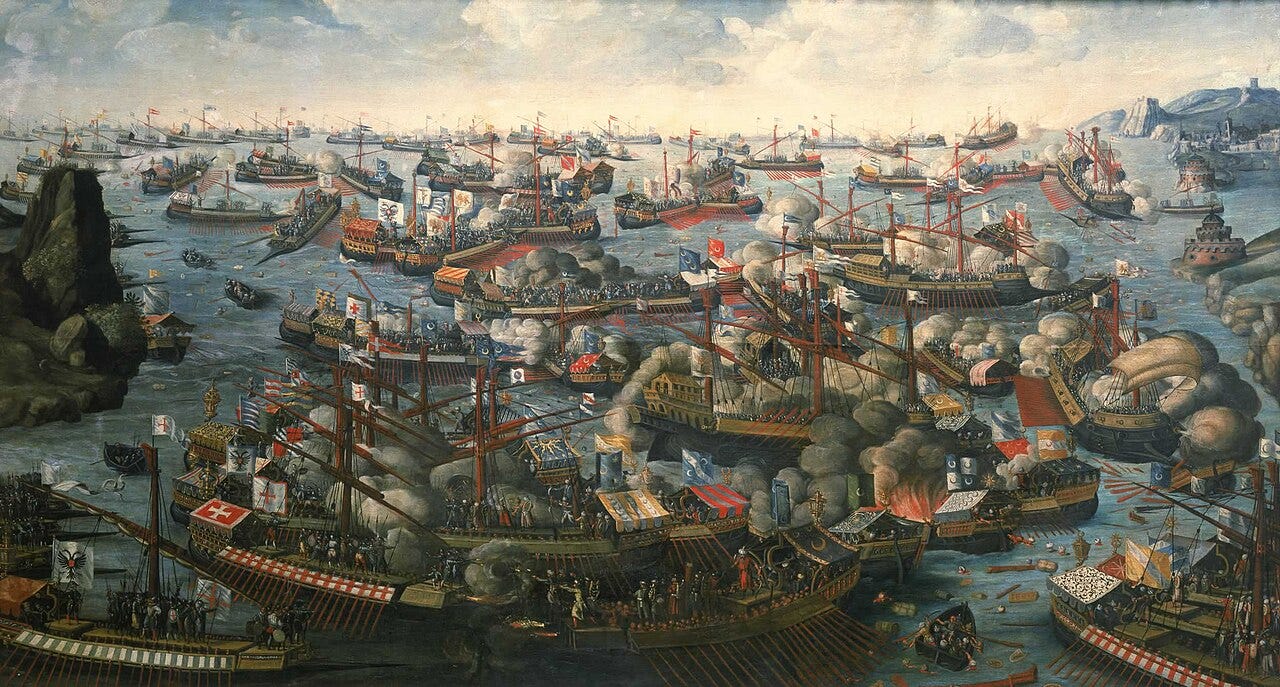
Spain ruled an empire on which the sun never set, and yet it lost more major battles than it won. Its century of glory was the sixteenth.
A few hundred conquistadors, backed by tens of thousands of Indigenous allies and preceded by smallpox, brought down the Aztec Empire, then the Inca. In Europe, its infantry, the tercios, was considered invincible for a hundred years.
All that power ran on credit. Silver from Mexico and Peru reached Seville in the holds of galleons, but the king had often already promised it to his bankers.
Four times, Philip II defaulted on his debts and ruined his lenders, most of them Genoese. His armies advanced at the pace of the silver fleets, and mutinied when the fleets were late.
In 1571, at Lepanto, off the coast of Greece, a Christian fleet, with Spain footing half the bill alongside Venice and the pope, crushed the Ottoman navy. On one of the galleys fought a twenty-four-year-old soldier burning with fever.
He took two bullets in the chest and a third in the left hand, which he would never use again. Four years later, pirates captured him and held him for five years in Algiers.
The soldier's name was Miguel de Cervantes. He would go on to write Don Quixote, the story of a man who dreams of being a knight in a world where chivalry has vanished.
Worn down by its European wars, the empire received its final blow from America. In 1898, Spain fought the Spanish-American War against the United States, a young republic whose regular army numbered barely 25,000 men.
On July 3, off the coast of Cuba, the Spanish fleet was wiped out in a few hours: more than 300 Spanish sailors died, against a single American.
The defeat stripped Spain of its last great colonies, Cuba, Puerto Rico, and the Philippines. An empire four centuries old had just bowed to a country barely more than a century old.
What the rest of the ranking reveals:
Where the United States ranks.
The country that wins battles and loses wars.
Why Alexander the Great and Genghis Khan don't make the list.
The country that would be first if every battle counted.
The country that has won more major battles than any other in history.