
A pair of dark green satin boots made in Europe in the 1840s has tested positive for arsenic. The poison gave Victorian green its brightness, and it colored dresses, gloves, shoes and the artificial flowers women wore to balls. Fashions that look strange today made sense in their own time. Someone paid for them, from the women who wore them to the workers who made them and the birds killed for hats.
Cool Stories About History is a newsletter to learn history the fun way.
Join free and get:
6 new stories a month, straight to your inbox
The full archive of stories
Comment, ask questions, and chat with other readers
How These Were Chosen
A fashion here is a way of dressing, wearing makeup or doing the hair that many people followed at the same time. All twelve were in fashion before 1900, though a few took until the 20th century to die out.
Each one is told through a real person and a dated moment, such as a death, a law, a court case or a royal haircut. Most of them cost someone dearly, whether the wearer, the worker or the people forced to adopt them. The most famous of the twelve comes last.
12. Arsenic Green and Matilda Scheurer (1861)
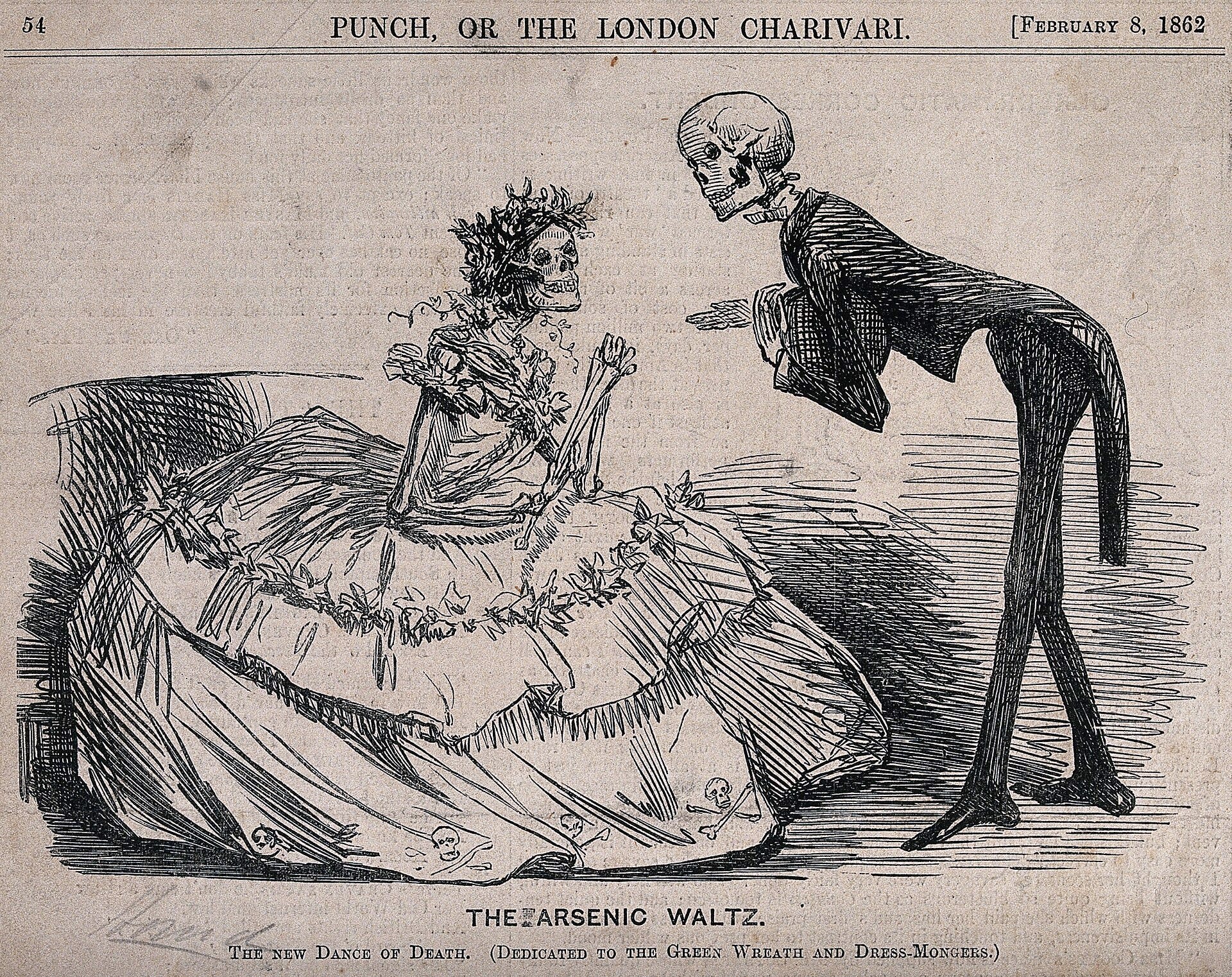
Shortly before she died, Matilda Scheurer told her doctor that "everything she looked at was green." She was 19 and made artificial flowers in London.
Victorian women wore wreaths of artificial flowers in their hair at balls, because real flowers wilted. Matilda worked for Bergerond, a maker of artificial flowers who employed 98 girls, and her task was to dust the leaves with a green powder.
That powder was arsenite of copper, a pigment invented in 1775 by the Swedish chemist Carl Wilhelm Scheele. It was cheap, and its shade came close to the greens of real leaves.
The danger was no secret in the workshop. Bergerond said he had suggested masks, but the girls found them too hot to wear, so they worked with muslin tied over their mouths instead.
On November 20, 1861, Matilda died after convulsions, vomiting and foaming at the mouth. Her bile, her fingernails and the whites of her eyes were green. At the inquest, the public hearing held in England after a sudden death, her widowed mother said that another of her daughters had died the same way.
James Thomas Paul, the surgeon who had treated Matilda four times in 18 months, found arsenic in her stomach, her liver and her lungs. The jury returned a verdict of accidental death, caused by the arsenite of copper used in her work. One juror pointed out that "the use of arsenite of copper in artificial flower-making was prohibited in France."
France, Germany and the Scandinavian countries banned the pigment, but Britain never did. The wreaths faded only after World War I, when fashion turned simpler and demand for artificial flowers fell.
At a Glance
Who: Matilda Scheurer, a 19-year-old artificial flower maker
Died: November 20, 1861, in London
The trend: Ball wreaths of fake flowers dusted with arsenic green
The pigment: Arsenite of copper, invented by Carl Wilhelm Scheele in 1775
Verdict: Accidental death, caused by the arsenic used in her work
11. Korea's War on the Topknot (1895)
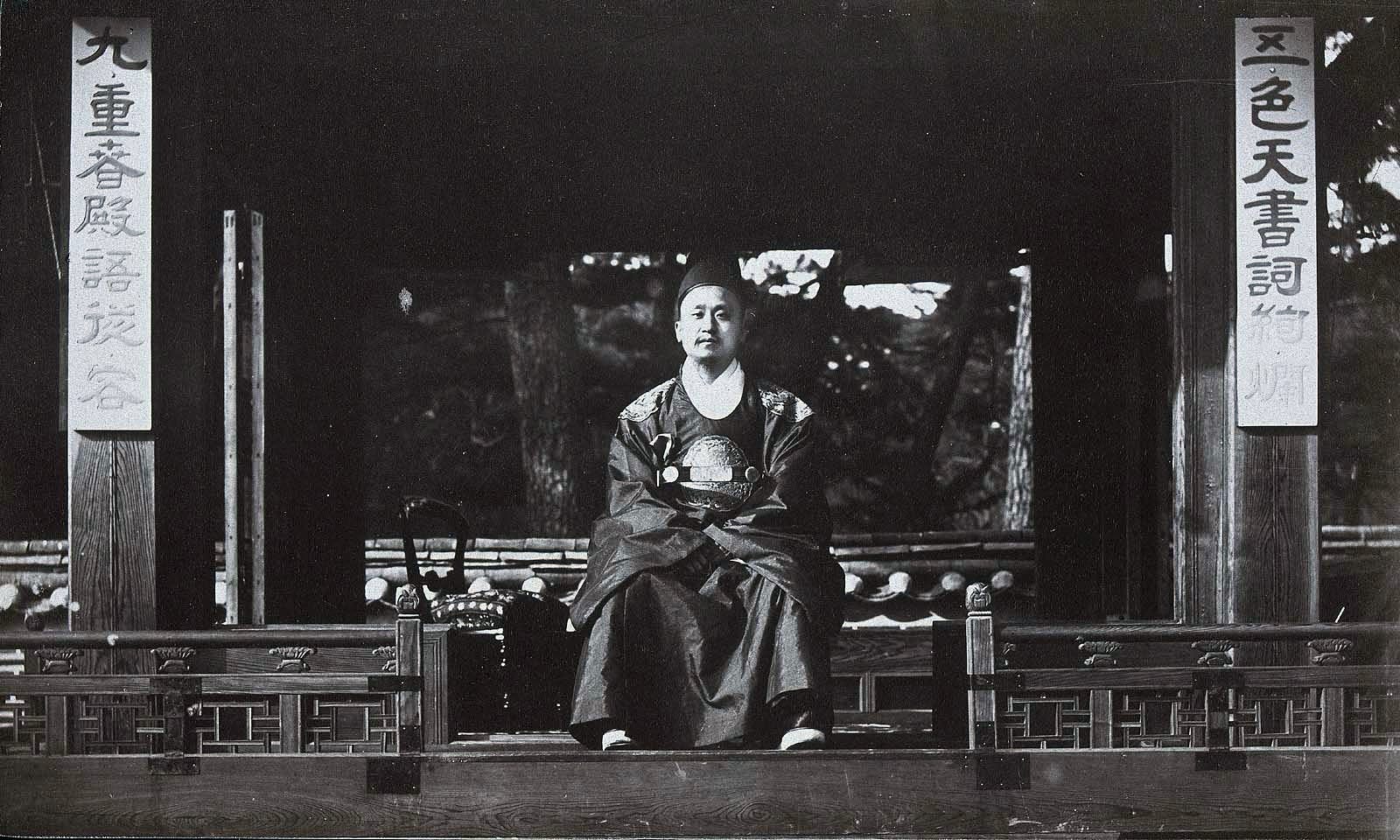
About an hour before midnight on December 30, 1895, Gojong, the king of Korea, had his topknot cut off by a Japanese barber, because no Korean would do it. Two days later, every man in his kingdom was supposed to follow his example. What would the men of Seoul do when the police came for their hair?