

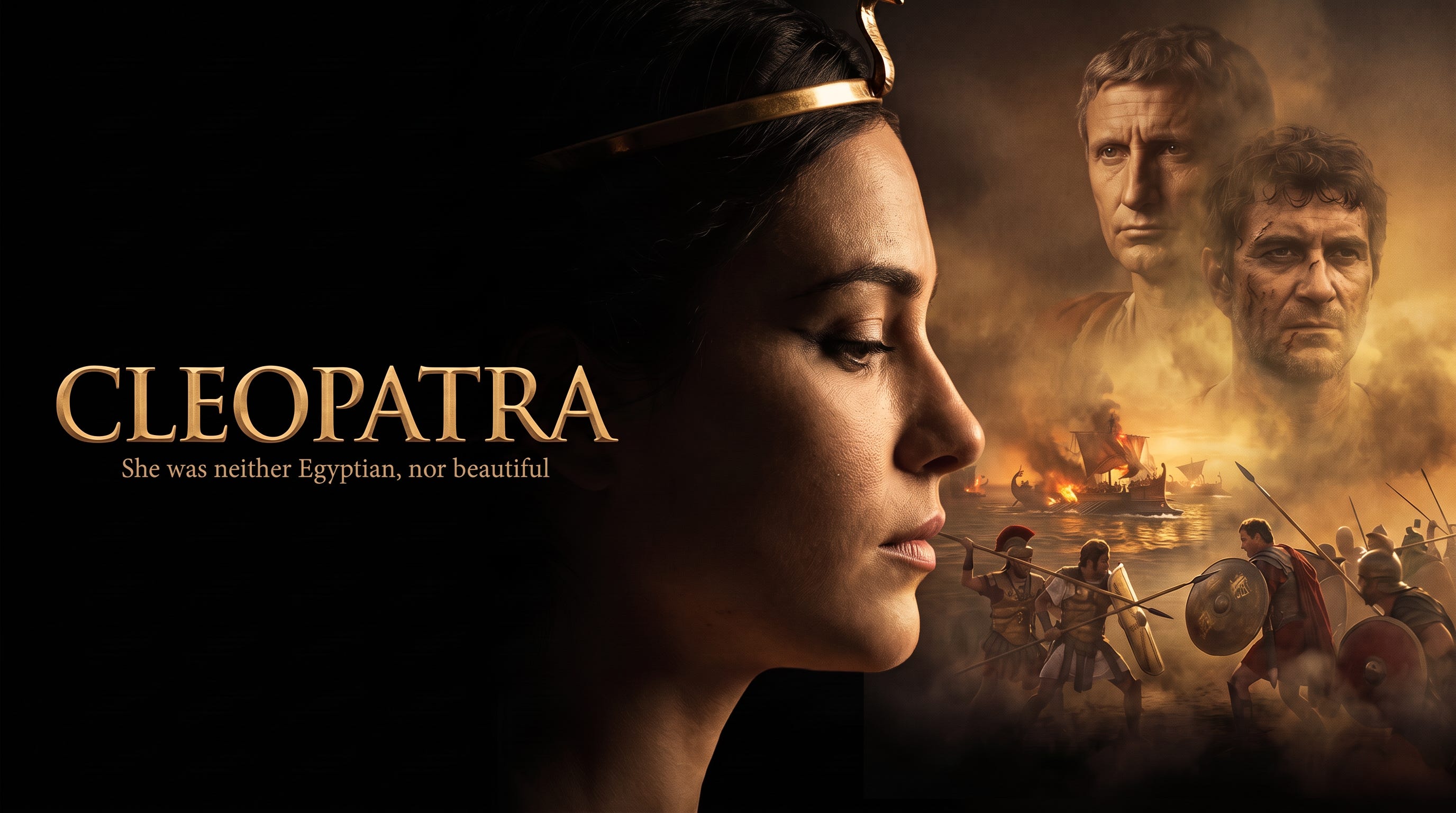
Learn History the fun way.
This is a preview. Paid subscribers get the full story.
You’ll also get:
4 new stories / month
The full archive
Comment, ask questions, DM me anytime
iPhone user? Subscribe at coolstoriesabouthistory.com, not via the app. Apple adds +30% to the price.
Everyone knows Cleopatra. Queen of Egypt, the greatest beauty of the ancient world, the woman who brought down Julius Caesar and then Mark Antony with nothing but her face.
Two thousand years later, we still picture her as Elizabeth Taylor. Smoky eyes, black bangs, gold at the wrists.
None of it is true.
That face was manufactured after her death, by a man who needed her to be beautiful so he could destroy her.
The story starts three centuries earlier, and not in Egypt.
The Stolen Body
Fall of 332 BC. A 24-year-old boy crosses into Egypt at the head of an army, and not a single arrow is fired.
His name is Alexander. King of Macedon, a mountain kingdom north of Greece, he left home two years earlier to tear the largest empire in the known world away from the Persians. The Persians have occupied Egypt for eleven years, and the Egyptians hate them for it. The gates open for him.
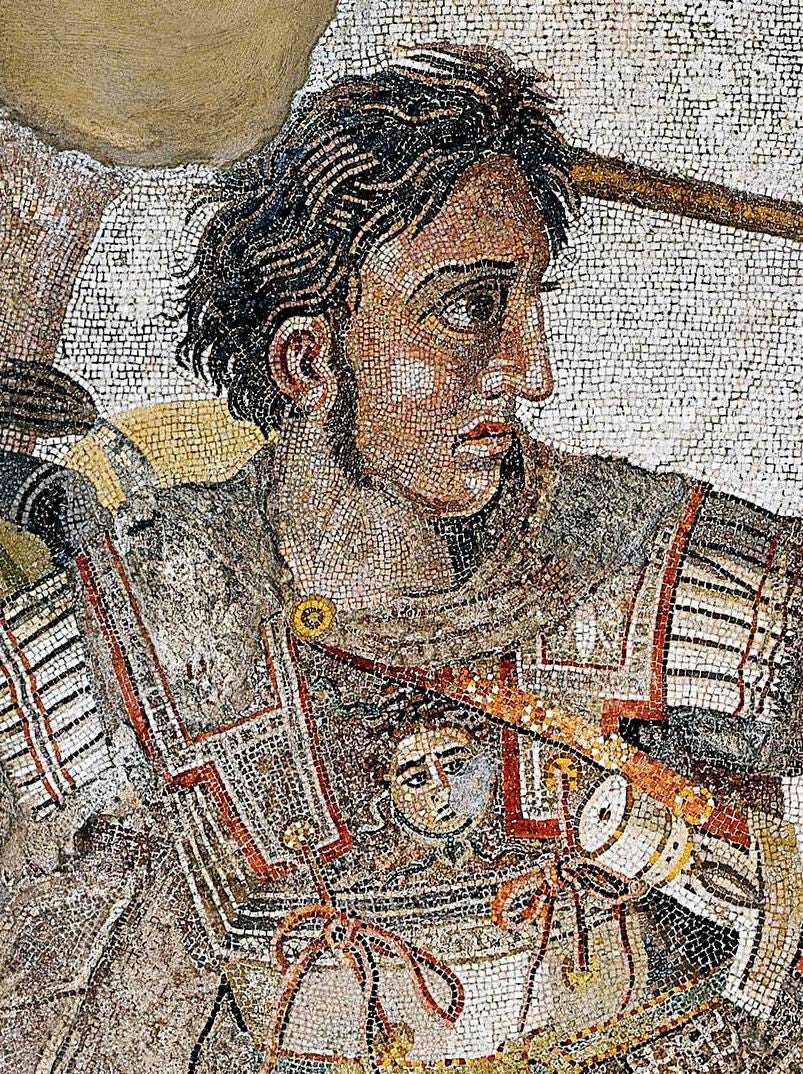
He stays six months.
Long enough to be crowned pharaoh, to travel five days by camel across the desert to have his fortune told by an oracle, and to drive stakes into a strip of sand wedged between the sea and a lake, west of the Nile delta. The city doesn't exist yet. He gives it his name.
Then he heads east again. In June of 323 BC, in Babylon, a fever kills him at 32, with no heir fit to rule.
His generals carve up the empire the following month. Macedonians, childhood friends, former bodyguards. Each man takes his share.
One of them claims Egypt. Ptolemy, in his forties, raised alongside Alexander, at his side on every battlefield since day one.
Two years pass before the body leaves Babylon. A funeral carriage pulled by sixty-four mules carries it toward Macedon, where kings are buried.
Ptolemy intercepts it in Syria with his troops and diverts the convoy to Egypt.
An army is sent to take it back. It never makes it across the Nile.
Alexander's body comes to rest in a mausoleum in the center of Alexandria. People file past it for centuries.
Ptolemy has himself crowned king. A Greek officer, in a country that isn't his, with the corpse of the greatest conqueror in the world resting in his capital.
A Greek Family
Ptolemy's kingdom will last nearly three centuries without ever ceasing to be Greek.
In Alexandria, the court speaks Greek, the administration writes in Greek, legal rulings come down in Greek. The city builds a theater, a gymnasium, a library where scribes churn out copies of Homer, and a lighthouse over three hundred feet tall that the ancient world counts among the Seven Wonders.
Egyptians have no place in any of it. They work the land along the Nile and pay their taxes.
The Ptolemies rule over them without mixing with them. To keep the bloodline intact, they marry their sisters, then their nieces, generation after generation. The coins tell the story of these marriages: the same profile turns up portrait after portrait.

They hold the title of pharaoh. They have themselves carved into temple walls in Egyptian dress, the double crown on their heads. A uniform for the job. Not one of them learns the language of the country.
Cleopatra is born in Alexandria in 69 BC, tenth generation. Her father is named Ptolemy, like every man before him. Her native language is Greek.
History didn't even record her mother's name. Or her paternal grandmother's. Half of her ancestry is missing from the record, and the other half, the half we can trace name by name, is Macedonian, start to finish.
The Language of the Land
Cleopatra takes the throne at 18, in 51 BC.
And she learns Egyptian.
Nine generations of Greek kings settled along the Nile, and not one of them had ever spoken the language of the land they ruled.
Egyptian isn't the only language she learns. From one audience to the next, she slides from Ethiopian to Hebrew, from Arabic to Parthian, never once calling for an interpreter.
She also has herself depicted as an Egyptian.
Roughly three hundred miles south of Alexandria, on a wall of the temple at Dendera, she has herself carved into stone in Egyptian dress, in the style Nile sculptors have practiced for two thousand years. Beside her, the son she had with Julius Caesar.
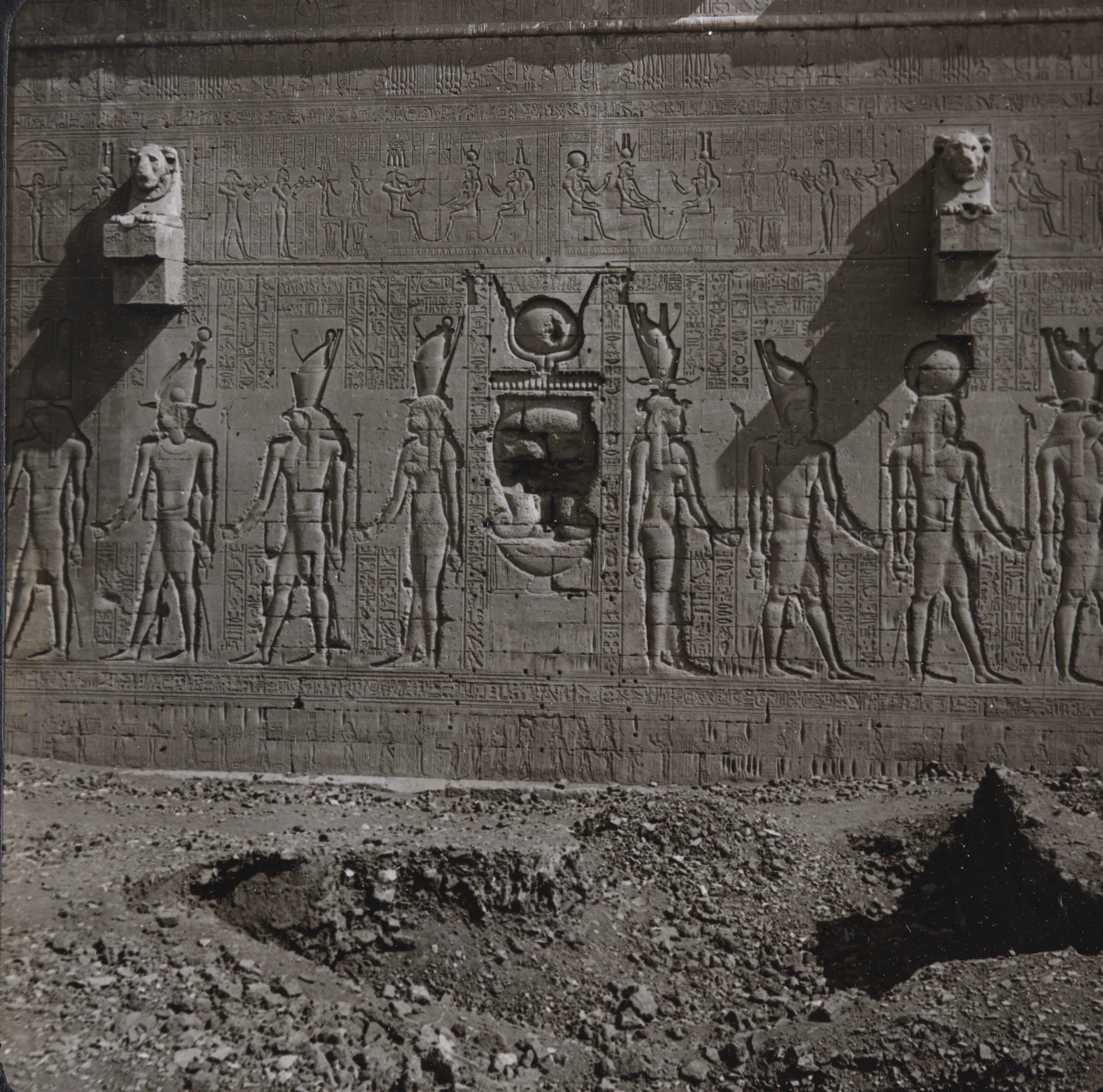
In the papyri, she signs herself the New Isis, after the country's greatest goddess.
A Greek queen learning to pass herself off as Egyptian. It's a political calculation, and it works. Egypt embraces her as it never embraced a single Ptolemy before her.
The Face on the Silver
In the spring of 36 BC, Cleopatra is 33 years old and some six hundred miles from Alexandria. Antioch, a city in Syria set on a river, the Orontes, with a mountain at its back.
Mark Antony, a Roman general, is headquartered there. A division of power among Rome's strongmen gave him the East, and for four years now he has governed everything stretching from Greece to the Euphrates.
She has spent the winter at his side. They already have two children, twins born four years earlier.
That year, the city's mint strikes a silver coin bearing both their faces. Mark Antony on one side. She on the other, the same size.
Rome doesn't put foreign rulers on its silver. And yet, around Cleopatra's head, in Greek letters, her full name and title: Queen Cleopatra, the Young Goddess.
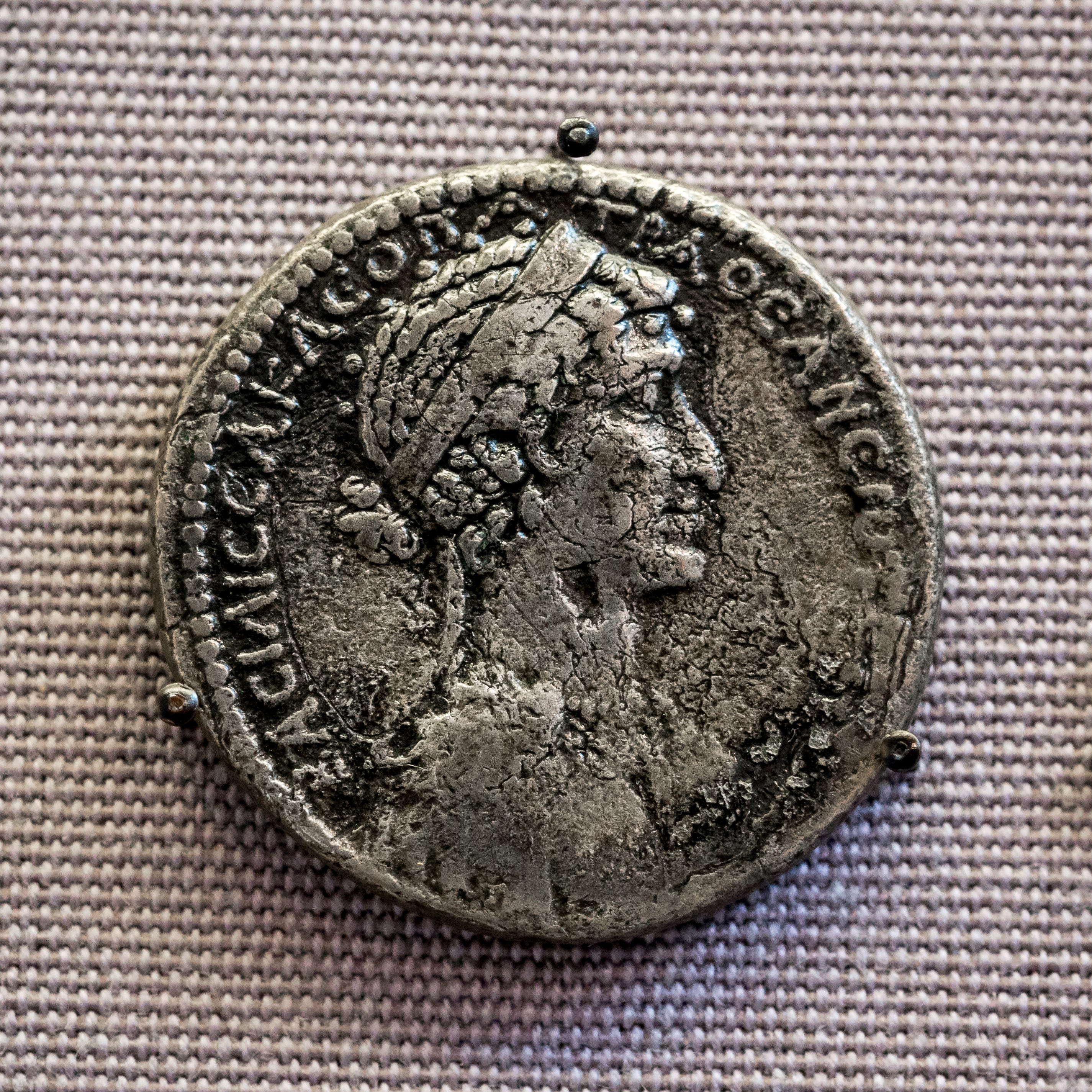
Her profile is what catches the eye.
The nose, long and sharply hooked, runs straight down from the forehead in a single line. The chin juts forward. The jaw cuts across the lower face. The neck is thick, the forehead low.
It's the Ptolemy nose. The one that belonged to her father, her grandfather, every king in the family for the past two hundred and seventy years.
A coin is the only object that shows a ruler to people who will never lay eyes on him. It passes from hand to hand, city to city, for years. No coin goes into production until the king has seen it.
Cleopatra approved this profile, then let it travel across the entire East.
A king who commissions his own portrait commissions one that flatters him. Engravers know how to soften a nose, pull back a chin, narrow a jaw.
Nobody touched hers.
Cleopatra's beauty was never something Cleopatra chose.
"The most beautiful woman of the ancient world" was shaped by a man who wished her nothing but harm.