

This is a preview. Paid subscribers get the full story.
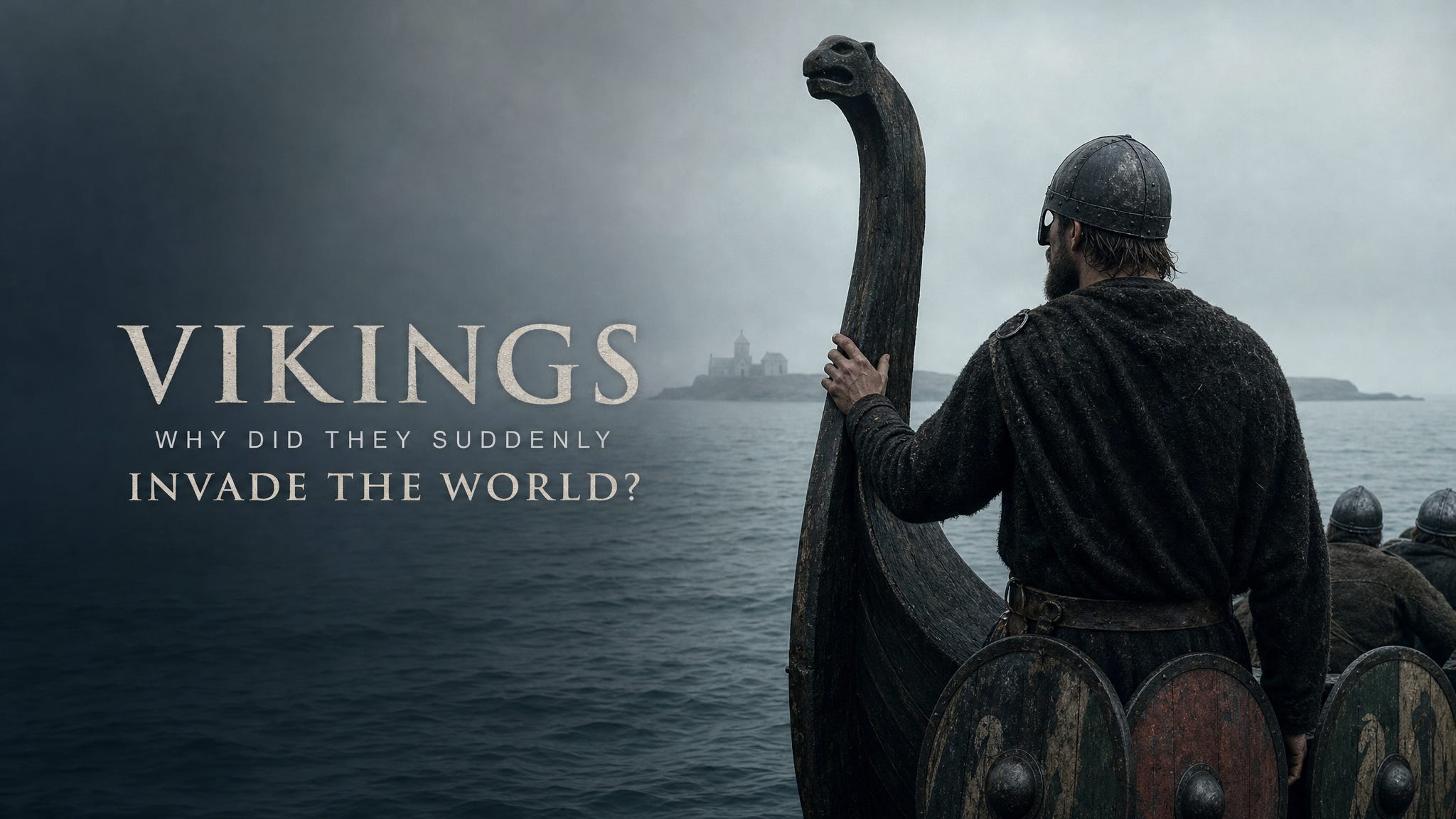
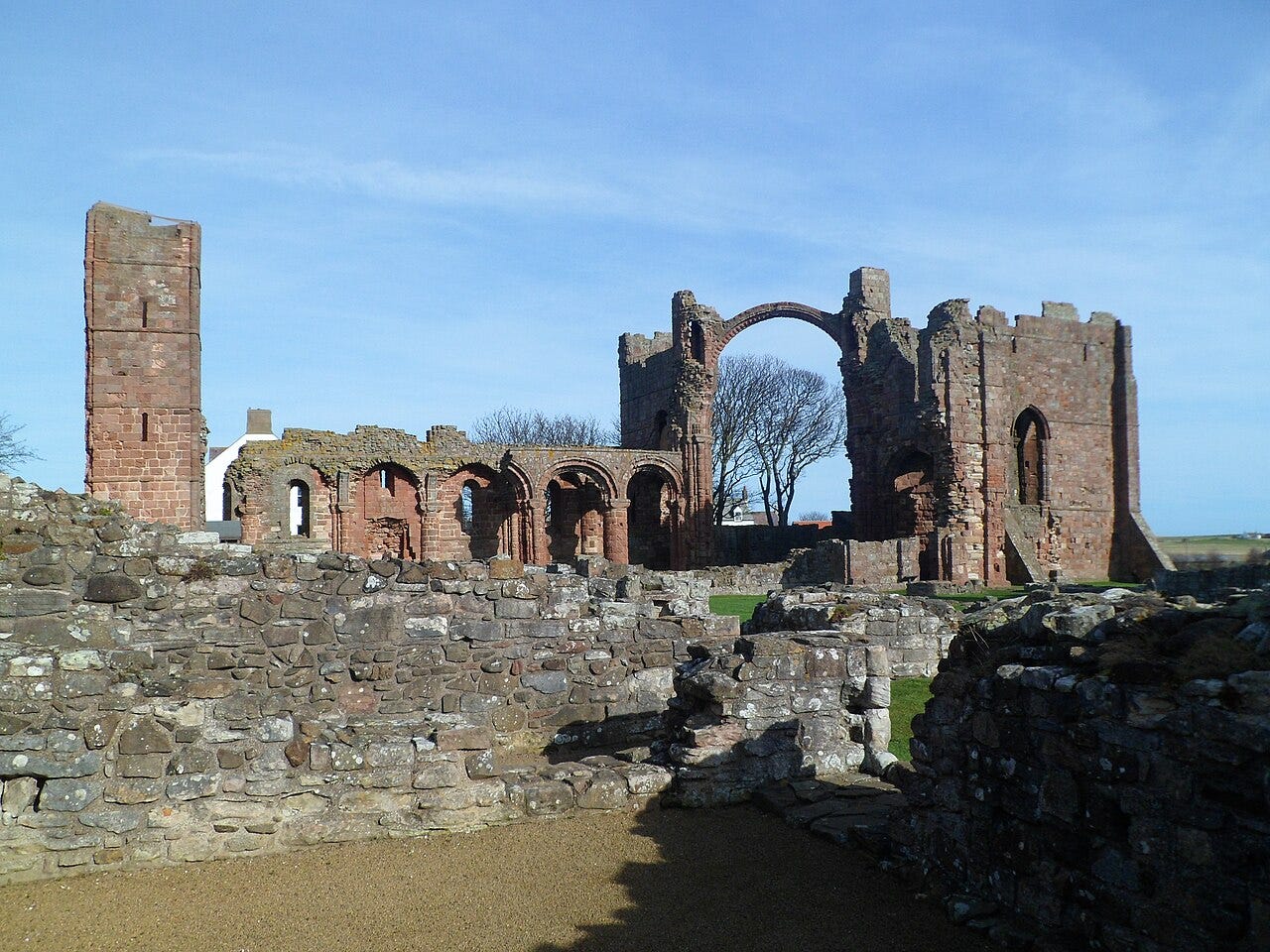
On the shore of Lindisfarne, one morning in June of 793, a monk is hauling in his net.
Lindisfarne is an island off England's northeast coast. A monastery there shelters men who have given their lives to prayer, and the monk with the net is one of them.
This morning, fog still hides the water in front of him.
A prow rises out of it, upright and curved, unlike any the monk has ever seen. A second breaks through beside it, then a third. Behind them come long hulls that sit barely above the water, each with a square sail stretched overhead and shields lining its sides.
The monk takes them for merchants from far away. Then he makes out weapons.
The net drops onto the sand, and the monk runs for the monastery.
"Ships! Armed men!"
The ships do not slow down. Their hulls slide up onto the sand, and men leap into the shallows, weapons in hand, and run straight for the church.
They ransack the altars and sweep up the gold and silver. Monks collapse under the blows; others, in chains, are dragged to the ships.
Then the ships, heavy with plunder, push back out to sea. The surviving monks stand on the shore where the net still lies and watch the square sails head east.
The Bells of Paris
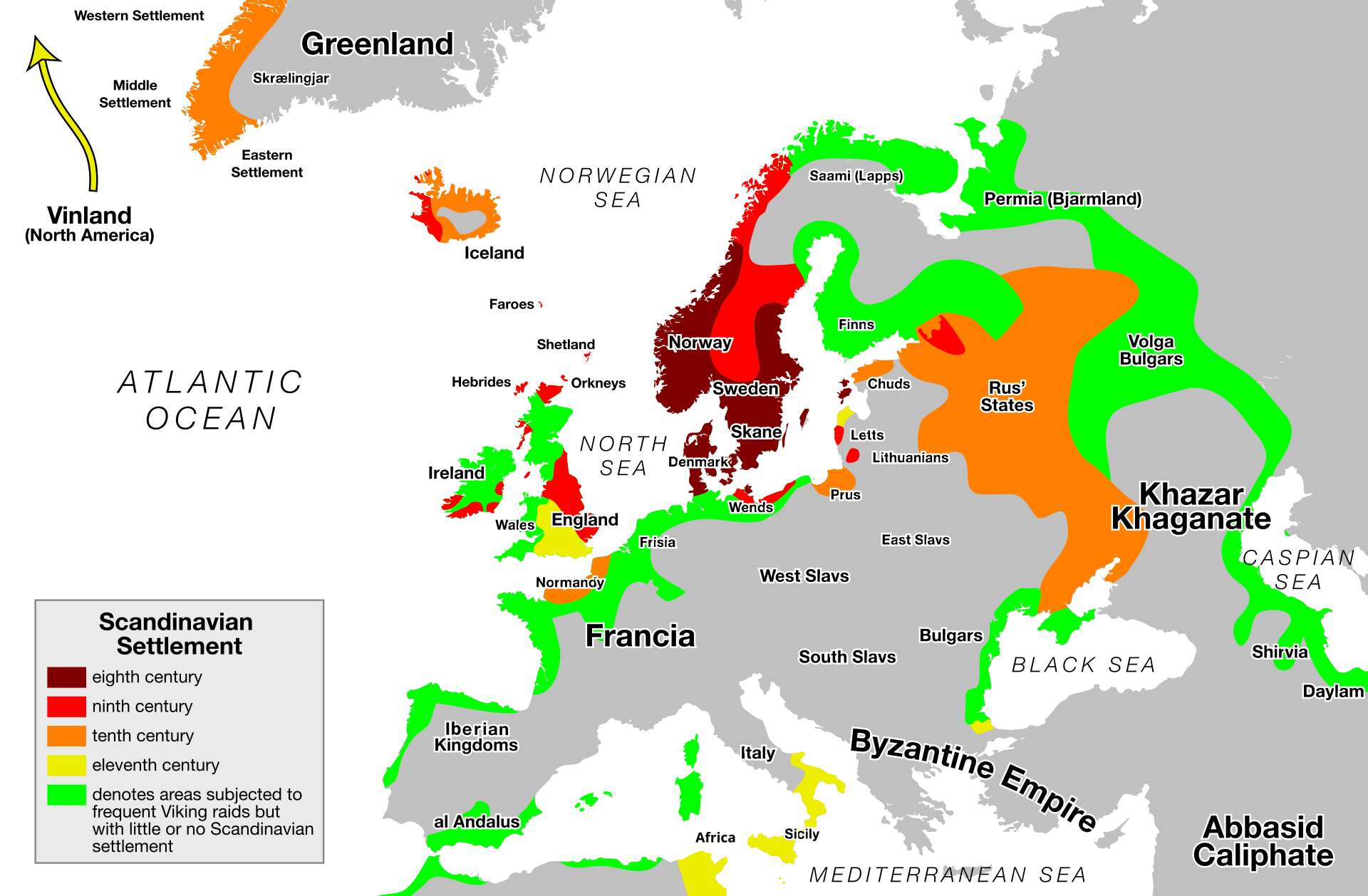
The square sails return in 845, this time on a river: 120 ships sail up the Seine to Paris. The city sits almost entirely on an island in the middle of the river, and as the fleet appears between the two banks, sail after sail, the city's bells sound the alarm.
The people flee. The Northmen land and plunder the city, church after church, all the way to the great monastery built at its gates.
The king of the Franks, Charles the Bald, decides not to fight. He pays the fleet 7,000 pounds of silver and gold to leave.
The ships head back down the river to the sea, heavier than when they came.
At the same time, other Northmen are making their way down the great rivers of what is now Russia.
Some turn up beneath the walls of Constantinople, today's Istanbul, the largest city in Christendom. They sack its suburbs and vanish.
Others reach Baghdad, where the caliph, the ruler of the Muslims, holds court. They sell furs and swords there, then turn north again.
A Forge
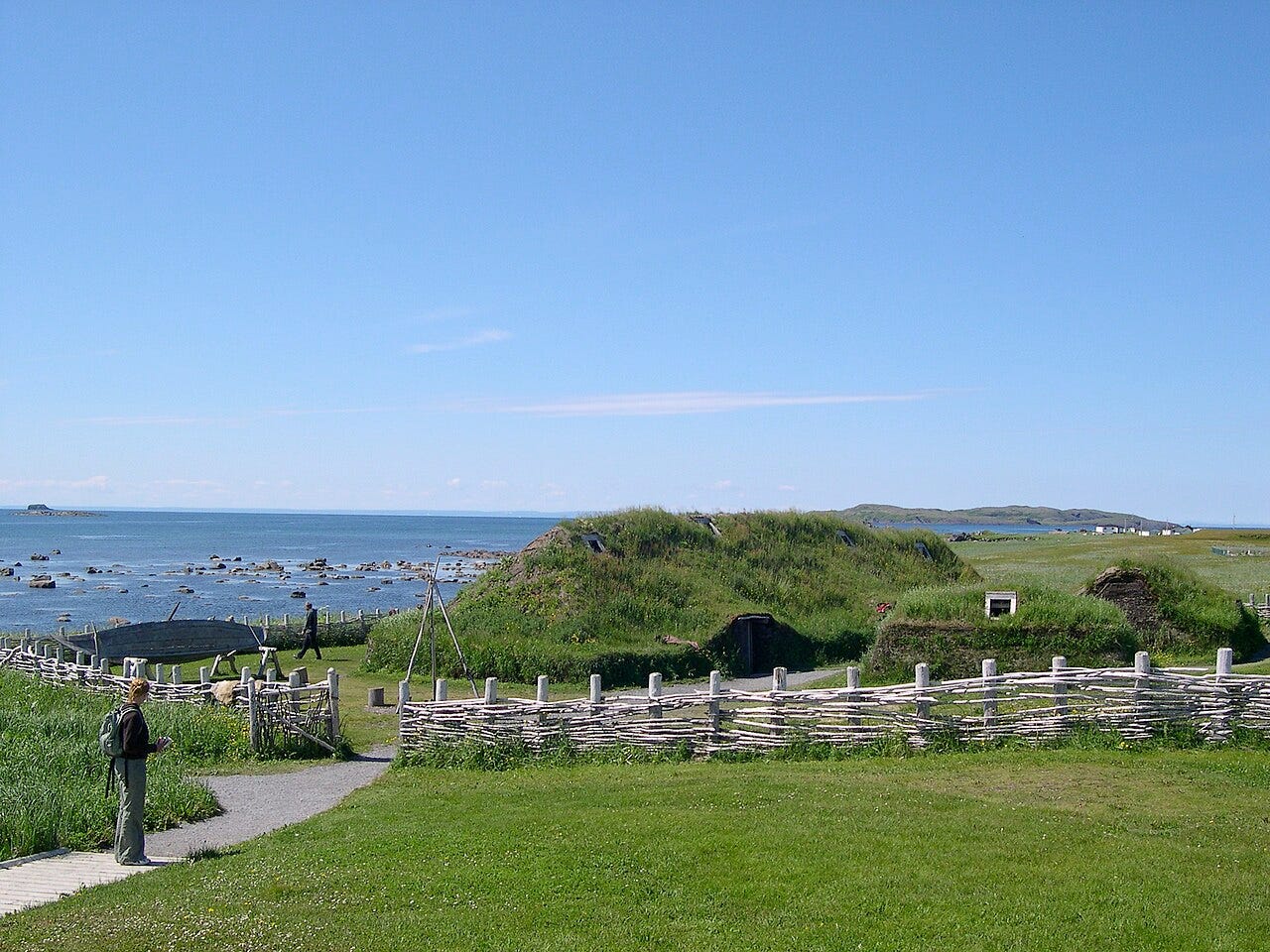
Around the year 1000, ships from the North cross the Atlantic and reach a coast on the far side that no one in Europe knows.
The crews set up camp: a few houses with sod walls, and a forge.
Five centuries later, this continent will be called America.
Within two centuries, the Northmen have reached England, Paris, Constantinople, Baghdad and North America. They are the Vikings.
Know someone who’d love history through these stories? Gift them a subscription. 🎁
Deep in the Fjords
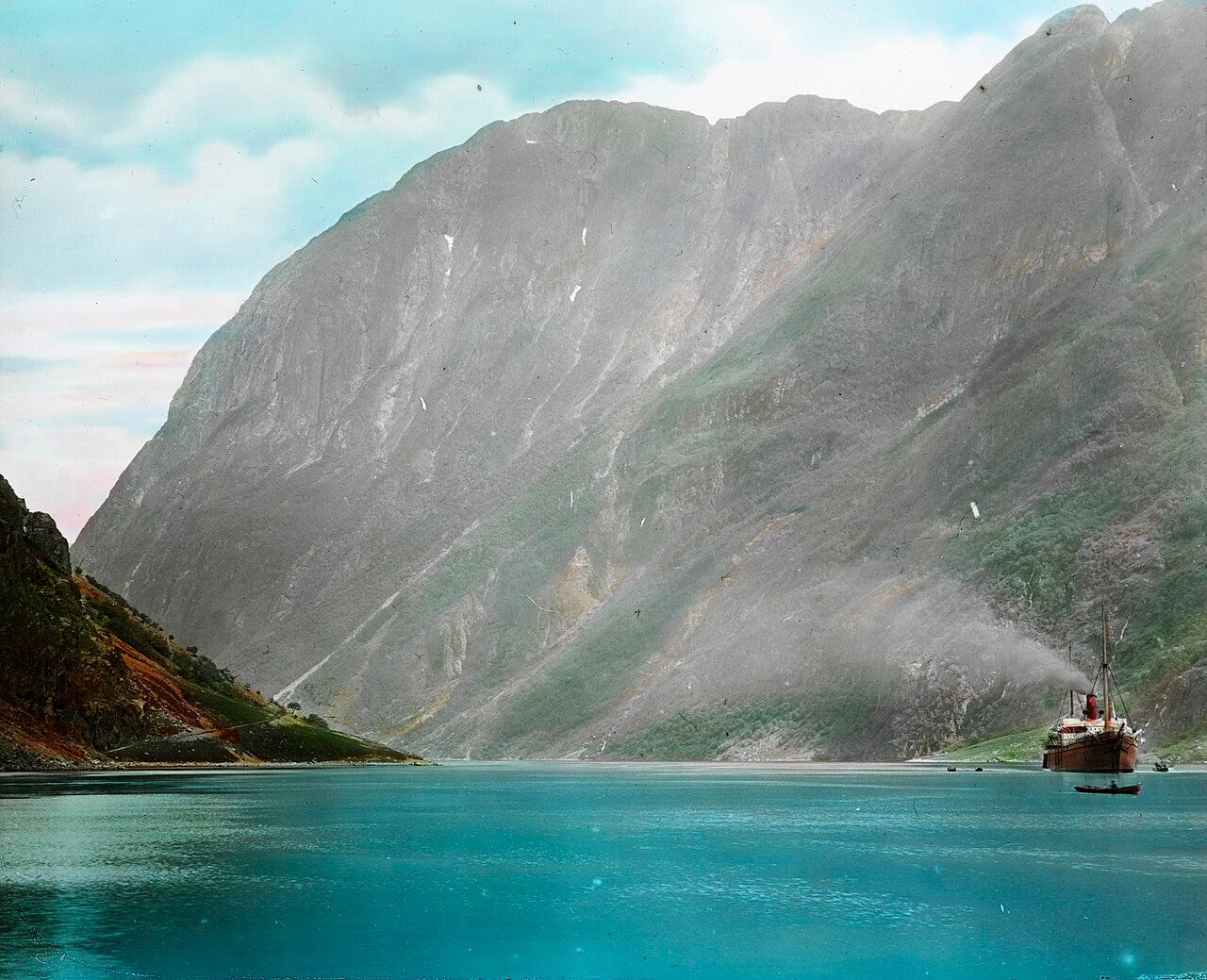
Before they took to the sea, the Vikings lived in the far north of Europe, in what are now Denmark, Norway and Sweden. Their farms stood apart from one another, along the shore or at the very head of the fjords, long arms of the sea wedged between mountains.
Between slope and water there was room only for narrow strips of field, and summer was short. A farm got by on barley, a few animals and fish.
On every farm, the wife wore the keys to the chests at her belt and ran the household. Chieftains ruled over the farms, surrounded by warriors they fed and showered with gifts.
Below the chieftains came the free farmers, who owned their land, bore arms and settled their quarrels at the assembly. At the very bottom were the slaves.
Generation after generation, Northern families worked their ancestors' fields and traded with neighbors on the continent. Rome's legions had never come this far, the empires fought their wars elsewhere, and Europe's chroniclers hardly bothered to write down the names of the Northern peoples.
Then everything changes. At the end of the eighth century, Viking ships surge onto the seas, and their crews descend on other people's lands.
On land this poor, the explanation seems obvious: too many mouths and too few fields. The Vikings, supposedly, set out to seize land to feed their families, and the gold they lacked.
Yet a people starved for land does not set out this way. It loads its ships with women, children, cattle and seed grain, and puts down roots on whatever shore it reaches.
For half a century, only warriors board Viking ships. They plunder, fill their holds and head home before winter, and never build a single farm on the coasts of England or France they ravage.
Nor are they short of gold. A ship costs a fortune: great oaks, months of carpentry, and a woolen sail that the women of a farm spend years weaving. Only chieftains and the richest farmers can fit one out, and only they launch the raids, with their sons and their men.
The men who own the Viking ships lack neither land nor gold. Yet every summer, their ships put to sea again.
So why does a people that kept to itself for centuries suddenly set out to invade the world?
You're about to discover:
What the word "viking" really means.
Why the Vikings hit monasteries first.
Why the Vikings went home before every winter.
Why the Viking raids came to an end.
Why the Vikings suddenly invaded the world.
Paid subscribers get the full story.
You’ll also get:
6 new stories / month
The full archive
Comment, ask questions, DM me anytime
iPhone user? Subscribe at coolstoriesabouthistory.com, not via the app. Apple adds +30% to the price.