

Learn History the fun way.
This is a preview. Paid subscribers get the full story.
You’ll also get:
4 new stories / month
The full archive
Comment, ask questions, DM me anytime
iPhone user? Subscribe at coolstoriesabouthistory.com, not via the app. Apple adds +30% to the price.
Menlo Park, New Jersey, September 1878.
A train pulls into the small station, fields stretching out on every side. A dozen or so reporters step off, dispatched by New York's biggest papers.
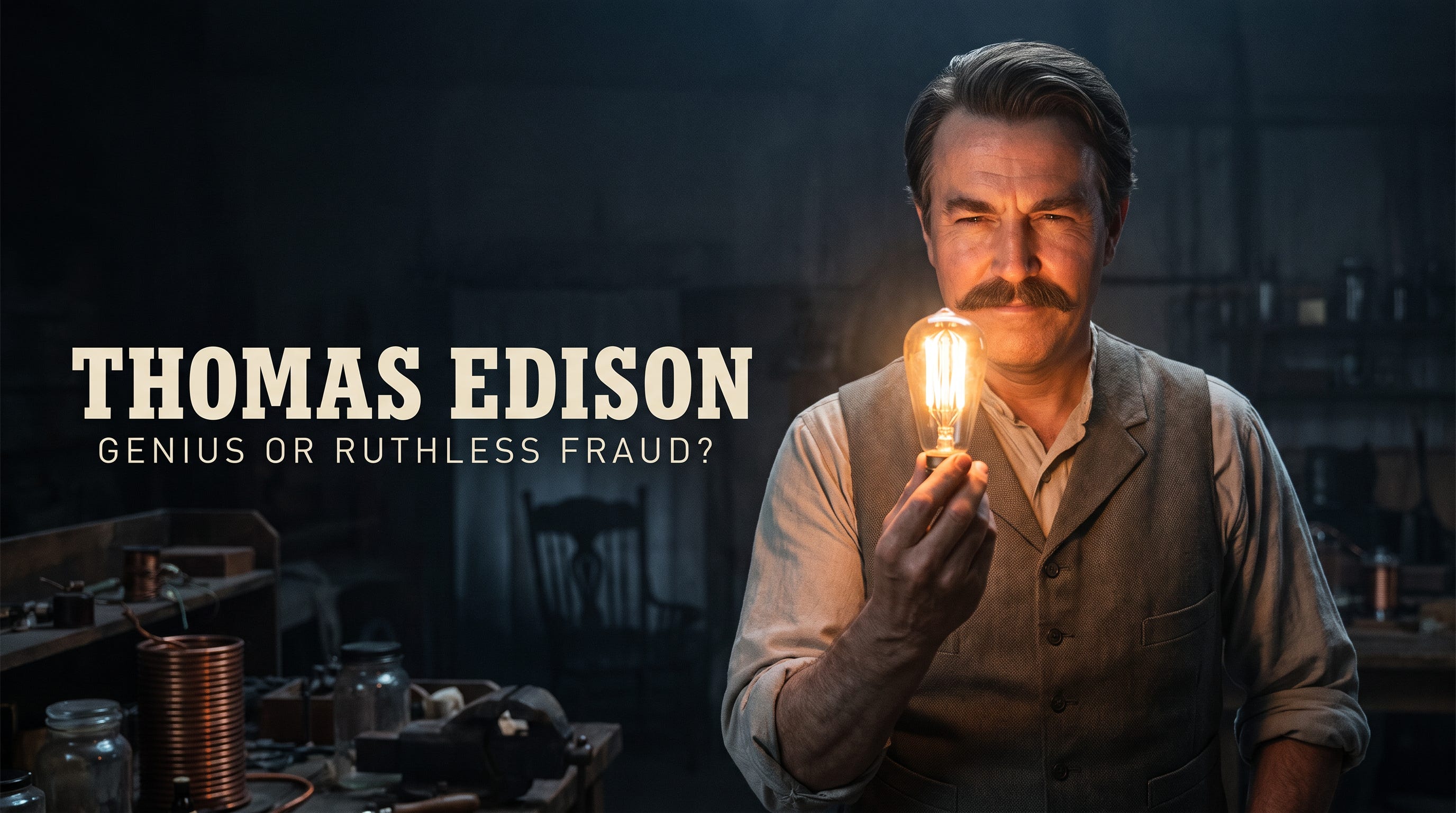
At the end of a dirt road stands a long wooden building, two stories tall. The man waiting on the doorstep is 31, his hair already gray, his sleeves rolled up. Thomas Edison, famous across America for the past year thanks to the phonograph.
He leads the visitors up to the workshop on the second floor, a long room cluttered with workbenches, coils of copper wire, and glass jars.
Then he picks up a bulb off the bench, a glass globe the size of a fist. He makes it glow in front of them, lifting it for a moment the way a jeweler holds up a stone.
"This light will last forever."
Dozens of inventors have been chasing this same light for years. Every one of their lamps dies within minutes.
Edison announces that he has solved electric lighting. The reporters' pencils race across their notepads.
That evening, everyone boards the train home.
The workshop falls silent again.
On the bench, the bulb burns out. A few minutes of light, like all the others before it.
Edison has not solved electric lighting. He has just lied to the entire press corps.
The next day, the New York Sun prints his line in bold type: "I have it now."
Within days, gas company stocks plunge on the New York Stock Exchange. A month later, J.P. Morgan and the Vanderbilts finance the creation of the Edison Electric Light Company.
None of them has ever seen the lamp.
It does not exist yet.
The Cotton Thread
The lamp won't exist for another thirteen months. And Edison won't be the one who builds it.
On the night of October 21, 1879, one man is still bent over a workbench, alone in the sleeping laboratory. Charles Batchelor, 33, an English mechanic, Edison's closest assistant. Around him, boxes full of failed attempts.
He seals a charred cotton thread inside a bulb drained of air. He switches it on.
The light holds for an hour. Then two.
Batchelor crosses the building to wake Edison. The two men spend the rest of the night sitting in front of the bulb. By morning, it hasn't gone out.
That same morning, in a nearby room, a clerk sits down to draft the patent application. Edison stands by the window.
"Whose name goes on the patent?"
Edison doesn't turn around.
"Mine."
Batchelor's name is nowhere on it. Nobody else's from the laboratory ever is, either. That is the house rule: the hands belong to everyone, the name belongs to him.
One problem remains, and Edison knows it. Back in 1874, two Canadians from Toronto, Henry Woodward and Mathew Evans, had patented a lamp built on the same principle. A carbon filament inside a glass globe.
Their patent predates his by five years. In court, it could bring the whole thing down.
Woodward and Evans had never found the money to develop their lamp. By the time the man Edison sent shows up in Toronto, in a room that serves as both office and workshop, the two men are in debt and out of options.
He sets a check for $5,000 on the table. The amount is no accident: just enough to cover their debts, not a dollar more. Edison had set the figure himself.
Woodward reads the check twice. Evans watches the snow through the window. Both men sign.
The patent changes hands, and the title along with it. In the eyes of the law, Edison is now the sole inventor of the incandescent lamp.
Years later, Evans will sum up the sale in one line: "The inventor never gets the reward of his labour."
The pattern is set, and it will hold for a lifetime. Other men search, invent, and go broke. Edison signs.
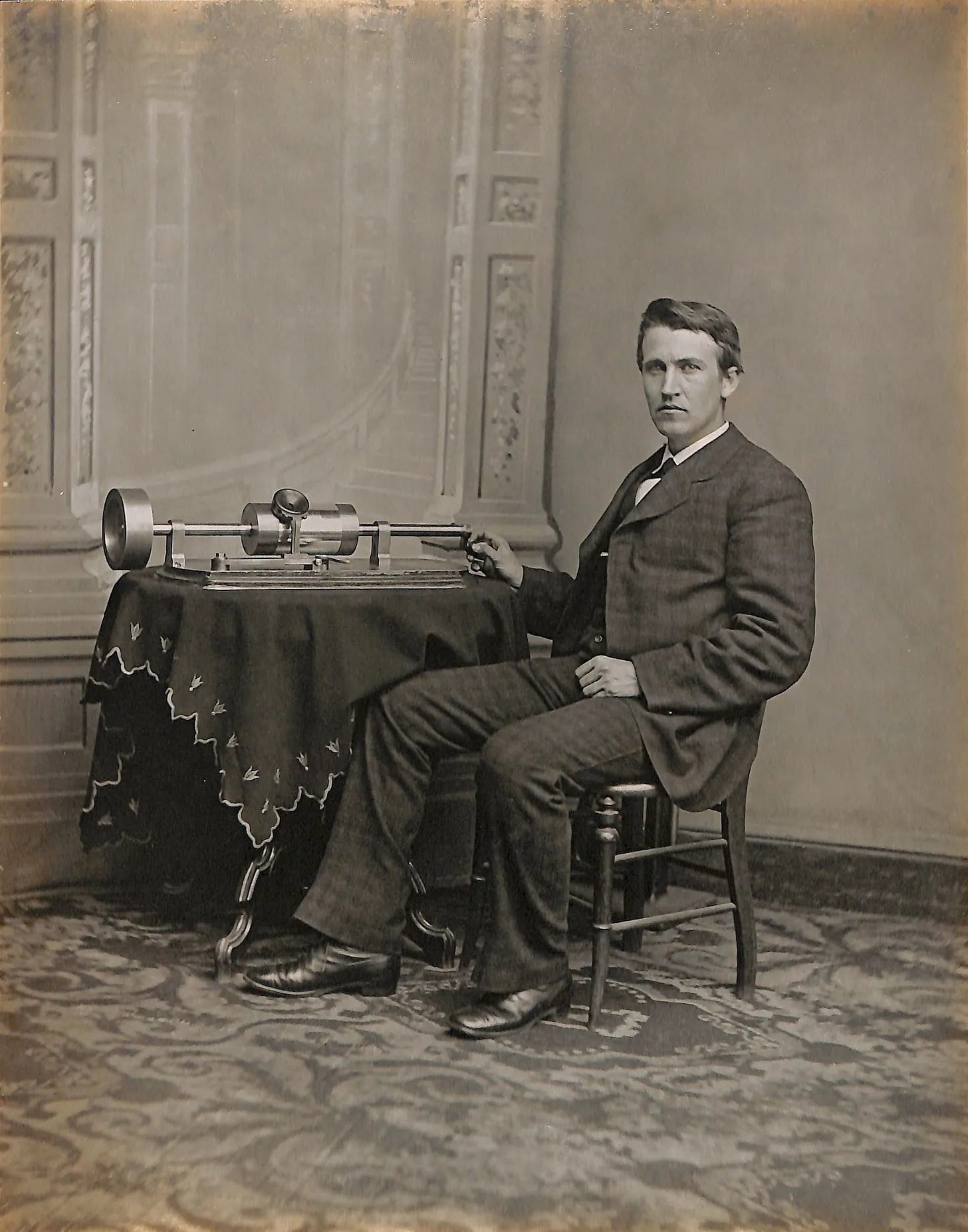
Much later, when a Washington inventor named Thomas Armat sells him his film projector, the contract will require the machine to be sold as an Edison invention. On the 1896 posters: Edison's Vitascope. Armat's name appears nowhere.
Pearl Street
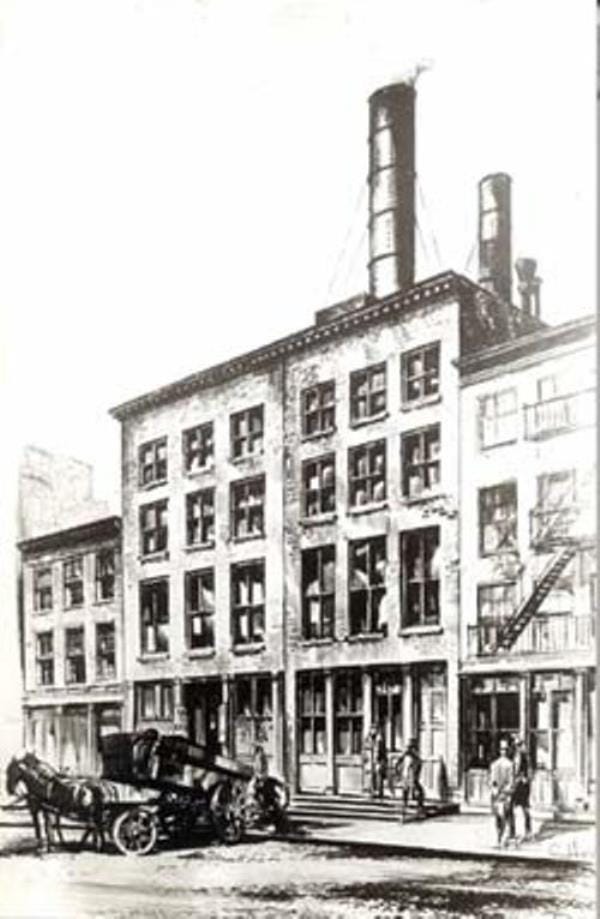
The lamp, at least, finally delivers on its promise. On September 4, 1882, in New York's financial district, Edison himself throws the switch at the power station he built at the bottom of Pearl Street. Behind him, six giant dynamos, each as heavy as a locomotive. The floor shakes under his boots.
Dozens of buildings light up at once. The New York Times prints the next day's edition under its own new lamps.
For five years, everything goes his way. Cities order his system one after another. Every power station carries his name. The laboratory moves to West Orange, ten times the size.
Then the sales reports start piling up on his desk.
George Westinghouse, 41, a Pittsburgh industrialist and the inventor of the railroad air brake, sells a rival system. Alternating current, patented by a young engineer newly arrived from Europe, Nikola Tesla. Westinghouse has bought the rights from him.
The difference between the two systems comes down to one line. Edison's direct current loses power after about a mile and a quarter of cable. That means a power station in every neighborhood.
Westinghouse's current travels much farther. Where Edison builds ten power stations, Westinghouse builds one.
Edison compares the costs, city by city. He loses everywhere. Buffalo has signed with Westinghouse, and more cities follow every month.
He reads the column of numbers again, then slowly pushes the papers away. He sits still for a moment, hands flat on the desk.
An ordinary industrialist would have cut his prices, or switched currents.
Edison looks up at the assistant who has stayed in the room.
"Find everything there is on how New York State executes condemned men."