

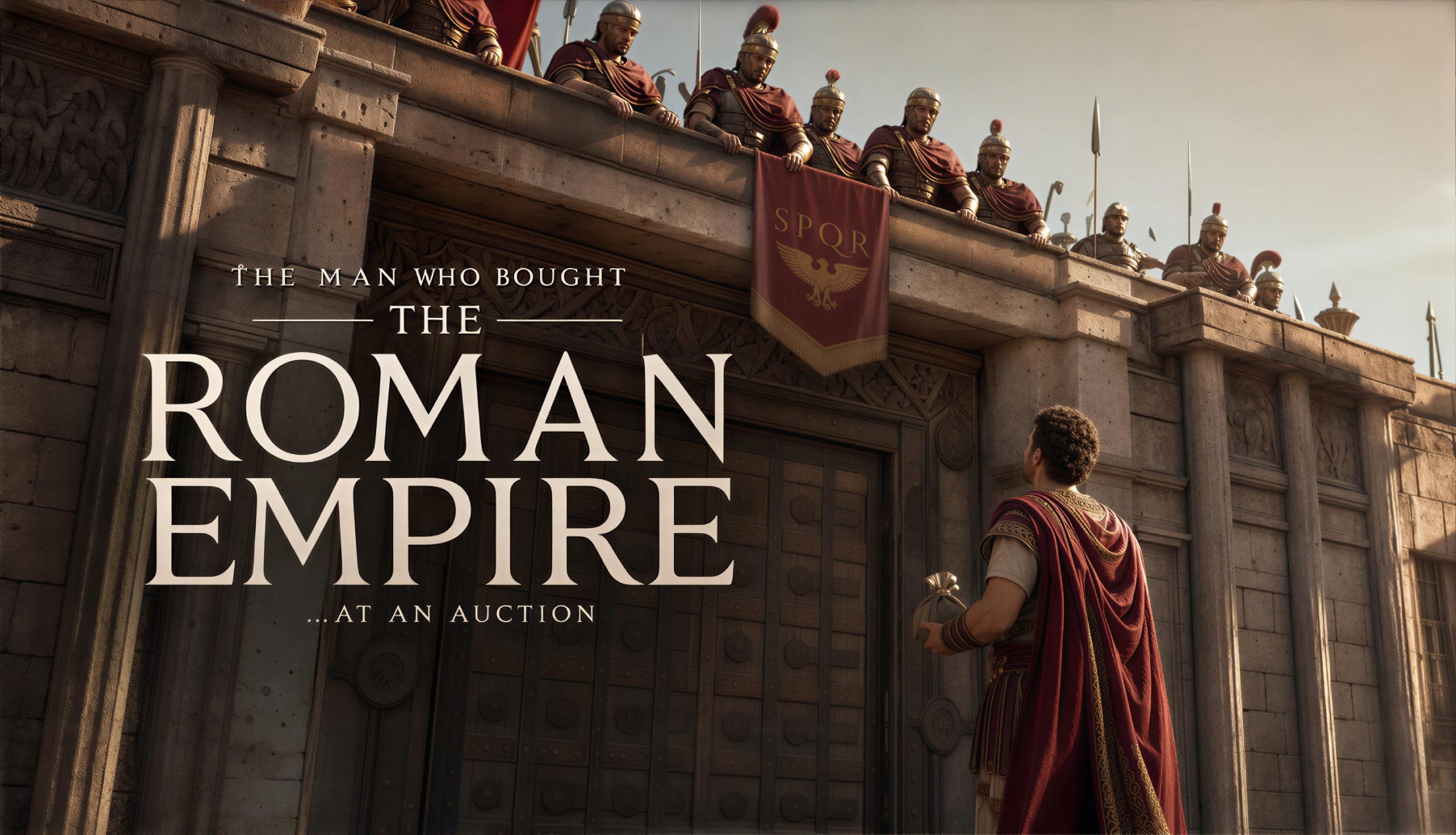
Learn History the fun way.
This is a preview. Paid subscribers get the full story.
You’ll also get:
4 new stories / month
The full archive
Comment, ask questions, DM me anytime
iPhone user? Subscribe at coolstoriesabouthistory.com, not via the app. Apple adds +30% to the price.
Rome, March 28, 193. Late afternoon.
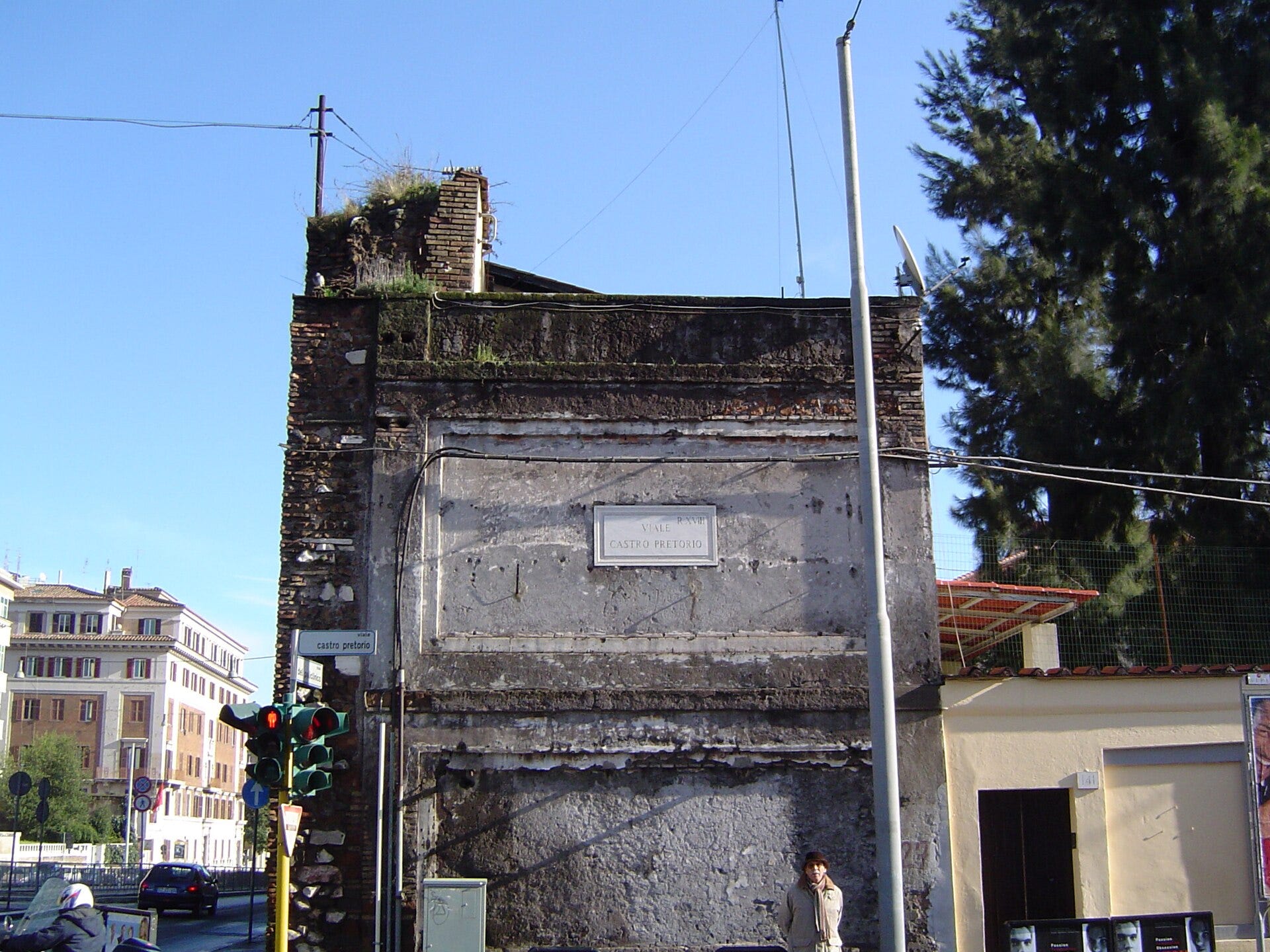
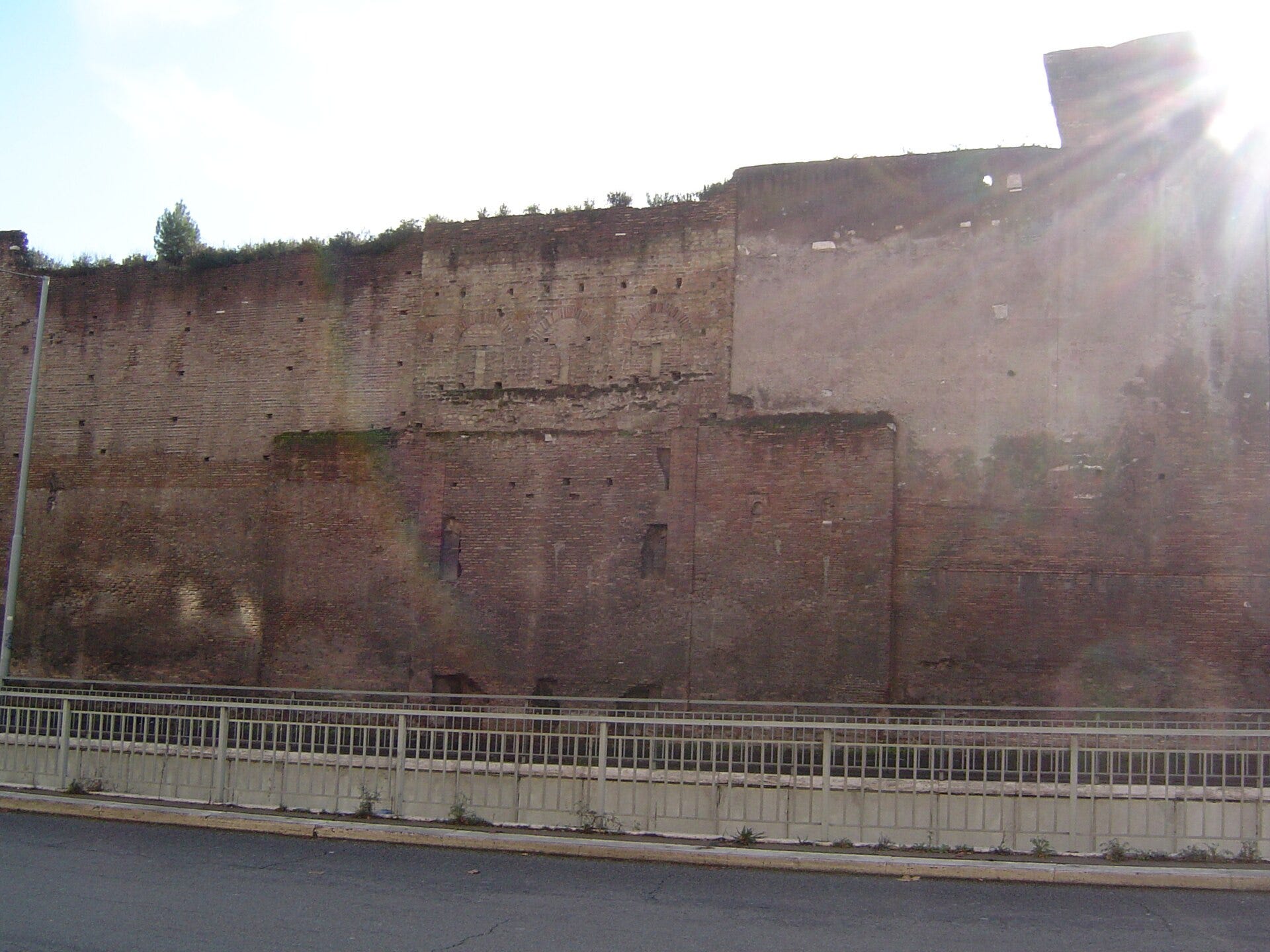
The imperial guard's camp closes off the northeast corner of the city.
A wall three men high, a walkway running along the top, square towers at the corners.
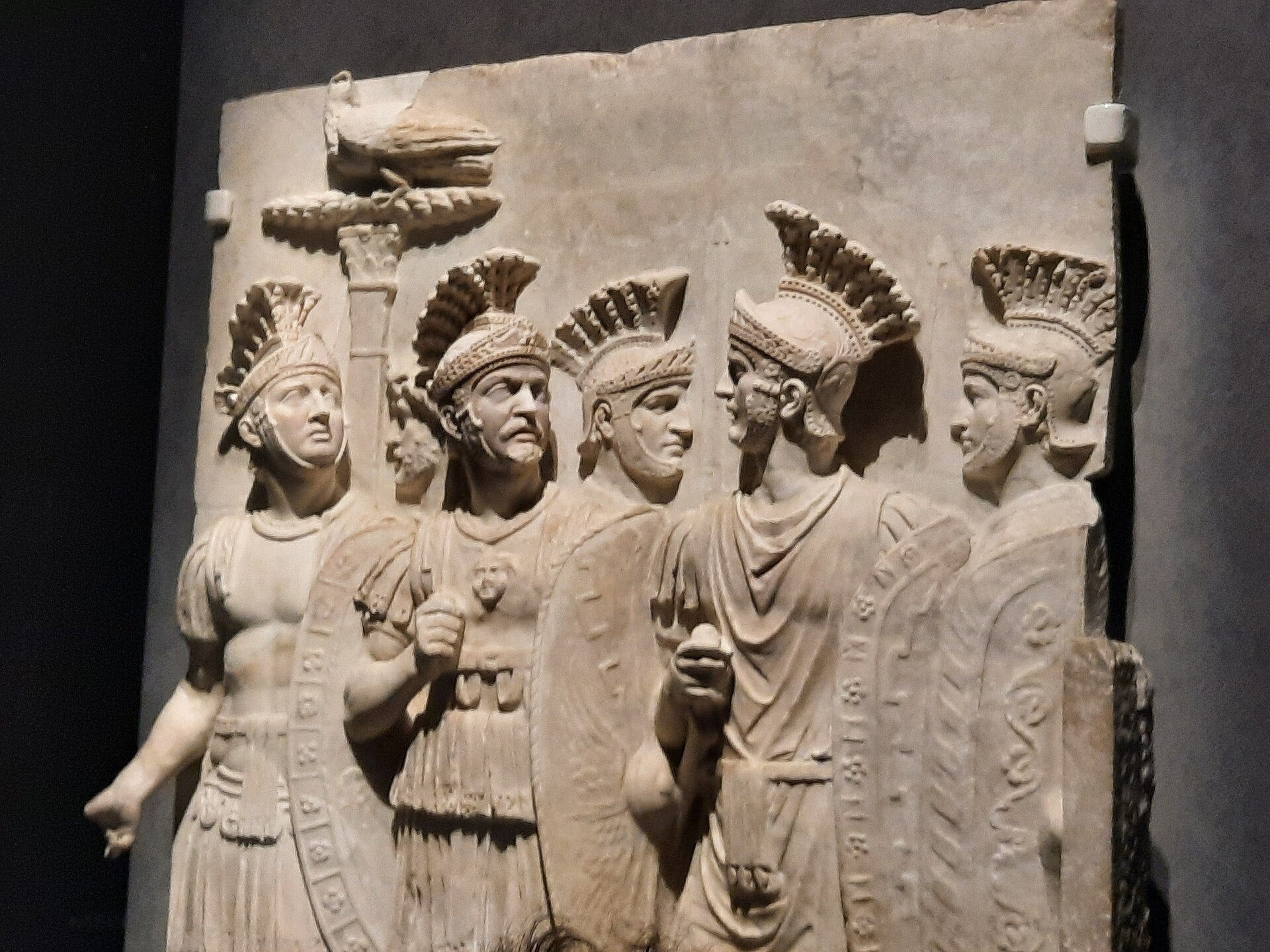
Behind it, several thousand soldiers. They are called the Praetorians.
They are the only men in Rome who carry weapons, and the emperor sleeps under their guard.
They killed him this morning.
The gates of the camp have stayed barred ever since.
Down below, in the dust, a 60-year-old man tips his head back to see the top of the wall. His hands cupped around his mouth.
“Fifteen thousand a man!”
The shout climbs the stone and fades.
Up top, a Praetorian steps onto the walkway, leans on his elbows, waits. Does not answer. Turns back toward the inside of the camp and calls the number down into the courtyard.
“Fifteen thousand!”
A voice comes back up from the courtyard, muffled by the thickness of the wall.
The Praetorian listens, then leans out over the drop.
“In here they're offering sixteen.”
“Seventeen thousand!”
He leaves, comes back, and another number drops from the top of the rampart.
What is being sold behind this wall is the Roman Empire.
The Man Below
The man pacing at the foot of the rampart is Marcus Didius Julianus. One of the richest men in Rome.
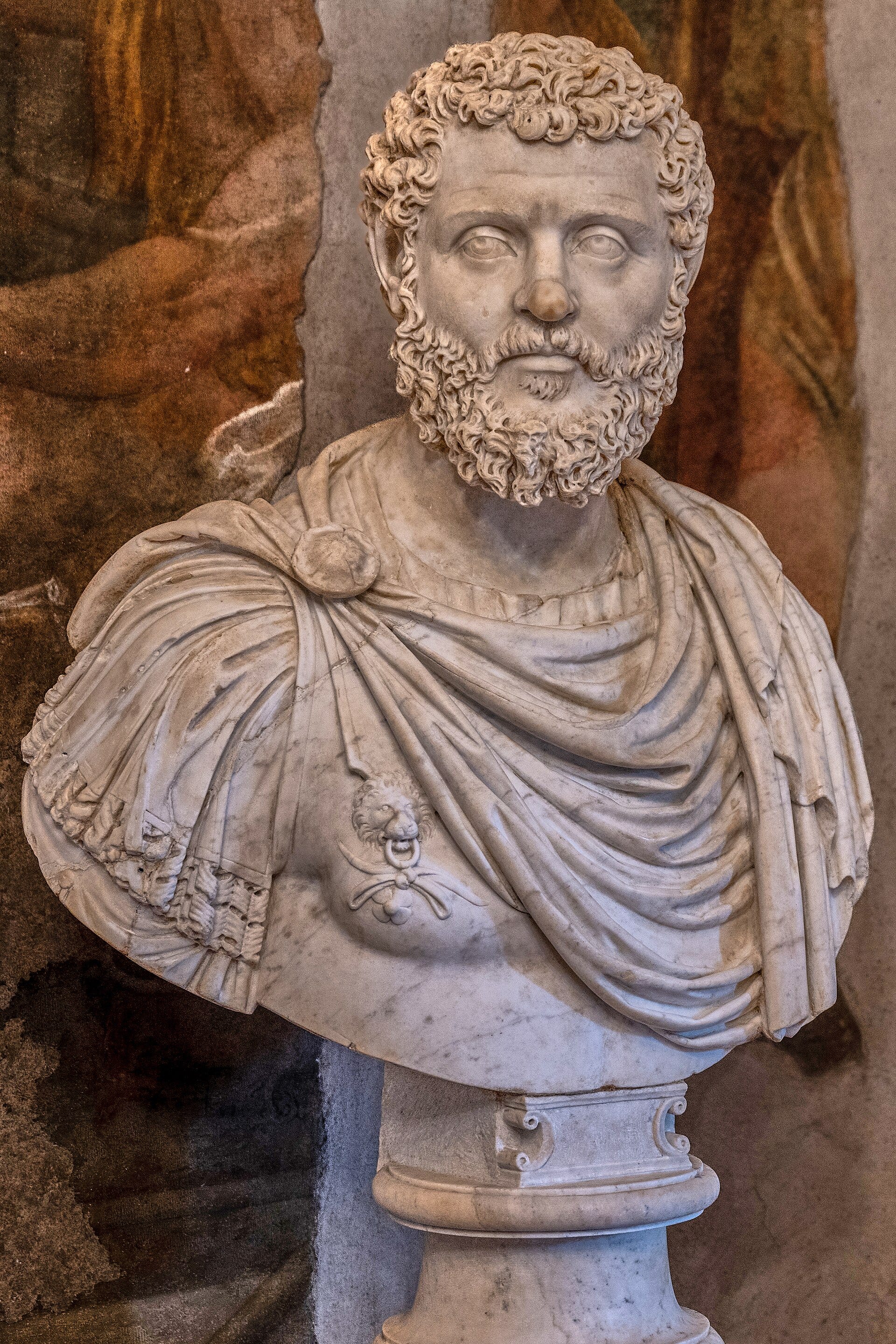
Consul 18 years ago, governor of four provinces, then of Africa.
Since then, nothing. No post, no assignment, ten years of opening his house to men who no longer want anything from him.
He pulls a fold of his toga back over his forearm. Twenty paces one way, twenty the other, head down.
At his back, the stone throws the day's heat back at him.
“Twenty thousand sesterces!”
The Praetorian heads back toward the courtyard. The wait stretches, and Julianus stops mid-stride.
Up top, six or seven of them are leaning out over the drop, watching him mark time in the dust.
When the head reappears between two battlements, no number comes back down.
Down below, Julianus cups his hands again.
“Who is the man bidding against me?”
The Praetorian takes his time.
“Flavius Sulpicianus. Prefect of the city.”
The prefect of the city keeps order in Rome and commands the city cohorts. The second highest office in the empire.
The emperor had sent him to the camp to calm things down. The gates locked behind him, and he has not come back out.
Since then he has been bidding from up on a platform, in the middle of the courtyard.
Julianus stops moving. His eyes travel up the wall, from the ground to the parapet, and the silence holds.
Then he shouts.
“That man married his daughter to the one you killed this morning!”
Nothing moves on the walkway.
“The day he is emperor, he will look for his son-in-law's murderers. And he will know where to find you.”
Up top, heads draw together. A discussion above him, and not one word of it comes down.
A ladder slides down the wall and bangs into the dust at his feet.
He climbs the rungs, toga askew, short of breath, and two pairs of arms catch him at the top and haul him over the parapet.
On the other side, the courtyard opens below. Thousands of faces turned up toward him.
Standing above them, he raises his hand and spreads his five fingers wide, so they can be counted from the back of the courtyard.
“Twenty-five thousand sesterces!”
Arms go up the whole length of the walkway, and the courtyard takes it up below.
“Long live the emperor!”
They walk him down between two rows of men. In the middle of the courtyard, a spear planted in the ground.
He walks past it without slowing.
On the end of the spear, the head of his predecessor.
The Spear in the Courtyard
That head belongs to Publius Helvius Pertinax. 66 years old, son of a man of no family, who climbed to the top of the Roman state over forty years in the army and the provinces.
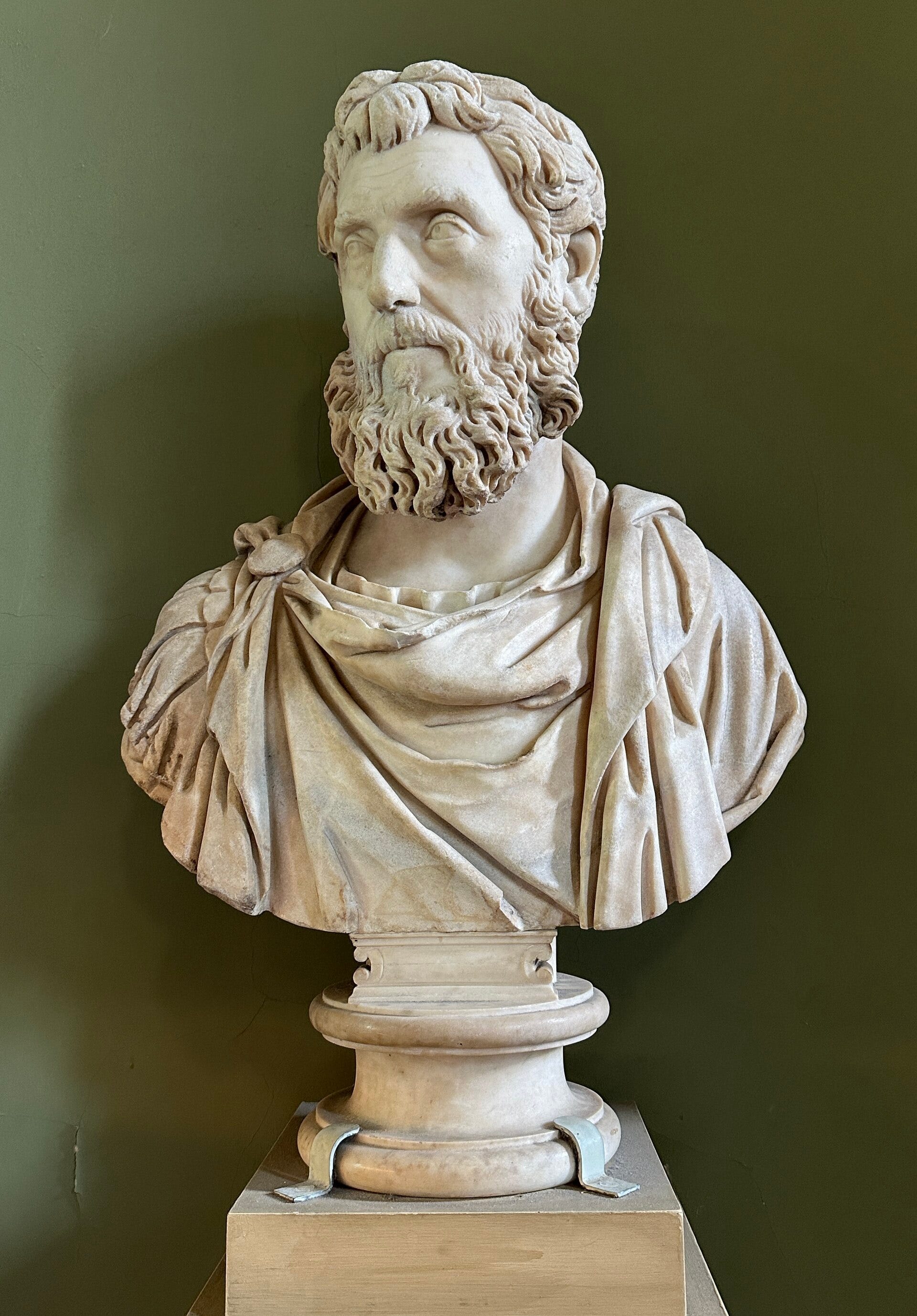
Eighty-seven days of rule, and the ambition to put the empire back on its feet.
Under him, the pits where the previous reign had thrown its condemned men were opened again, and families finally carried their dead to a tomb.
Before the Senate, he swore that no senator would die while he reigned.
To his wife he refused the title of empress, to his son the title of heir.
From the Praetorians, he took away the right to plunder Rome.
A coin lifted off a stall, a door they went through without anyone opening it for them: for twelve years they had helped themselves without being asked to account for it.
Overnight, they had to pay for what they took.
At first light, two hundred of them climbed the palace stairs, swords in hand.
The doorkeepers let them in. The servants stepped aside in the hallways. Not one door was shut in their faces.
One man struck first, and the rest followed.
They came back down with the head, returned to the camp, and barred the gates behind them.
Pertinax's Dinner
Julianus reaches the palace late that night. In the hallway leading to the dining room, the body of Pertinax is still waiting.
He steps over it.
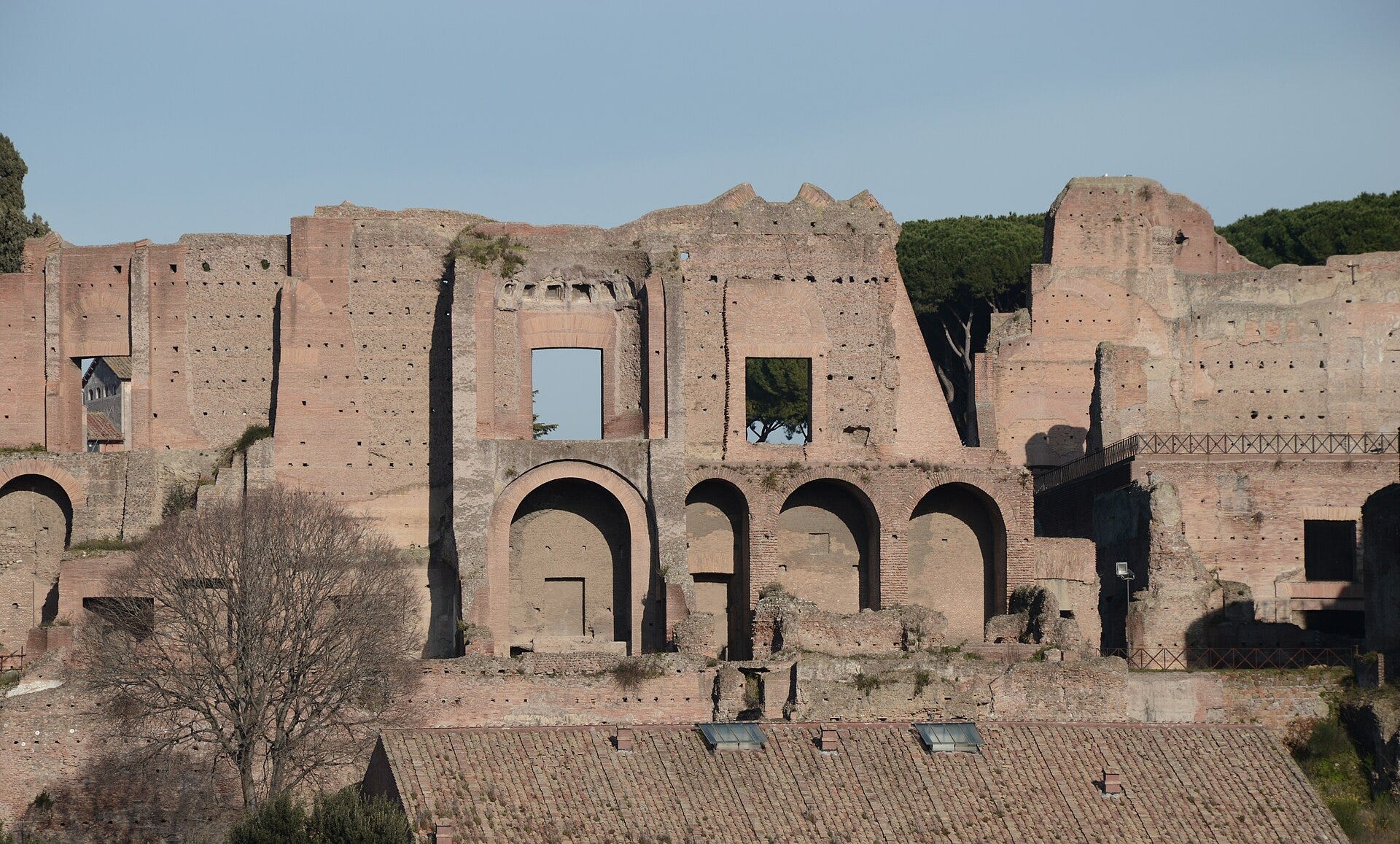
The lamps have been burning since morning and the oil smells burnt. On the table, the meal prepared for Pertinax at dawn.
Julianus settles in, pulls a lamp toward him, and looks at the dead man's dinner.
Lentils, cabbage, half a cold chicken.
The old man served his guests the cheapest food in Rome, and the great houses laughed about it behind his back.
Julianus laughs and orders the table cleared.
Servants go out into the streets. Merchants get up in the middle of the night, and every expensive thing in Rome makes its way to the palace.
A famous dancer arrives. The meal starts over, the dice come out, and the dice cups keep knocking on the wood for part of the night.
Toward the end, the palace steward leans in toward him.
“The Praetorians are asking when they will get their twenty-five thousand sesterces.”
Cup in hand, Julianus stands and walks the length of the table without answering.
The guests fall silent one after another, and soon nothing is left but the sound of the dice cups.
Twenty-five thousand sesterces, eight years of pay for every man in the camp, and there are several thousand of them.
No private fortune in Rome covers a sum like that. Not his either.
He stops behind the steward.
“At first light. You will take me to the treasury.”
Under the Palace
Day breaks over several thousand Praetorians massed in front of the palace.
The steward goes down first, a lamp in his hand. A hallway, a staircase, a door unlocked, and the air turns cold all at once.
A vaulted room where the light does not reach the corners. Along the walls, chests bound with iron, set on stone bases.
This is where the empire's money sleeps. What the provinces pay in, what pays the legions on the frontiers.
The lids come up, one after another.
They are empty.