
Christmas has never been a single day. The Twelve Days run from December 25 to Epiphany on January 6, and in parts of Europe the season opens even earlier, on the evening of December 5. Over those weeks, villages, royal courts, shopkeepers and even a political party added customs of their own. Some are far younger than they look, and several outlived laws written to stop them.
Cool Stories About History is a newsletter to learn history the fun way.
Join free and get:
6 new stories a month, straight to your inbox
The full archive of stories
Comment, ask questions, and chat with other readers
How These Were Chosen
A strange tradition, here, is a Christmas custom that would surprise an American meeting it for the first time. Eleven are still alive. One, a mock king at the English court, died out centuries ago.
Each one was kept because its start, or the moment it changed, can be dated: a first written record, a ban, a contest or a sales idea.
They are ranked by how familiar they are to Americans, from the least known, at number 12, to the best known, at number 1.
12. The Giant Lanterns of San Fernando (1908)
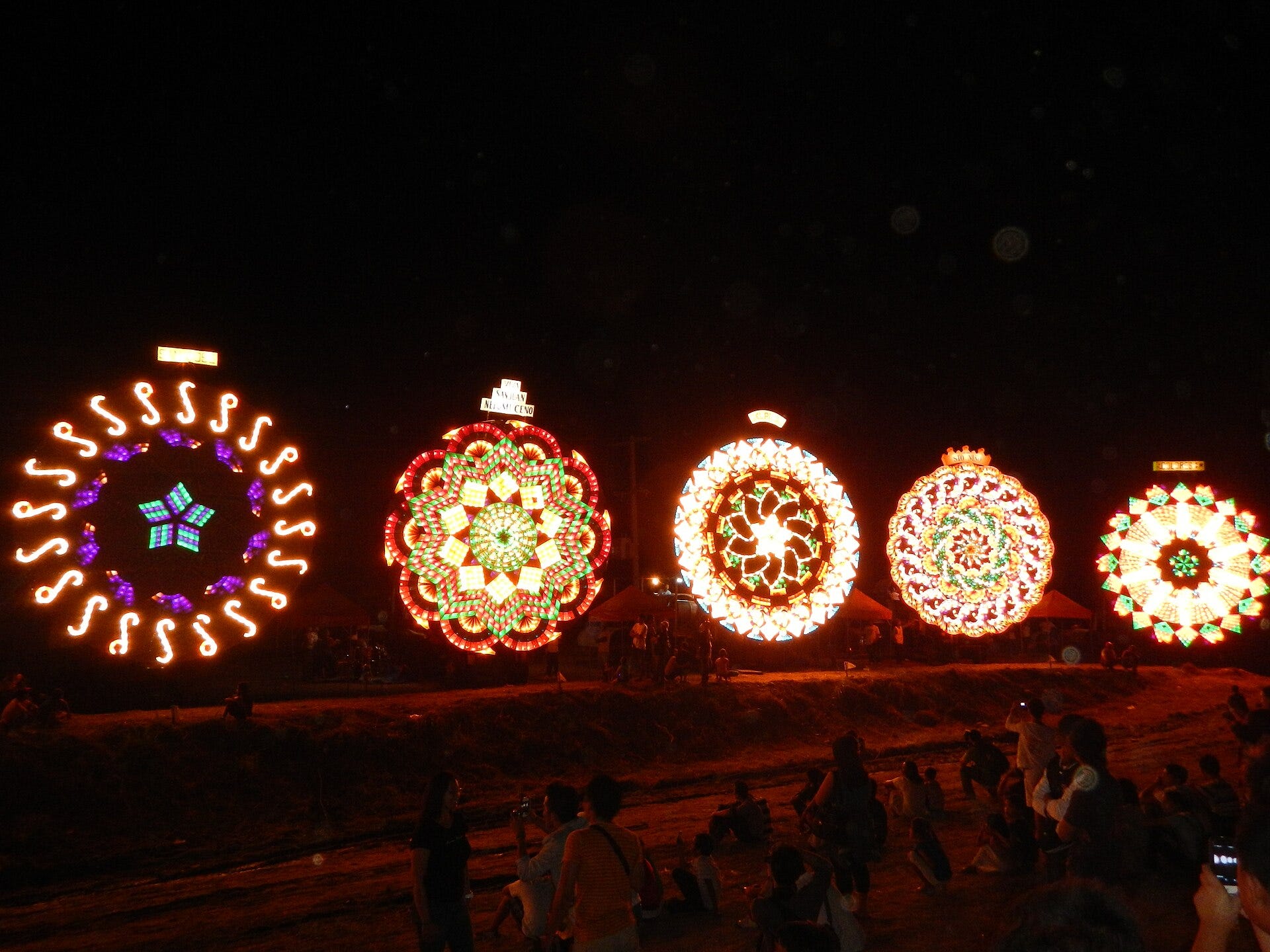
Before World War II, a lantern maker in the Philippines needed 20 car batteries to light a single Christmas star. The star was a parol, the star-shaped Christmas lantern of the Philippines. In San Fernando, a city in the province of Pampanga, lantern makers built it on a giant scale.
The city traces its giant lanterns to 1908 and to Santa Lucia, one of its barangays. That is the name for the neighborhood districts of Philippine towns.
In the years before the war, a Santa Lucia man named Severino David was building 12-foot lanterns. To light 200 bulbs on one of them, he is said to have borrowed 20 car batteries from a bus company, La Mallorca Pambusco.
The bus company returned to the story in 1957. Its chief electrician, Rodolfo David, hooked the company's generators to a 14-foot lantern carrying 600 bulbs. Inside it turned a rotor, a device he is credited with helping to invent, and the rotor made the lights dance.
That year, the moving lantern won Santa Lucia the championship of the Ligligan Parul, the city's Christmas lantern contest.
The craft still passes from family to family in the barangays of San Fernando. Rodolfo David's nephew, Ernesto Quiwa, carries on building giant lanterns.
At a Glance
Tradition: Giant parol lanterns and the Ligligan Parul contest
Place: Santa Lucia, San Fernando, Pampanga, Philippines
Date: First giant lanterns in 1908, Rodolfo David's rotor lantern in 1957
People: Severino David, Rodolfo David, his nephew Ernesto Quiwa
Power: 20 borrowed car batteries before World War II, bus company generators in 1957
11. The Mummers of Newfoundland (1860)
In Newfoundland, an Atlantic island that is now part of Canada, mummers are neighbors in disguise who visit houses after Christmas, and their hosts must guess who they are. On December 28, 1860, a fisherman named Isaac Mercer met masked mummers in Bay Roberts, and by morning he was dead. Who was behind the masks, and why was the costume itself then outlawed for more than a hundred years?