

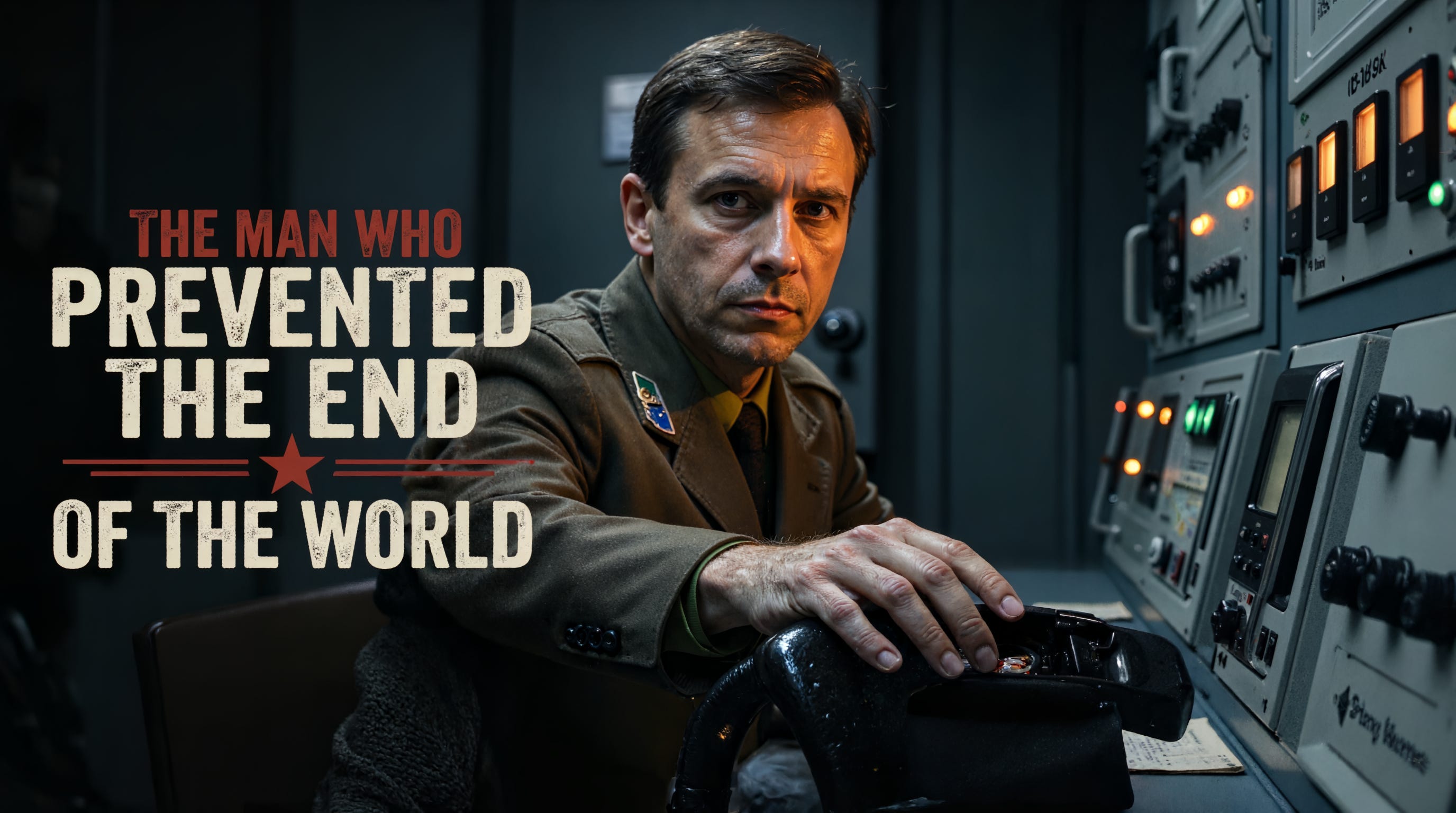
Learn History the fun way.
This is a preview. Paid subscribers get the full story.
You’ll also get:
4 new stories / month
The full archive
Comment, ask questions, DM me anytime
iPhone user? Subscribe at coolstoriesabouthistory.com, not via the app. Apple adds +30% to the price.
Serpukhov 15, on the night of September 25 to 26, 1983.
A bunker buried under the pines, 70 kilometers southwest of Moscow, on no map.
Stanislav Petrov walks down the concrete stairs, pushes open the door to the watch room, and sits down in the commander's chair.
It's cool inside. The air smells of stale tobacco from the shifts before his.
In front of him, three tiered rows of consoles, an operator behind each one, heads bent under their lamps. The back wall holds a lit up display board as wide as a building front. Tonight, the board stays dark.
Petrov is 44. A lieutenant colonel and an engineer trained at the Kiev military aviation academy, he has worked on this satellite network since it began.
The watch is his, twelve hours straight. A lieutenant brings up a glass of tea and sets it on the console, to the right of the logbook.
Petrov opens the logbook to today's date and uncaps his pen. The war journal. Everything that happens on a watch gets written here, hour by hour.
High above the Earth, Soviet satellites watch American missile bases. Whatever they see arrives here, on this wall.
11 p.m. The tea goes cold. Below him, an operator spins a pencil between his fingers. Another coughs, steps out for a cigarette, comes back.
Petrov writes a line in the logbook. Nothing to report.
Twelve fourteen a.m. The alarm goes off. His hand drops the pen.
On the console, a red button starts pulsing. One word on it. LAUNCH.
Petrov looks up. The back wall repeats the word in capital letters, and a second line lights up beneath it. HIGH RELIABILITY.
A chair scrapes against the concrete. For 15 seconds, no one speaks.
The Boeing
The operator in the front row half rises, one hand on the back of his chair.
“Commander, is it a plane?”
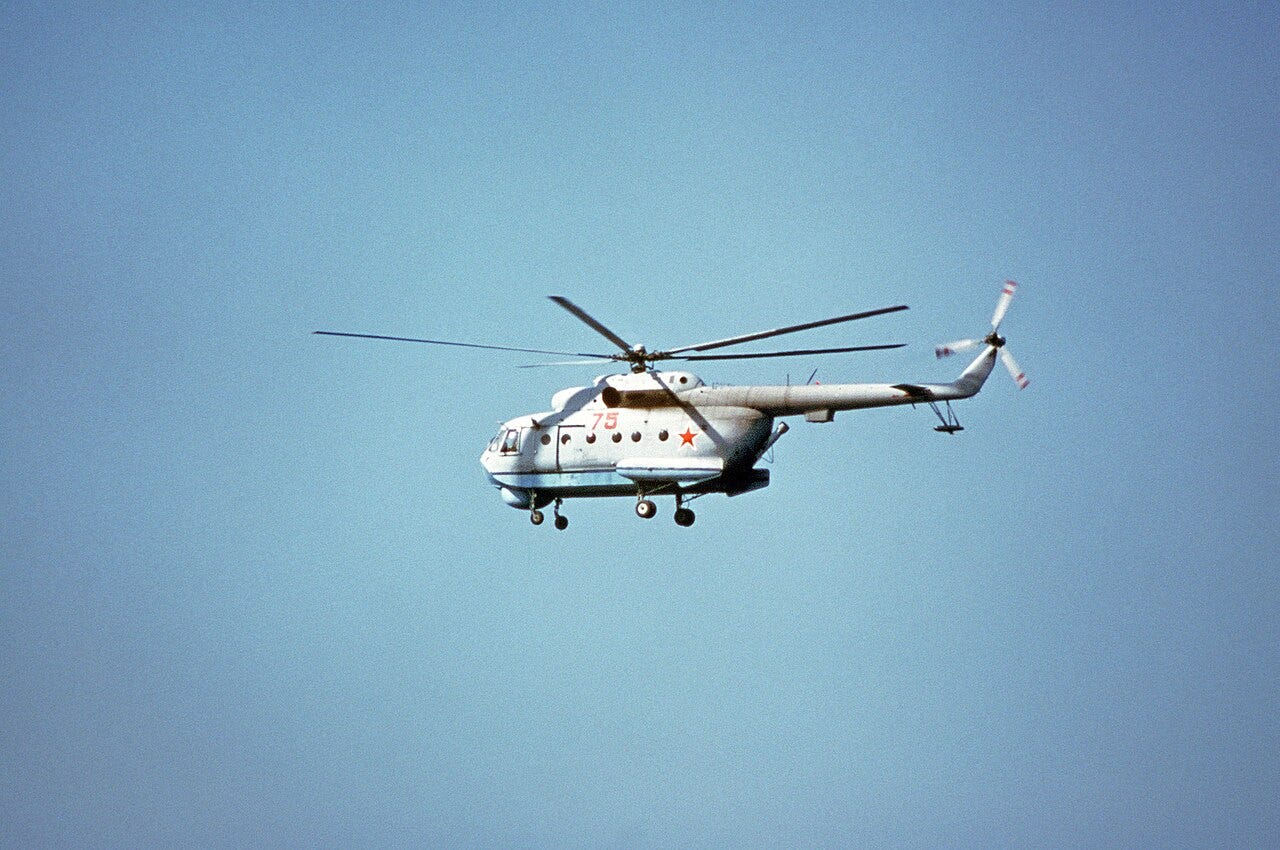
Three weeks earlier, a Korean airliner had drifted over Sakhalin, a Soviet island facing Japan. Ground defense had taken it for an American spy plane and given the order to fire. A fighter shot it down in flight. 269 dead.
“The board doesn't light up for a plane anymore,” Petrov says. “Sit down.” The operator sits back down.
“We have to report it.”
“Not yet.”
In March, in front of the cameras, the American president had called the Soviet Union the evil empire. Since then, both sides have kept each other in their sights.

On the board, a second light comes on. Then a third. The top line changes. MISSILE ATTACK.
A fourth. A fifth. Under each light, the machine repeats its reliability rating.
Petrov picks up the phone. “Get me ground radar.”
Three Rings
Ground radar sits in another building, kilometers from here. Petrov counts three rings.
“What do you see?”
A silence. Voices in the background, the rustle of paper. “Nothing.”
“Five launches, on our end.”
“We have nothing.”
“I'll stay on the line.” “Understood.”
A radar looks up from the ground, and the Earth is round. As long as a missile is far off, it stays below the horizon.
Petrov wedges the receiver against his ear. Those men need a few more minutes, the time it takes a missile to climb above the curve of the Earth.
Moscow Is On Alert
The intercom crackles above the console. The transmission room, two corridors away, where messages leave the bunker for Moscow.
Petrov takes it with his free hand. “Commander. Moscow has the alert.”
“I didn't send anything.”
“It went up on its own. We're waiting on your assessment.”
His tongue sticks to the roof of his mouth. His right arm is shaking, he braces it against the armrest.
In Ukraine, in the Urals, in Siberia, missiles wait in their silos, warheads bolted on.

An intercontinental missile takes about 30 minutes to travel from an American base to Moscow. Five minutes have just gone by.
Petrov calls the general staff.