
To hold the world record for the oldest university, a school must grant degrees and must never have stopped teaching. The record goes by a founding year, and for several of the oldest schools that year is a claim made long afterward. Many grew slowly out of a house of worship or a guild of masters and students, and the oldest of all stopped teaching eight centuries ago.
Cool Stories About History is a newsletter to learn history the fun way.
Join free and get:
6 new stories a month, straight to your inbox
The full archive of stories
Comment, ask questions, and chat with other readers
How These Were Chosen
A school belongs here if adult students learned from masters the highest knowledge of their time, in religion, law, medicine or philosophy, before 1640. Nalanda, in India, stopped teaching in the thirteenth century and stays because it was the oldest of all.
Founding years are given as the schools claim them, or as the oldest record shows. The order has nothing to do with age: it climbs from names few Americans have heard to the one they all know.
12. Nalanda (Fifth Century)
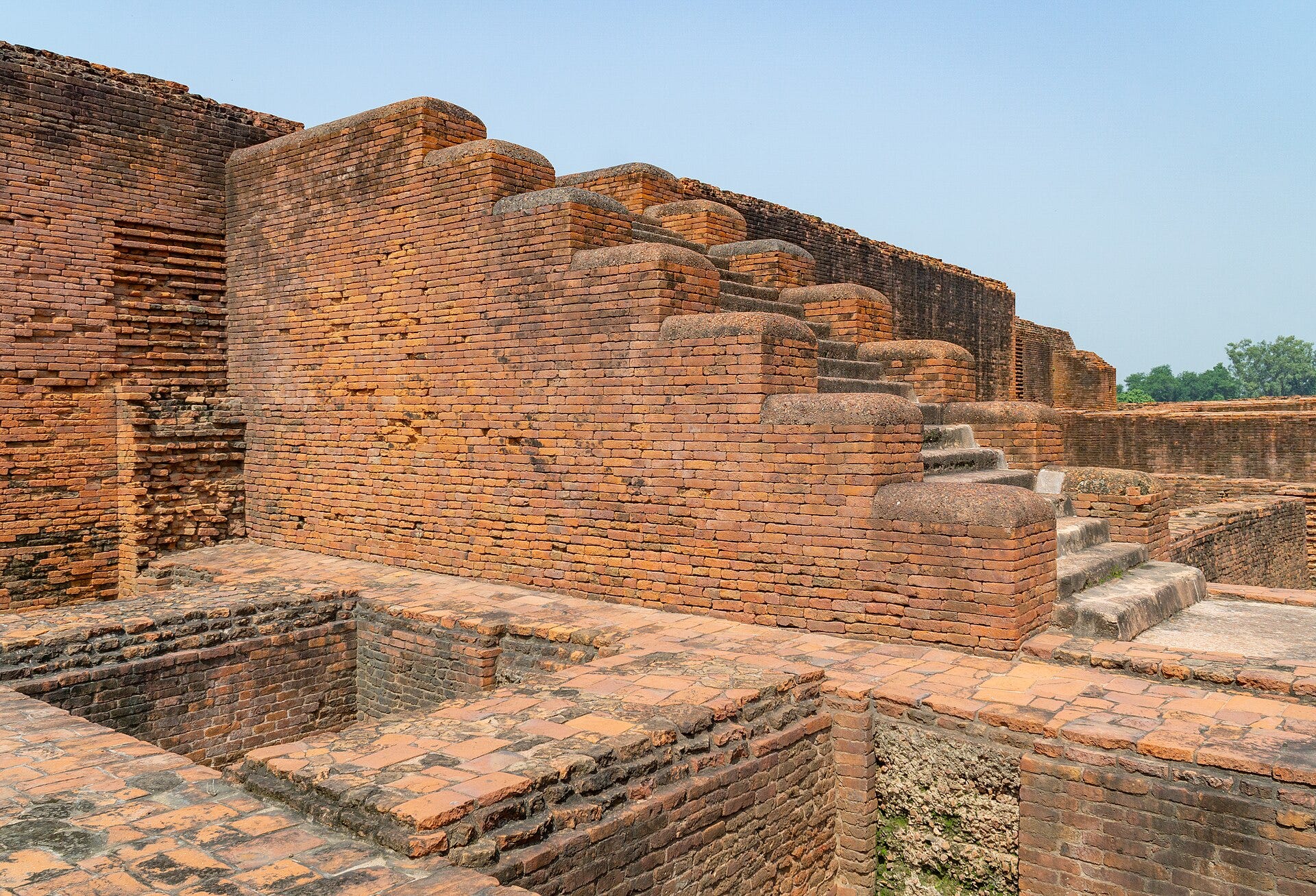
When a Tibetan monk named Dharmasvamin reached Nalanda in 1235, the oldest center of higher learning in India had shrunk to seventy students and an abbot past ninety. The abbot was a master of grammar named Rahula Shribhadra, and the Tibetan became his pupil.
Nalanda had been a Buddhist place of learning since the fifth century, in what is now the state of Bihar, in northeastern India. For some eight hundred years, monks came to study there from as far away as China.
Around 1200, Muslim armies raiding Bihar probably sacked it, and thousands of its monks fled. Nalanda had once counted 98 monasteries, the halls where its monks lived and studied, and Dharmasvamin found only two still fit to use.
The old abbot had refused to leave. He lived on gifts from a local king and from Jayadeva, a wealthy layman of the nearby town of Odantapuri who followed his teaching. Jayadeva even paid for a lamp so that the old man could read at night.
In the summer of 1235, the commander of a Muslim garrison stationed at Odantapuri, about eight miles to the east, suddenly threw Jayadeva in prison. In his cell Jayadeva learned that a new attack on Nalanda was being planned, and he got a warning through to the abbot.
All seventy students fled. The abbot told his Tibetan pupil to go too: "If you do not flee away, you would be killed." Dharmasvamin did flee, with the old man on his shoulders, along with some rice, sugar and a few books, and carried him to a temple southwest of the monastery.
About 300 armed soldiers reached the temple, did not find them and went back. When Dharmasvamin left for Tibet in 1236, the abbot told him, "We shall not meet in this life." Nalanda stopped teaching before the century was out, and its ruins became a World Heritage Site in 2016.
At a Glance
Who: Dharmasvamin, a Tibetan monk, and his teacher Rahula Shribhadra, abbot of Nalanda
Founded: Fifth century
Place: Nalanda, in the state of Bihar, northeastern India
Scene: 1235, a pupil carries his teacher of more than ninety away from 300 soldiers
Where to see it today: The ruins of Nalanda, a World Heritage Site since 2016
11. University of Salamanca (1218)
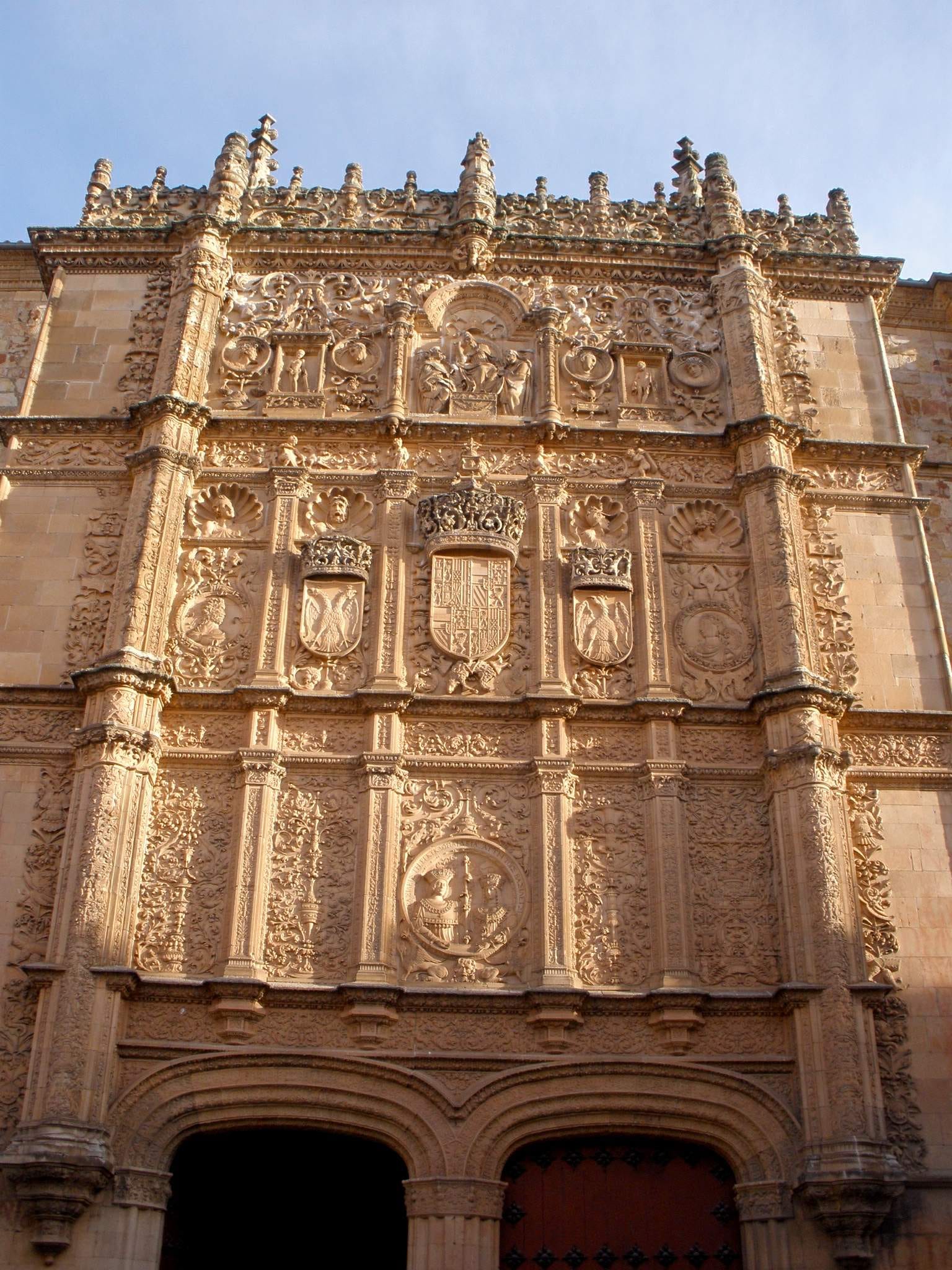
On March 27, 1572, the Inquisition, the Church court that hunted heresy in Spain, arrested Fray Luis de León. He was a friar who taught theology at the University of Salamanca, and two of his fellow professors had been seized earlier that year. Locked in the Inquisition's prison at Valladolid, he would not teach a class again for almost five years.