
Stone can last for millions of years, but leather, wood, cloth and food almost always rot, and most cloth that archaeologists dig up is less than 2,000 years old. The handmade things that beat those odds survived in rare places, such as a cave too dry for leather to rot or a bog that kept wood from the air. Some are older than our own species, and a few sat unnoticed in storage for decades.
Cool Stories About History is a newsletter to learn history the fun way.
Join free and get:
6 new stories a month, straight to your inbox
The full archive of stories
Comment, ask questions, and chat with other readers
How These Were Chosen
Only things made on purpose count here, so there are no living trees, rocks or meteorites. Each object was shaped by people or by earlier human ancestors. Each is among the oldest known things of its own kind, whether a shoe, a flatbread or a flute.
That is why a Roman bottle from AD 325 sits beside stone tools 3.3 million years old. Most of these records were set in 2008 or later. The order follows fame, from the least familiar object to the most famous, and has nothing to do with age.
12. The Areni-1 Shoe (About 3500 BC)
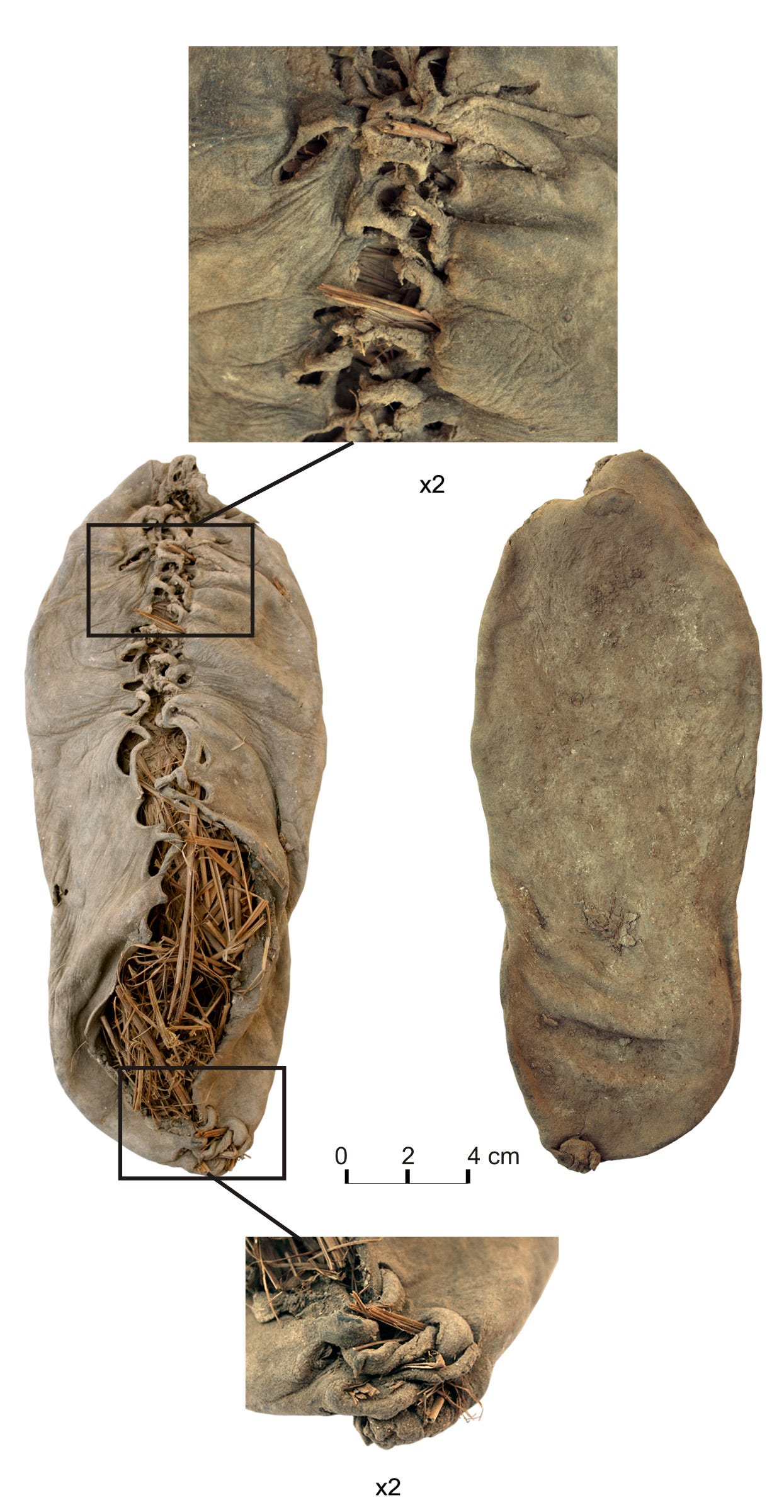
On September 16, 2008, Diana Zardaryan, a 27-year-old Armenian graduate student, was clearing a clay floor in a cave called Areni-1 in Armenia's Vayots Dzor province. She uncovered a shallow pit with a broken clay pot turned upside down in it and two wild goat horns nearby. She reached into the pit, felt something soft and took it for a cow's ear.
It was a whole leather shoe, lying upside down at the bottom of the pit with its laces still in place. "Nobody believed me," she said later. "Even the shoe-laces were preserved."
The Areni-1 shoe had lasted because the air in the cave is so dry that leather and grass do not rot there. Labs in Oxford and California spent more than 18 months dating it by radiocarbon, a method that measures the carbon left in anything that was once alive.
The answer was about 5,500 years. That puts the shoe around 3500 BC, in the Copper Age, when people in the region worked copper but did not yet make bronze.
No older leather shoe has been found anywhere. It is a few centuries older than the shoes of Ötzi, the Iceman found in the Alps. Some sandals from Arnold Research Cave in Missouri are older, but they are not leather shoes.
A leather thong threaded through eyelets laced it over the top and the back, and someone had packed it with loose grass, probably to hold its shape. At 9.6 inches long, it is closer to a woman's foot than a man's, though the wearer is unknown.
The leather is worn at the heel and at the big toe. After 5,500 years, the shoe still holds the shape of one person's right foot.
At a Glance
Object: A laced leather shoe stuffed with grass
Made: About 3500 BC, in the Copper Age
Found: September 16, 2008, by Diana Zardaryan
Place: Areni-1 cave, Vayots Dzor province, Armenia
Size: 9.6 inches long, molded to a right foot
11. The Lomekwi 3 Stone Tools (About 3.3 Million Years Ago)

A wrong turn on July 9, 2011, left an archaeological team led by Sonia Harmand stuck in a dead-end riverbed west of Kenya's Lake Turkana. While they looked around, a local man named Sammy Lokorodi spotted broken stones on the next hill and radioed her. Those stones, now called the Lomekwi 3 stone tools, had been shaped half a million years before the oldest known human fossil, so who made them?