
In 1999 two looters in eastern Germany pulled a bronze disc out of a hill with a pickaxe and kept no record of the soil around it. That soil is what usually dates a buried object. Many ancient objects have reached museums with half their story lost, and no text from their own time explains them. Laboratories have solved some of these puzzles, and others are still open.
Cool Stories About History is a newsletter to learn history the fun way.
Join free and get:
6 new stories a month, straight to your inbox
The full archive of stories
Comment, ask questions, and chat with other readers
How These Were Chosen
Every object here is real and has been studied by museum or laboratory specialists. For each one, a basic question has been argued over: what it was for, who made it, how it was made, or how old it is.
Some of those arguments are settled and others are still open. Objects that no researcher has ever been able to examine, such as stones said to carry alien writing, were left out, and the most famous come last.
12. The Nebra Sky Disc (About 1600 BC)
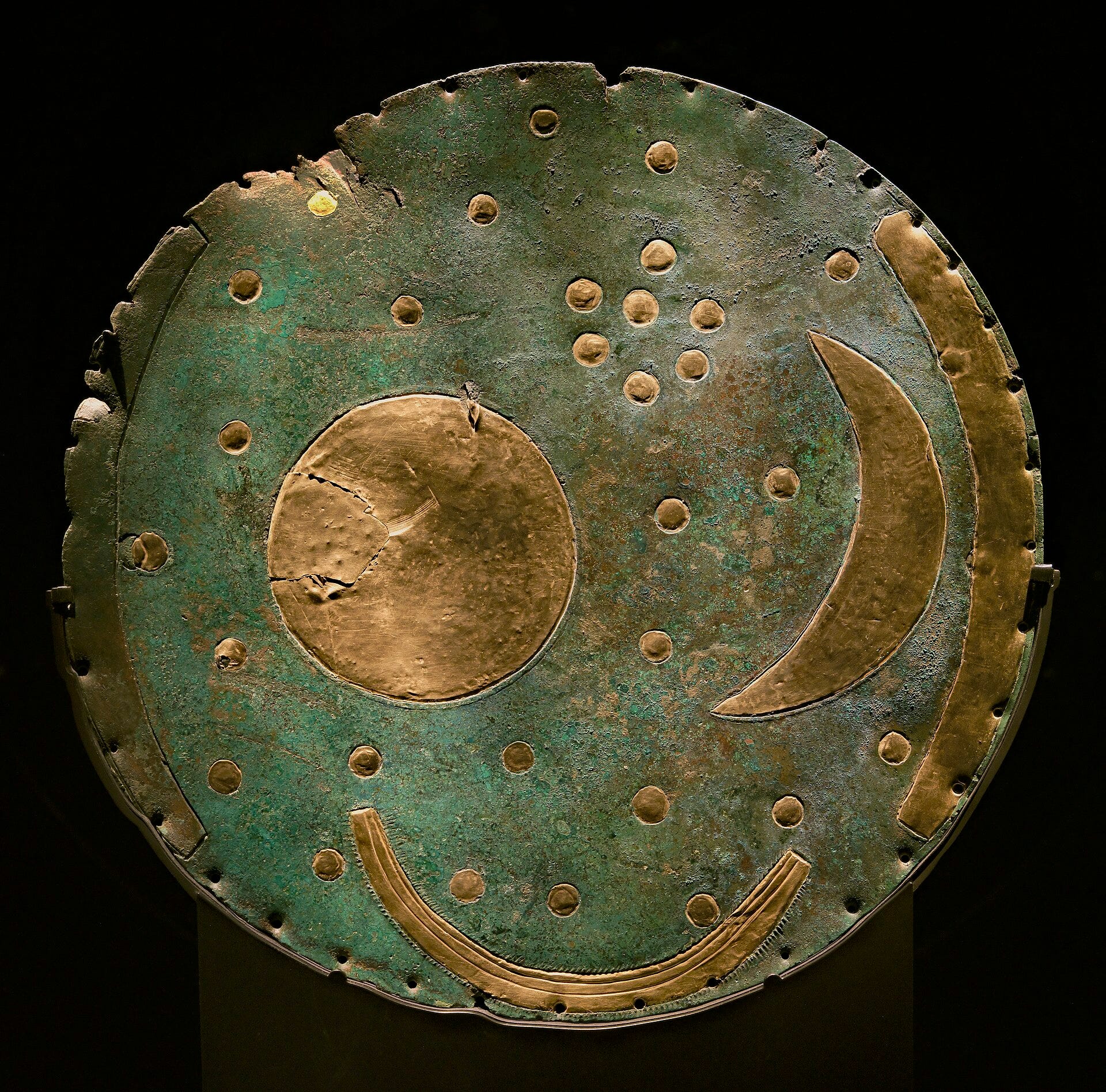
On July 4, 1999, two men with metal detectors were hunting for old military relics on the Mittelberg, a hill near the town of Nebra in eastern Germany. One detector gave a signal, and its owner dug with a firefighter's pickaxe, damaging a bronze disc on the way up. The two men took it for an old bucket lid.
That same day they called a dealer who bought such finds, and the next day he paid them 32,000 Deutschmarks for the disc and the bronzes buried with it. He scrubbed everything with steel wool. No museum would buy, because the law of Saxony-Anhalt, the state where the hoard was dug up, makes such finds public property.
The owner of a restaurant then brokered a second sale, to a private collector, for 236,000 marks. In 2001 the archaeologist Harald Meller became director of the state museum in Halle. He was shown photos of the disc, its new owners asked 700,000 marks, and Meller decided to play the buyer.
On February 23, 2002, he met the collector and the restaurant owner at the Hilton Hotel in Basel, Switzerland. He staged an authenticity check with chemicals a chemist had prepared for the show, then went to the toilet and called the police on his mobile phone. Both sellers were arrested at the table.
Five months later the dealer named the looters and led Meller to the real findspot, and the two men received suspended sentences in 2003. The disc they had dug up, called the Nebra Sky Disc, carries gold shapes of the sun, moon, stars and a boat on a night voyage across the sky. No older image of the sky that shows real objects in it is known anywhere in the world.
In 2020 two archaeologists argued that the disc belonged to the much later Iron Age. A team of 13 researchers answered that no Iron Age art shows such a boat, and that a sword hilt buried with it dates to about 1600 BC. The team also traced the disc's copper to the Salzburg region of Austria and its gold to a river in Cornwall, in England.
The age is now settled at about 3,600 years, and what the disc was used for is still argued. Only its last use is certain. Someone buried it on the Mittelberg with two swords, two axes, two spiral arm rings and a bronze chisel, as an offering.
At a Glance
Object: A bronze disc with a gold sun, moon, stars and boat
Made: About 1600 BC
Found: July 4, 1999, by two men with metal detectors
Recovered: February 23, 2002, at the Hilton Hotel in Basel
Where to see it today: The state museum in Halle, Germany
11. The Lycurgus Cup (Fourth Century AD)
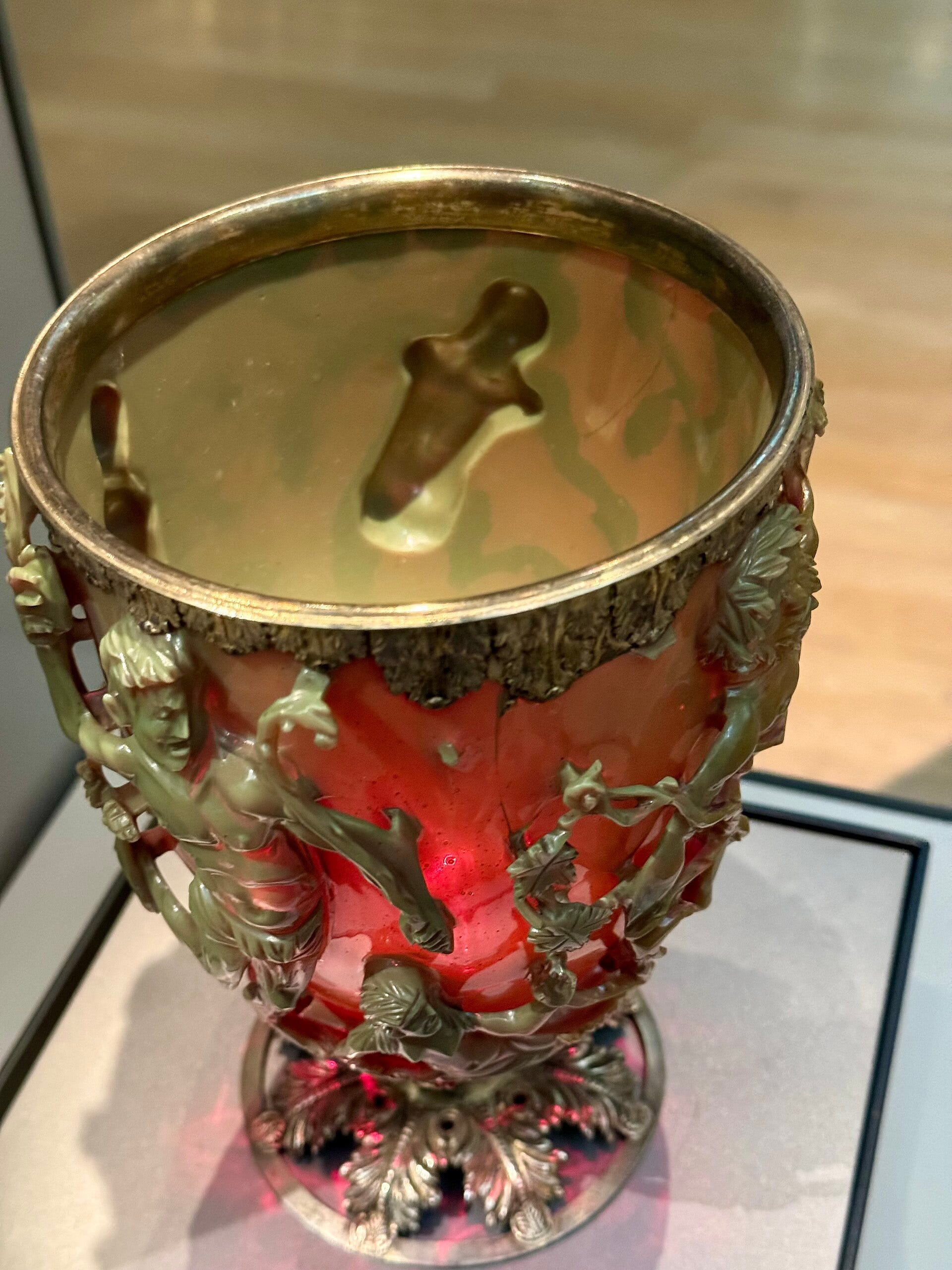
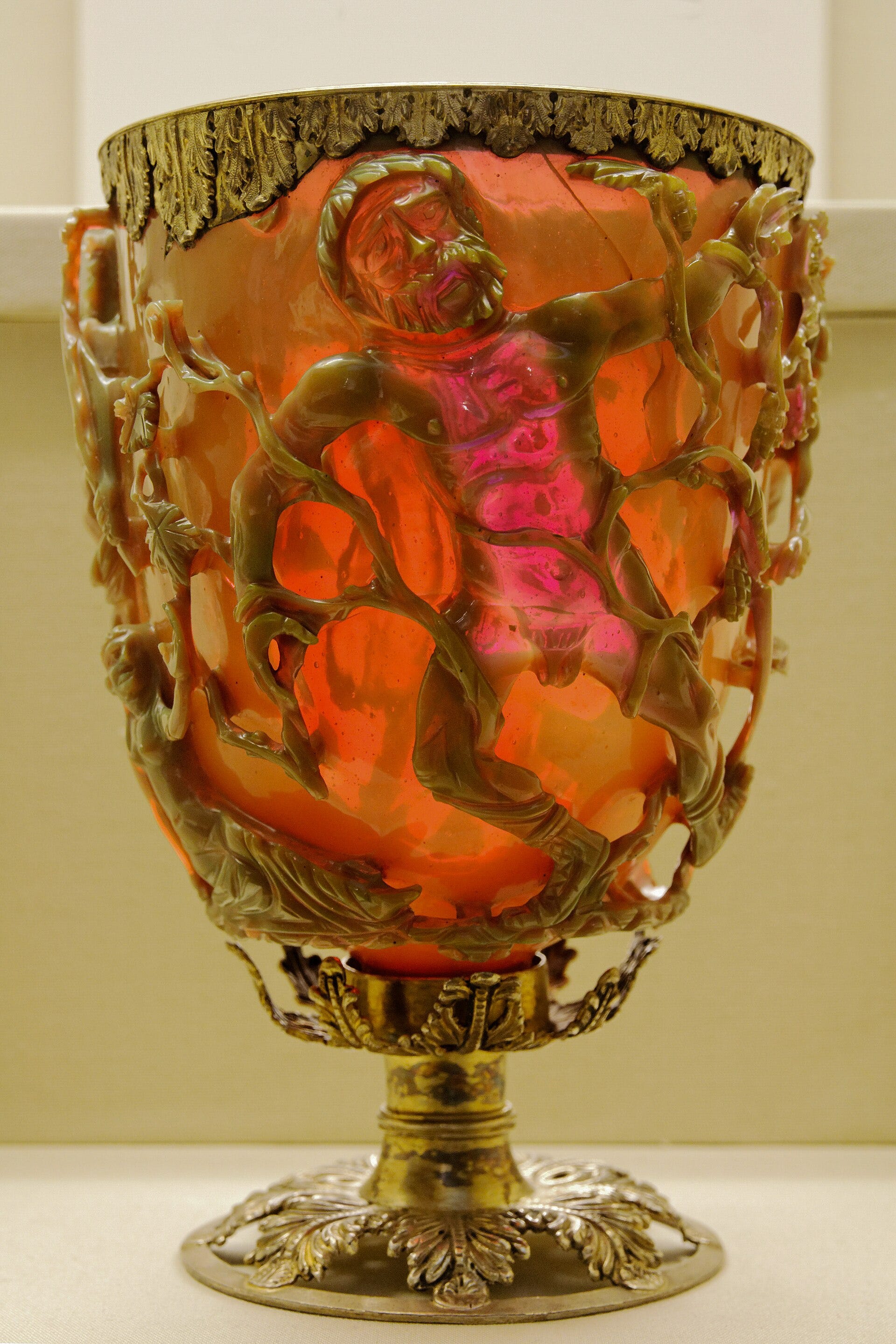
The Lycurgus Cup is a Roman glass cup decorated with a king of Greek myth, Lycurgus, dying in the grip of a vine. In ordinary light its glass looks jade green, and lit from behind it glows ruby red. The British Museum bought it in 1958, and for more than thirty years nobody could say how Roman glass did that.