
In 1382, a London embroiderer who had cheated players with a rigged checkerboard was sentenced to an hour in the pillory, with his false boards set beside him. England then had few prisons, because they cost too much to build and to run, and trials were quick. Courts struck at the body instead, and many sentences let the crowd see the crime in the punishment.
Cool Stories About History is a newsletter to learn history the fun way.
Join free and get:
6 new stories a month, straight to your inbox
The full archive of stories
Comment, ask questions, and chat with other readers
How These Were Chosen
A punishment, here, is a penalty that a court, a ruler or the Church imposed for an offense, even when it went wrong. One man lived through his own hanging. Another was sentenced to the fire while far from home and never caught.
Every case is known from written records, down to a sow hanged in Normandy. Eleven took place between 695 and 1483, from Wales and London to Constantinople and Baghdad, and the last in Kyoto in 1594. The cases grow more famous one by one, up to William Wallace, the Scottish rebel of the film Braveheart.
12. Roger Clerk (1382)

In May 1382, a man rode through the middle of London on a horse with no saddle, to the sound of trumpets and pipes. Around his neck hung a scrap of parchment and a whetstone. A glass urine flask hung on his chest, and another on his back.
The rider was Roger Clerk, from Wandsworth, near London, and every object on him was part of his sentence. Earlier that year he had sold a cure to a Londoner whose wife, Johanna, lay sick with a fever.
The cure was an old leaf of parchment taken from some book, scratched across and rolled in a piece of cloth of gold. Clerk hung it around her neck and promised to heal her. Her husband paid him 12 pence on account, with more to come once she was well.
The charm did nothing for her, and on May 13, 1382, Clerk stood at the Guildhall before the mayor and aldermen who governed London. The charge was deceit and falsehood. A city rule barred anyone from treating the sick without experience and approval, and Clerk knew nothing of medicine and could not read.
The court asked him what was written on the parchment. He said it was a good charm for fevers and recited a Latin prayer, but not one of those words was on the page. The court told him that a straw under his foot would cure a fever just as well, and Clerk agreed.
The court gave its reason plainly: the people must not be deceived and wronged by such ignorant men. The parchment around his neck was the fake cure itself. The whetstone hung beside it, in the words of the sentence, "for his lies."
At a Glance
Who: Roger Clerk of Wandsworth, a man posing as a physician
Date: May 13, 1382
Place: The Guildhall, London
Why: Deceit and falsehood, for selling a cure without knowing any medicine
Punishment: Led through London on a horse without a saddle, with the parchment, a whetstone and two urine flasks hung on him
About This Punishment
What were public punishments in medieval times?
In England, drunkenness, public disorder, prostitution and cheating at the market were usually punished by a spell in the stocks, the pillory or the cucking stool. These punishments combined pain and discomfort with public humiliation. A person in the stocks could be kept outdoors for several days, exposed to the weather and to the rubbish people threw.
11. William Cragh (1290)
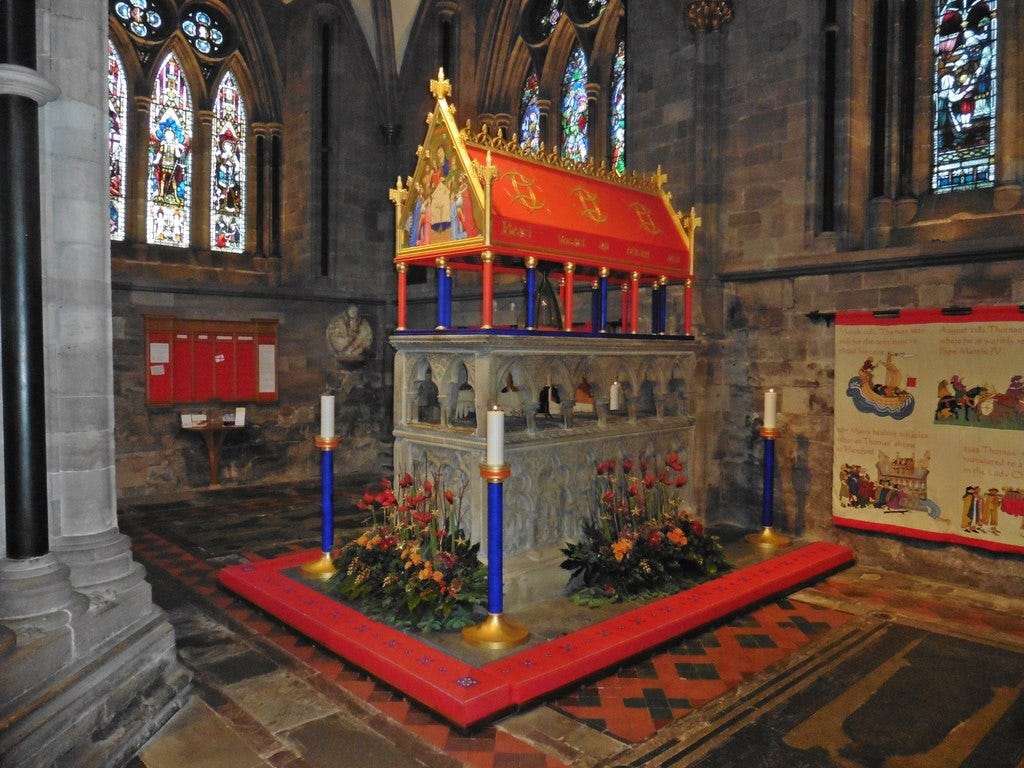
In 1290, on a hill outside Swansea, in Wales, an English lord hanged a Welsh rebel named William Cragh. He was left on the gallows until sunset and carried away as a corpse, and then he began to breathe again. Seventeen years later, envoys of the pope came to question him about it. Why would the pope care how a rebel had survived the rope?