

Learn History the fun way.
This is a preview. Paid subscribers get the full story.
You’ll also get:
4 new stories / month
The full archive
Comment, ask questions, DM me anytime
iPhone user? Subscribe at coolstoriesabouthistory.com, not via the app. Apple adds +30% to the price.
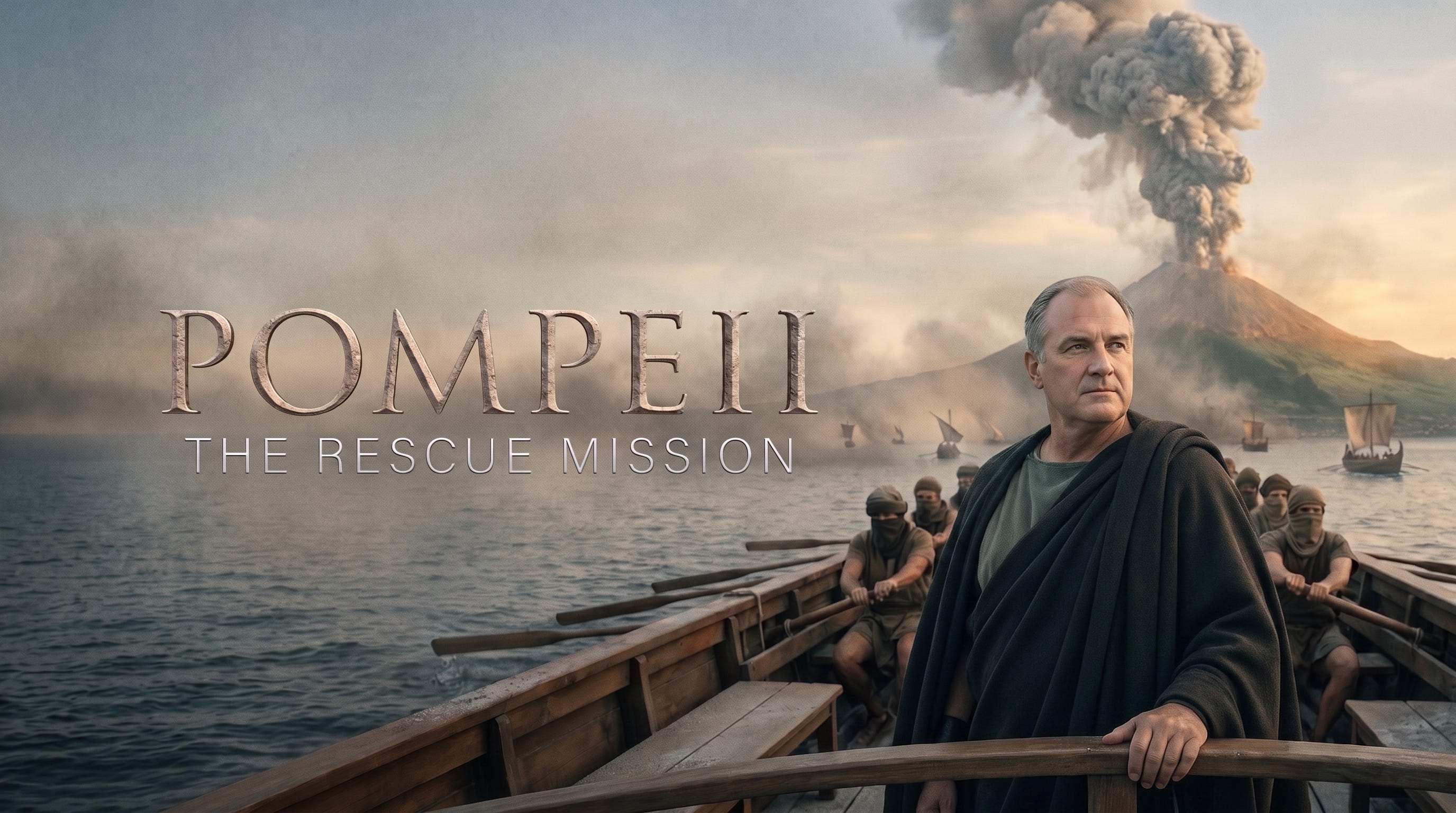
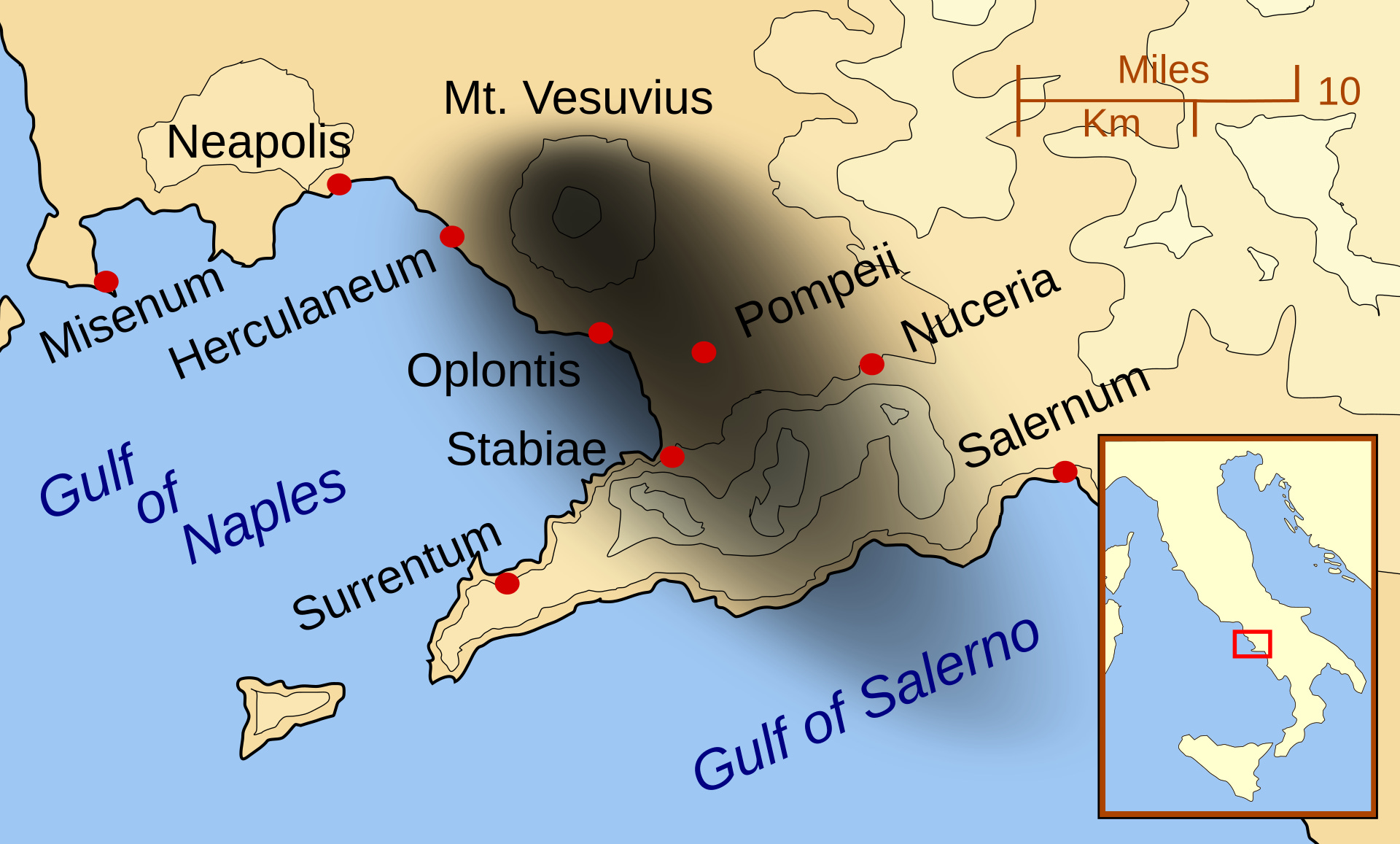
Misenum, on the Bay of Naples, August 24, AD 79.
Tablets open, stylus raised, a secretary trots behind a 55 year old man. Without slowing, the man dictates a note on harbor traffic as he walks.
His name is Pliny. He commands Rome's battle fleet, moored below.
A cold bath, a light meal taken half reclining, a reader at his side turning page after page. Pliny hates to lose an hour. Then he stretches out in full sun, a book unrolled on his chest, before going back in to read in the shade.
His nephew, Caecilius, 17, also lives in the house, with his mother, Pliny's sister. The uncle has given him an assignment: read Livy, the historian who told the whole story of Rome from its founding, and copy out extracts.
Over the boy's shoulder, Pliny reads, strikes out a line with the flat of the stylus, points to another higher up the scroll, and waits until it is copied before moving on.
For several days now, the earth has been trembling off and on. No one worries: in Campania, tremors come and go with the seasons.
Midmorning, a slightly stronger tremor sets the dishes ringing on the sideboards. Conversations pick up where they left off.
Around one in the afternoon, his sister hurries through the house, calls him from the doorway and pulls him from his reading: she has never seen anything like it in the sky, he must come and see.
Caecilius drops his scroll and follows. All three step outside and look up.
Above a mountain across the bay, about 18 miles away, a column of smoke is climbing into the sky, a straight, immense trunk that rises and then spreads into branches, like a pine.
At times the column is white, at times dirty and mottled, depending on how much earth and ash it is tearing up. No sound crosses the bay. It climbs in silence.
Pliny calls for his sandals, climbs to the best vantage point in the house, and looks for a long time without a word.
Then he comes down and gives his orders: ready a light ship, a fast one, just to make the crossing. He offers to take Caecilius along to see.
The boy declines. His extracts are not finished. The uncle does not insist and goes down toward the harbor, the secretary at his heels.
Rectina's Note
Pliny is at the bottom of the steps when the bay trembles again, a shock harder than any before it, running from one end of the coast to the other.
Tiles slide from roofs. Inside the houses, people steady the amphorae against the walls.
On the harbor road, a messenger arrives, out of breath, a note in his hand. He holds it out.
The note is signed Rectina, wife of a man named Tascius, and comes from a villa at the foot of the smoking mountain.
From there, no road leads out anymore; the only escape is by sea. Rectina begs someone to come for her.
The messenger stays bent double, hands on his knees.
Pliny folds the note and sends the light ship away. His orders turn the whole harbor upside down: the quadriremes, his warships, are launched one after another.
He boards the first one himself, the secretary behind him, tablets clutched to his chest. On this coast, the villas nearly touch. Rectina is not the only one the sea can still save.
Straight at the column, the ships push on against a tide of fleeing sails. Everything afloat on the bay is running south or out to open water. Only the quadriremes head up toward the mountain.
Then the ash arrives. Warm at first, then hot, thicker with every stretch of sea, it falls on the deck. The rowers take it on the back of their necks.
Pumice stones follow, bouncing off the benches, then black stones, split and scorched by fire.
At last the sea itself gives way: the water turns shallow all at once, the surface covered with floating pumice and debris fallen from the mountain. The hull scrapes bottom.
Ahead, the shore is walling itself off with rubble.
At Misenum, Caecilius looks up from his scroll. The column is taller than when the ships left, and darker. Somewhere on the water beneath the smoke, his uncle is sailing toward it.
Uneasy, the boy goes back to his line.
On deck, the helmsman turns to Pliny. Where Rectina lives, he says, the sea and the wind make landing impossible. They must try another point on the coast, or turn back.
Pliny is silent for a moment, his eyes on the rubble closing off the shore, the ash falling between the two of them. The helmsman waits, hand on the tiller, facing the open sea.
One last time, Pliny looks at the barred shore, then at the helmsman.
"Fortune favors the bold. Make for the villa of my friend Pomponianus."