
Ancient writers told of a bronze bull in which Phalaris, a tyrant in Sicily in the sixth century BC, roasted his victims alive. Its designer, they added, was the first man to die inside it. That ending was a later addition to the story. Real inventors did die by their own machines, most of them in the early days of flight, when the person who designed a flying machine usually tested it himself.
Cool Stories About History is a newsletter to learn history the fun way.
Join free and get:
6 new stories a month, straight to your inbox
The full archive of stories
Comment, ask questions, and chat with other readers
How These Were Chosen
Each of the twelve men designed, alone or with partners, the machine or structure that killed him. All of them died while using it, testing it or working on it, between 1703 and 1930, and seven died in the air.
Two famous stories fail that test. The bull's designer dies only in later versions of the legend, and Dr. Guillotin, whose name the guillotine carries, did not design the machine.
The cases climb in fame, up to a tailor's jump from the Eiffel Tower in 1912.
12. Augusto Severo and the Airship Pax (1902)
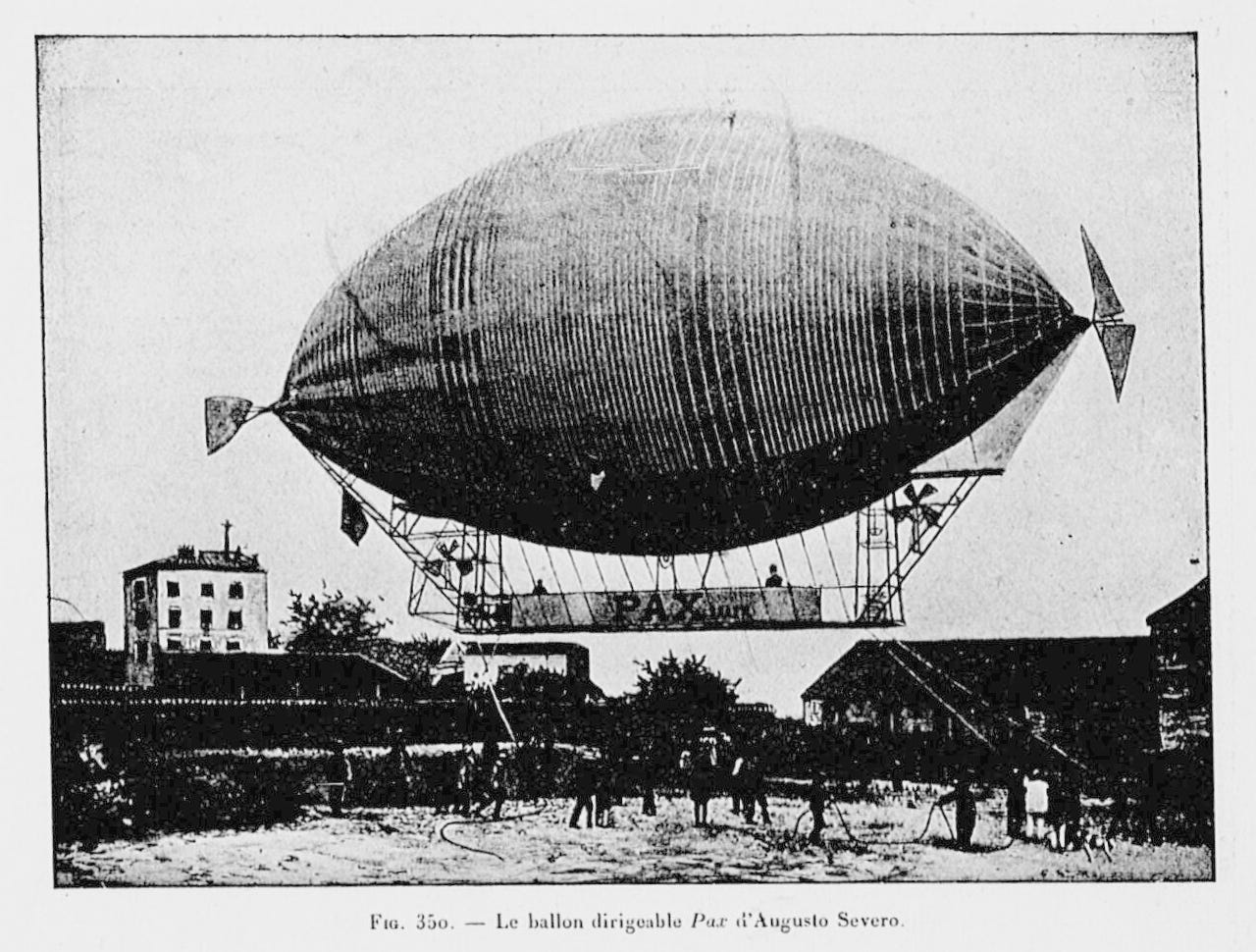
In the spring of 1902, an airship called the Pax sat finished in a hangar in Paris. Its designer was Augusto Severo, a Brazilian lawmaker. He had campaigned against slavery and worked as a journalist, then sat in his home state's assembly and in Brazil's national parliament.
Severo was not the only Brazilian building airships in Paris. Alberto Santos-Dumont, far better known today, had been flying his own airships over the city in those years.
The Pax hung from a huge bag of hydrogen, a gas lighter than air that catches fire very easily. Engines turned its propellers and pushed it wherever its pilot chose to go.
Its two gasoline engines sat only about 7 or 8 feet below that bag. For more than two weeks the airship waited for good weather, and some of the visitors who came to admire it worried about that small gap.
The sky finally cleared at five in the morning on Monday, May 12, 1902. Severo took his place at the front engine, and his French mechanic, Georges Saché, took the one at the back. A friend who was meant to come along stayed on the ground at the last moment.
At half past five the Pax rose from its hangar, bound for the army drill ground at Issy-les-Moulineaux, on the southwest edge of Paris. Severo's wife and friends set off by car to meet him there.
From the ground, people watched the engines start and the propellers turn, and the airship began to maneuver. Then the engines stopped. The two men were seen waving their arms as the Pax drifted toward the avenue du Maine, on the south side of the city.
A flame appeared, followed by a violent explosion that woke the neighborhood. The Pax was some 1,300 to 1,600 feet up. Within seconds its frame and gondola fell onto the avenue du Maine, near the corner of the rue de la Gaîté, and both men were killed.
As the Pax climbed, the hydrogen expanded. Some of it probably escaped through a valve at the bottom of the bag and reached a hot engine, across the gap the visitors had feared. A German inventor named Wölfert had died the same way in his own airship in 1897.
Back in Brazil, his home state of Rio Grande do Norte honored him with a law passed on August 28, 1903. It raised the town of Triunfo to the rank of city and renamed it Augusto Severo, the name it still carries.
At a Glance
Who: Augusto Severo, Brazilian lawmaker and aeronaut
Invention: The Pax, a hydrogen airship with gasoline engines, of his own design
Date: May 12, 1902
Place: Over Paris, wreck fell on the avenue du Maine
Outcome: The airship caught fire and exploded some 1,300 to 1,600 feet up, killing Severo and his mechanic, Georges Saché
11. Cowper Coles and HMS Captain (1870)
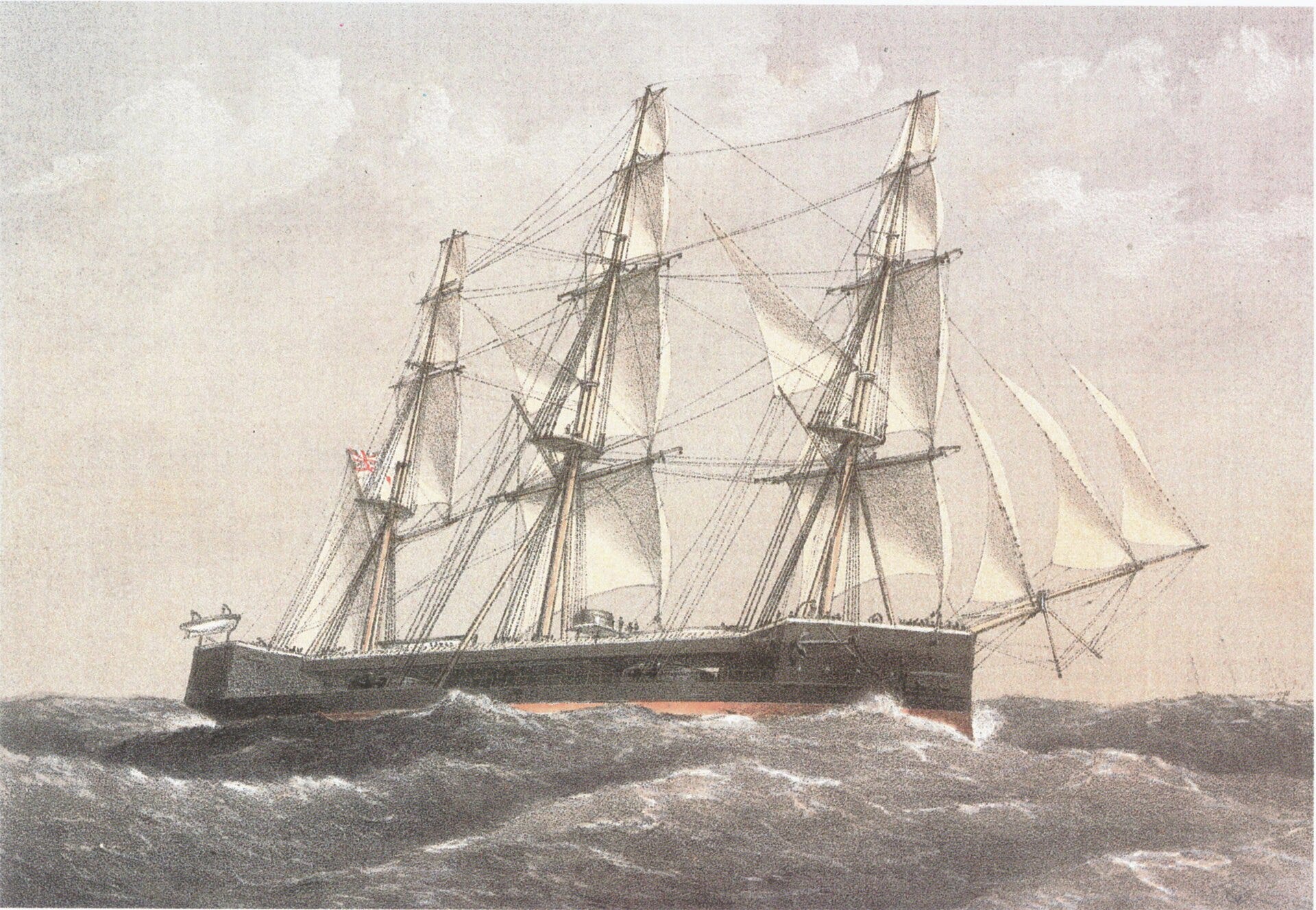
Cowper Coles was a captain in Britain's Royal Navy, and he designed a warship that the navy's own designers objected to. He forced it through with the help of newspapers and Parliament. One night in September 1870, with Coles aboard, a squall swept over the squadron she sailed with off the coast of Spain, and the older ships rode it out. Why did the newest warship in the fleet turn upside down in the same wind?