

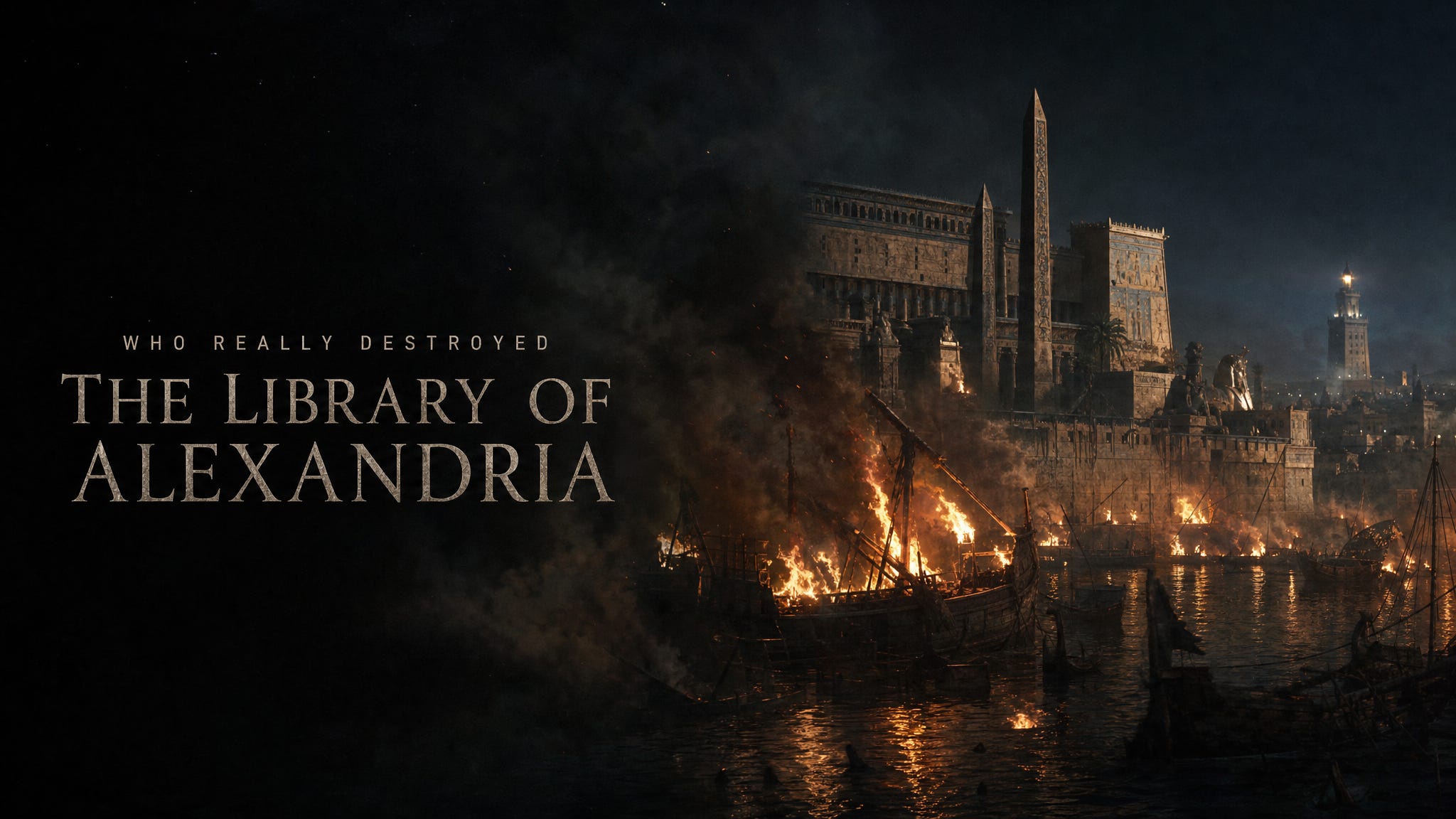
Learn History the fun way.
This is a preview. Paid subscribers get the full story.
You’ll also get:
4 new stories / month
The full archive
Comment, ask questions, DM me anytime
iPhone user? Subscribe at coolstoriesabouthistory.com, not via the app. Apple adds +30% to the price.
Imagine a single building that holds everything anyone has ever written down.
It has the charts of every coastline, the remedies of every doctor, the plays still staged today and the ones nobody remembers. Every line ever written is on a shelf somewhere inside.
Even today, with all our computers and all our AI, nobody can pull that much together in one place.
Yet this place once existed. It was called the Library of Alexandria.
Legend has it that the library held all the knowledge of the ancient world, and that losing it set humanity back a thousand years.
Legend says it vanished. What actually happened to it looks almost nothing like the story everyone tells.
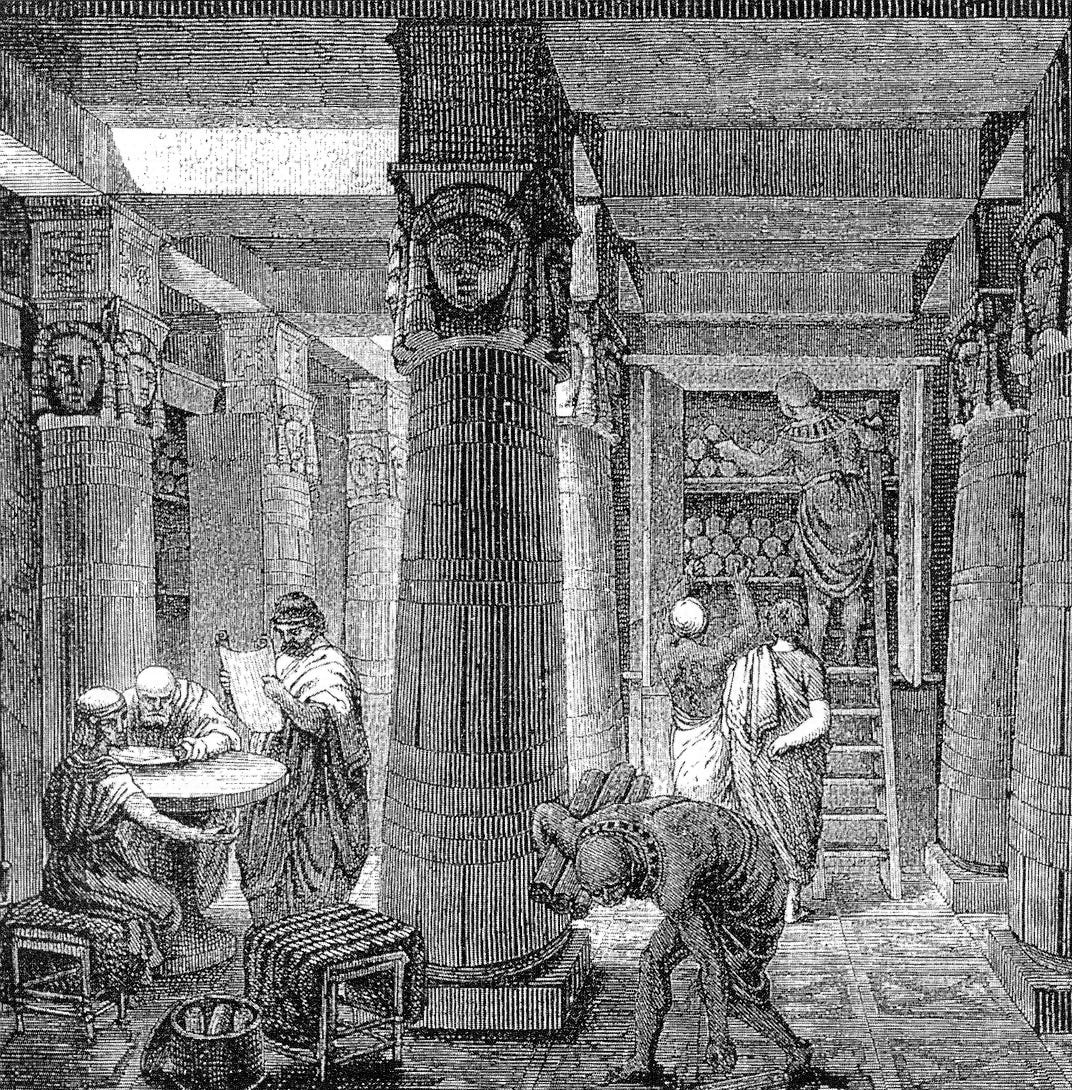
The Palace Windows
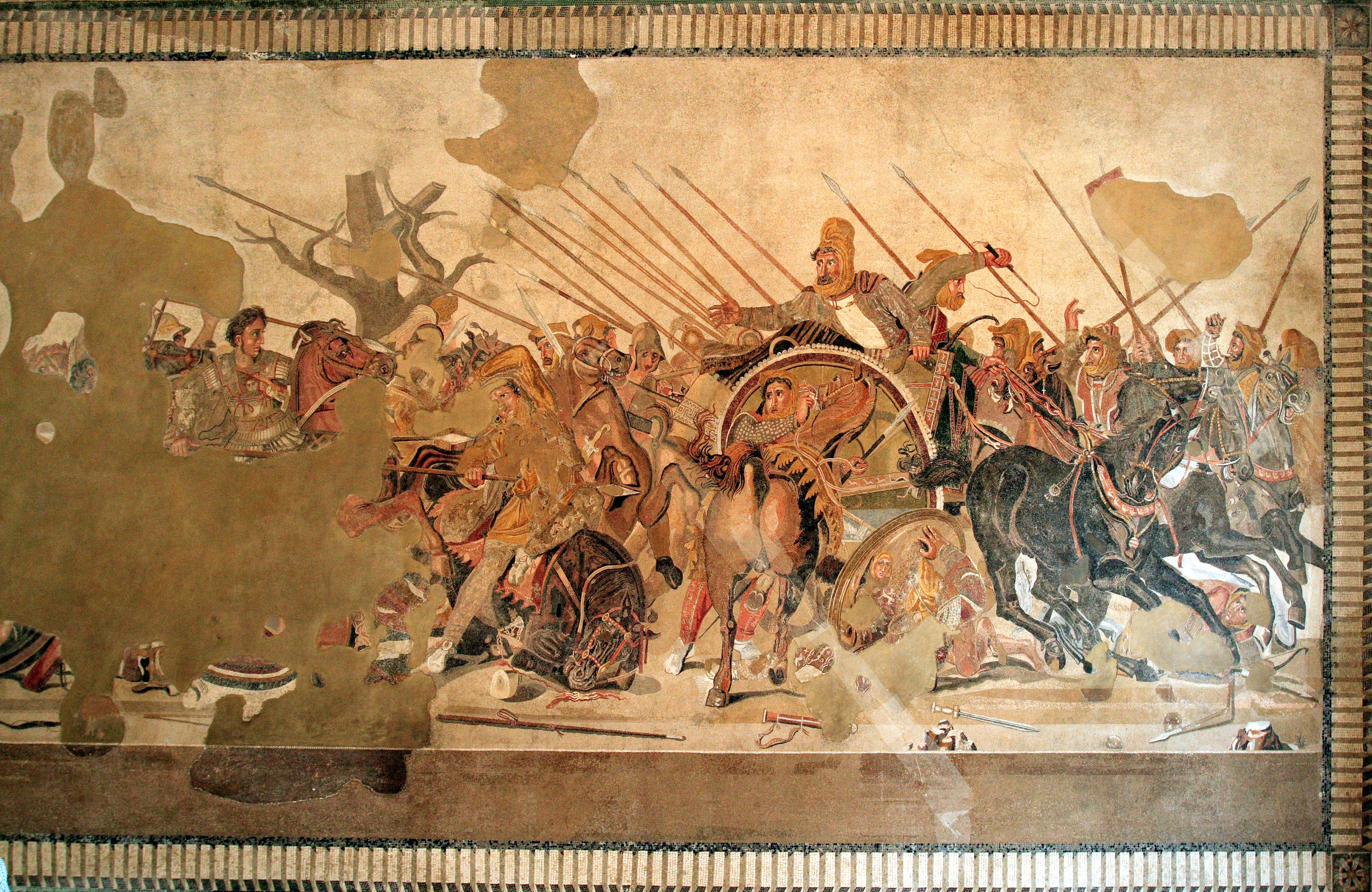
Alexander the Great rules a small kingdom on the northern edge of Greece when he sets out to conquer half the known world. He dies in 323 BC, young, far from home, without naming an heir.
His empire does not outlive him by a single season. His generals carve up what he conquered, then turn on one another.
One of them is Ptolemy, a boyhood friend of Alexander's who has fought beside him ever since. He takes Egypt for himself, the richest share of all.
On the coast he founds a new city, names it Alexandria after the dead man, and sets out to make it the most brilliant city in the Greek world, one that outshines every other capital combined.
To pull that off, he launches a project of almost absurd ambition: collect everything ever written, anywhere on earth, in one place.
He builds the library right inside the royal palace, just above the docks. From its windows you can see the masts of ships coming into the harbor, and watch the sails come down as they tie up.
Directly below, every one of those ships is boarded and searched. The king's men climb aboard, open the chests, and unroll whatever they find.
Every book that turns up is confiscated and copied. The original stays in the library. The copy sails away with the crew.
Within a few generations, this palace of books is the greatest center of learning the ancient world has ever seen, and scholars from all over the Mediterranean work there, fed and housed at the king's expense.
The Harbor District
Time passes, and Alexandria becomes exactly what Ptolemy wanted: the most brilliant capital in the Greek world.
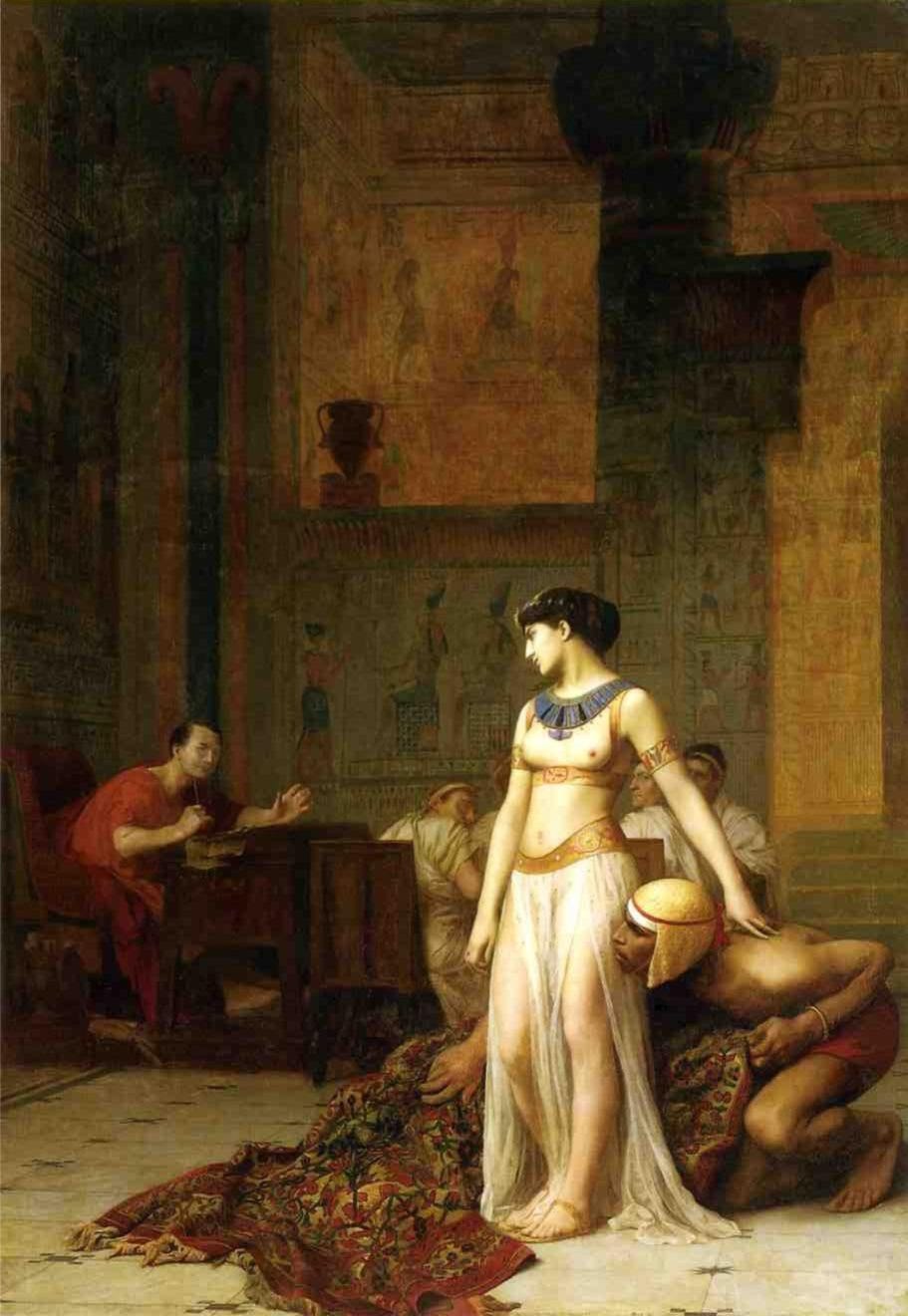
Rome, meanwhile, is tearing itself apart in a civil war, and one of its generals, Julius Caesar, chases his rival all the way to Egypt.
He lands in Alexandria and walks straight into somebody else's war. Two heirs are fighting over the Egyptian throne, brother against sister.
Caesar picks a side, and just like that he is trapped in the harbor district.
His ships are moored side by side along the docks, his soldiers dug in behind the warehouses. In the streets facing his men, an army far larger than his own is waiting.
His fleet is within the enemy's reach. Rather than hand it over, Caesar sets fire to it himself.
Torches land on the decks. The flames catch on the hulls, run up the rigging, climb the masts.
The wind is blowing in off the sea. It drives the fire onto the docks, and from the docks into the warehouses that line the harbor. Their roofs cave in one after another.
By daybreak, the harbor and everything around it is ash.
On the Dock
Decades go by. Alexandria gets back on its feet, richer and more crowded than before the fire, and merchant ships are once again coming and going in its harbor.
One morning, among the bales and the travelers coming ashore, there is a man. Strabo.
Strabo is a geographer, already respected across the Greek world for the accounts he brings back from his travels in Italy, Greece, and Asia Minor. He is here, as always, to write down what he sees.
He leaves the harbor, his legs still heavy from the crossing, and heads into the city. Porters are unloading amphorae on the docks, and merchants are calling out to passersby in several languages at once.
Strabo does not have to ask directions. He has walked these streets once before, and he knows them.
He picks up his pace, then stops short.
The Library of Alexandria is still there.
And that's just the beginning.
You will discover
What remains of it today, and where to see it.
Whether it is as immense as people say.
The texts lost with it, forever.
How the library really disappears.