
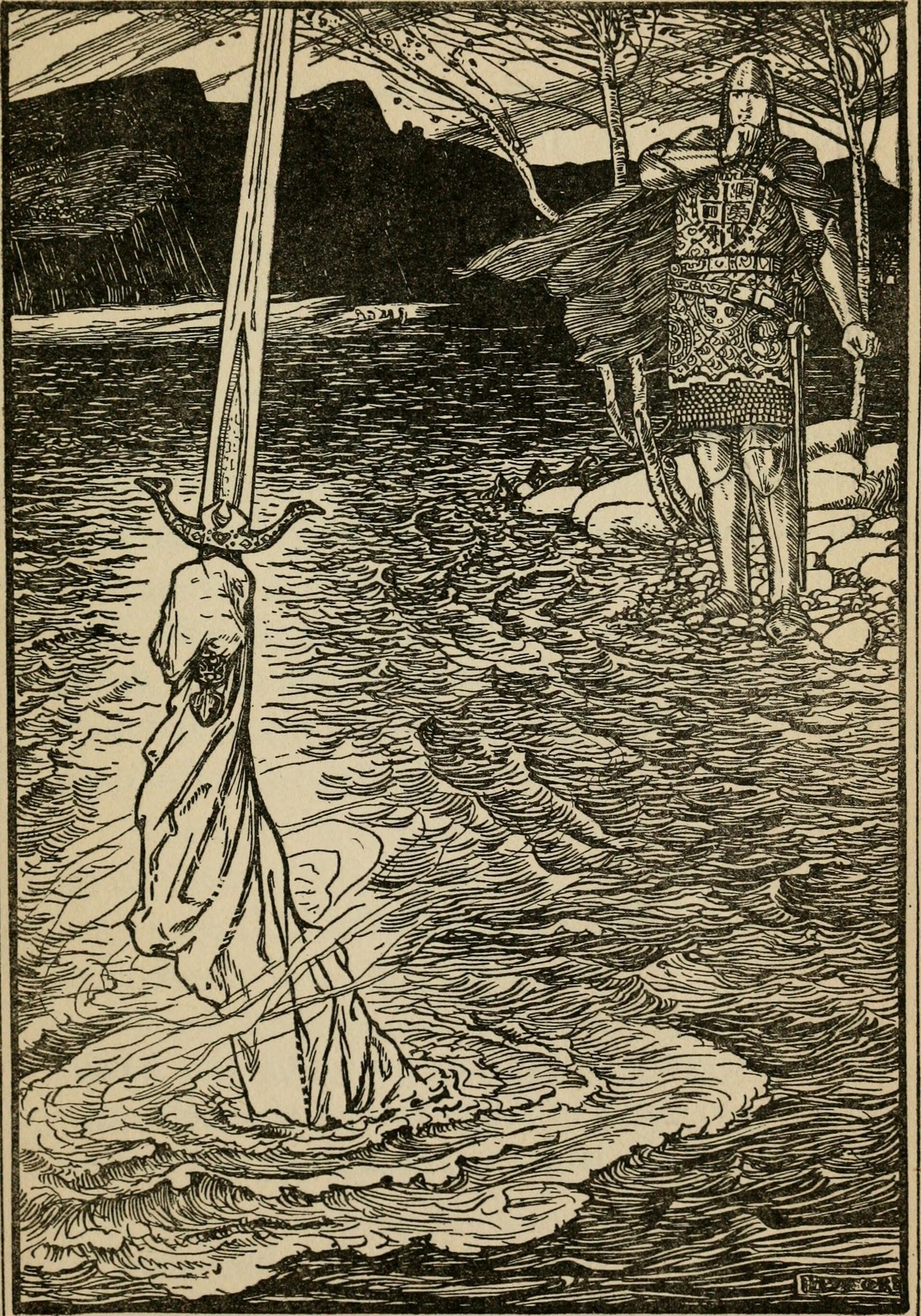
In Le Morte Darthur, an English romance of the 15th century, the boy Arthur becomes king by pulling a sword from a stone. Dying, he orders a knight to throw Excalibur into a lake, and an arm rises from the water, brandishes the sword three times and disappears with it. Excalibur never existed. The swords that do survive are famous for the people who made, carried, gave or seized them.
Cool Stories About History is a newsletter to learn history the fun way.
Join free and get:
6 new stories a month, straight to your inbox
The full archive of stories
Comment, ask questions, and chat with other readers
How These Were Chosen
Every sword here is real, and every one still exists. Eleven are single blades. The twelfth is a family of Viking Age swords that share one name forged into the steel.
Swords known only from legend were left out. Legend still comes in wherever a real sword carries one, from an ogre in Japan to a stubborn horse in Tuscany.
The order climbs toward the swords an American is most likely to have heard of, and it ends with one from the Civil War.
12. The Sword in the Stone of San Galgano (About 1180)
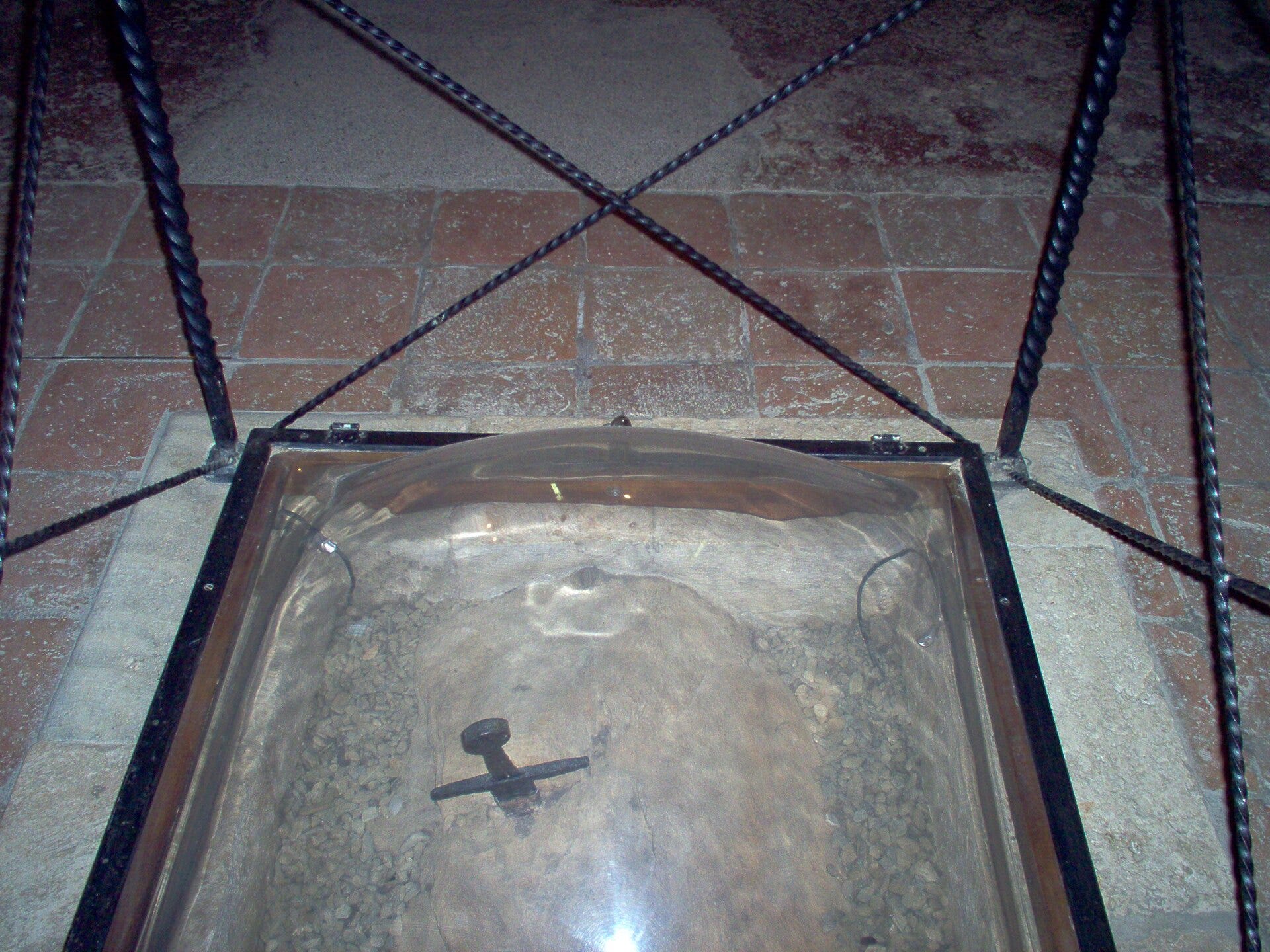
On a hilltop in Tuscany, in central Italy, a sword sticks out of the rock at the center of a round stone chapel. Only the hilt rises above the stone, and its crossguard makes the shape of a cross. Visitors often link it with King Arthur, but it belonged to a Tuscan knight named Galgano Guidotti.
Galgano was born in 1148 into a family of minor nobles in the town of Chiusdino. He fought for local lords while rival noble factions tore the region apart, and like his father he lived for war and pleasure.
After his father died, Galgano began to have dreams and visions. Several times he saw the Archangel Michael, and he resolved to give up his old life and live alone as a hermit. His mother tried to talk him out of it.
His horse, so the story goes, settled the matter. It stopped, refused to go on, and then carried him to the hill of Montesiepi. There Galgano drove his sword into a crack in the rock, and the weapon of a fighting man became a cross.
He lived about a year on the hill and died on December 3, 1181, at 33. Miracles were soon credited to him and written down for the Church's process to declare him a saint. About four years after his death, the local bishop began a round chapel over the saint's tomb and the sword, with the pope's approval.
The blade had never been welded to the rock. Until 1924 it could still be slid out of its crack, and after it was vandalized again and again, the parish priest sealed it in place with molten lead.
In 2001 a study of its metal found that it matched Galgano's century, with nothing pointing to a modern fake. A Plexiglas dome now covers it. Of the saint himself, his head is kept as a relic in a church in Chiusdino.
At a Glance
Who: Galgano Guidotti, a Tuscan knight who became a hermit and then a saint
Date: About 1180, a year before his death on December 3, 1181
Place: The hill of Montesiepi, Tuscany, Italy
Tested: 2001, the metal matched the 12th century
Where to see it today: The round chapel of Montesiepi, under a Plexiglas dome
About This Sword
What is the most famous sword in history?
Excalibur, the sword of King Arthur, is the best known, but it exists only in legend. Medieval writers first called it Caliburn, and later tales give it two origins, a sword pulled from a stone and a sword given by the Lady of the Lake.
11. Szczerbiec, the Coronation Sword of Poland (1939 to 1959)
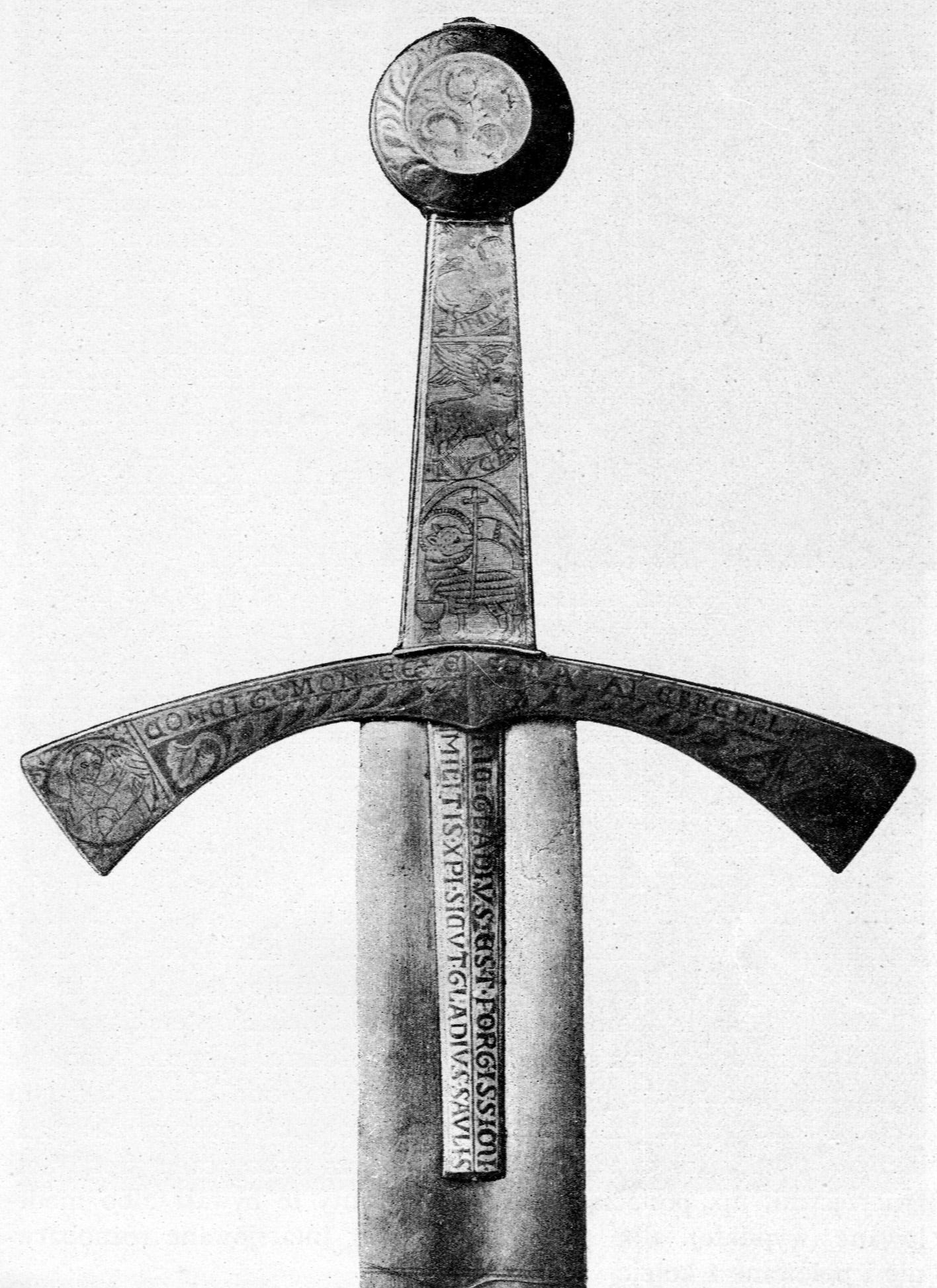
In the summer of 1940, as France fell, two museum curators crossed to England on an overcrowded ship. They kept Szczerbiec, the sword that had crowned the kings of Poland, within easy reach in case their ship went down. How had a nation's coronation sword come to be at sea, and would it ever go home?