
Astronomy and poetry are taught today as separate subjects in different departments, a split that came late, mostly during the 1700s and 1800s. Before it, one person could do serious work in both and in several other fields, and a few kept doing so long after. Polymaths, as such people are called, worked as far apart as Persia, China, India and the Andes, often for rulers who wanted their learning put to use.
Cool Stories About History is a newsletter to learn history the fun way.
Join free and get:
6 new stories a month, straight to your inbox
The full archive of stories
Comment, ask questions, and chat with other readers
How These Were Chosen
A polymath, in the sense used here, left work that specialists still recognize in at least two fields that are now taught apart. Wide curiosity alone was not enough, and neither were hobbies.
Each person also had to be caught at a moment fixed in time: a climb up a volcano, a letter to a viceroy, a skull on a table.
Nobody living was considered, and the twelve run from names little known outside their own countries to a face printed on American money.
12. Nasir al-Din al-Tusi (1258)
The Mongol commander Hulegu wanted to know what the stars said before he attacked Baghdad. He had been warned that the signs in the sky were bad for an attack on the caliph, the ruler who claimed to succeed the Prophet Muhammad. So he asked his Persian astronomer Nasir al-Din al-Tusi to measure the danger.
For about twenty years Tusi had lived in the mountain fortresses of the Isma'ilis, a branch of Shiite Islam, writing on astronomy, mathematics and ethics. When Hulegu's army reached their stronghold of Alamut in 1256, Tusi persuaded the young Isma'ili leader that resistance was pointless, and the Mongols kept him as their scientific adviser.
So when Hulegu asked about Baghdad, the answer was plain. The stars foretold no disaster, Tusi said, and the only great event to come was Hulegu sitting on the caliph's throne. Baghdad fell in February 1258, and Tusi was at the siege, carrying messages to the caliph.
The last caliph, al-Musta'sim, was killed on February 20. Tusi's reward was an observatory. Hulegu gave him the libraries of Iraq and of the Isma'ilis, with income from religious endowments in Baghdad, to build it at Maragha, then the Mongols' capital in today's Iran.
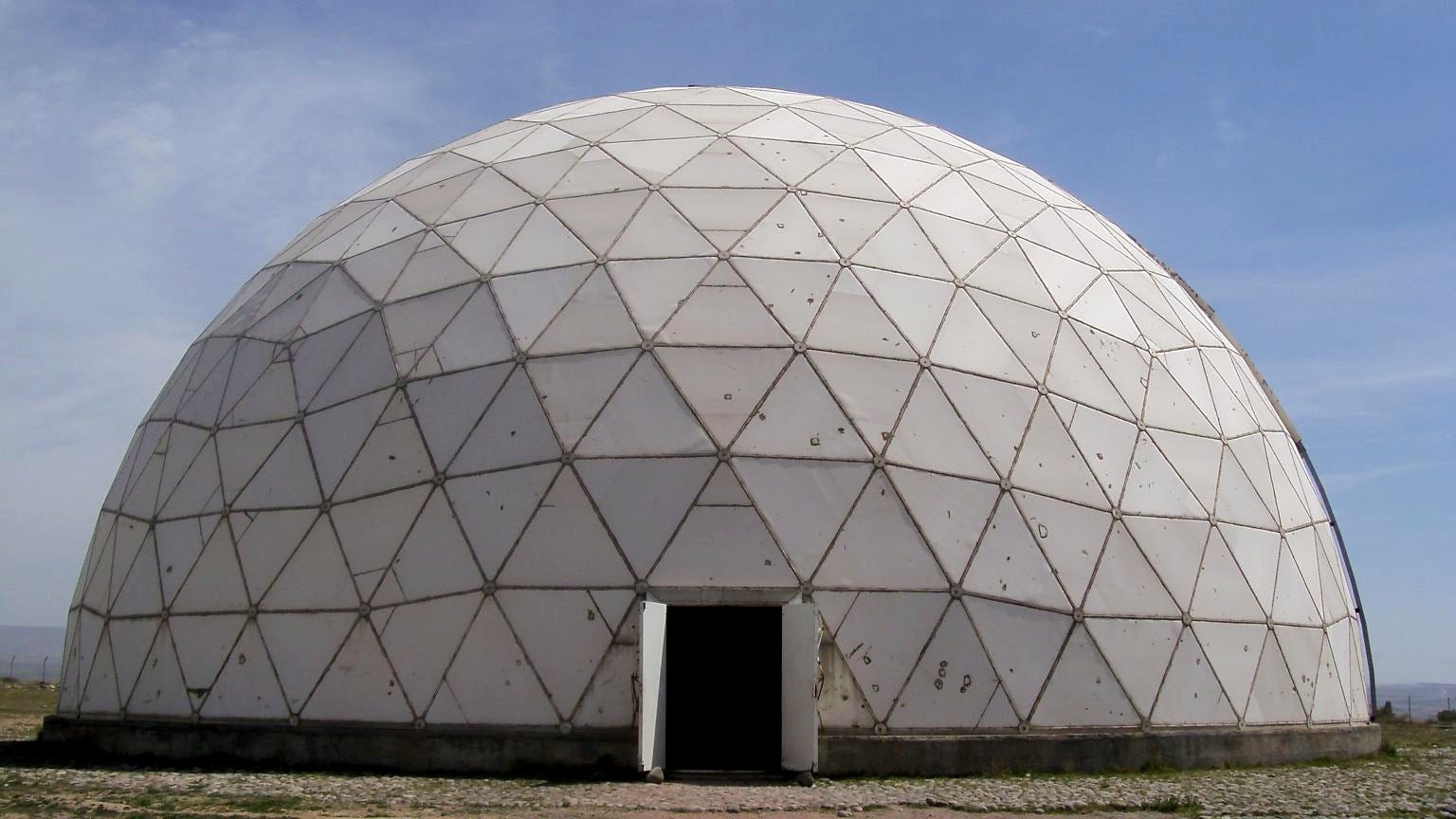
Work began in 1259, and the observatory was running by 1262. Chinese astronomers helped build and run it, and its instruments included a 4-meter copper quadrant, a quarter circle fixed to a wall to measure the positions of stars. Twelve years of observations there went into the Ilkhanic Tables, named after the dynasty Hulegu founded.
Tusi was a mathematician as much as an astronomer. He showed that a small circle rolling inside one twice its size moves a point on its rim back and forth along a straight line. The device, now called the Tusi couple, makes a straight motion out of circles alone, and the Polish astronomer Nicolaus Copernicus used the same theorem about 250 years later.
Tusi died in Baghdad in June 1274, and at his request he was buried near the tomb of the seventh Shiite imam, Musa al-Kazim. While digging the grave, the workmen are said to have found an unused burial chamber built long before for a caliph.
At a Glance
Who: Nasir al-Din al-Tusi, Persian astronomer, mathematician and writer on ethics
Before the Mongols: About twenty years in the Isma'ili fortresses, until Alamut fell in 1256
Baghdad: Taken by Hulegu's army, its last caliph killed on February 20, 1258
Observatory: Maragha, in today's Iran, begun in 1259 and running by 1262
Died: June 1274, in Baghdad
About This Polymath
Who is the greatest polymath of all time?
No prize or vote decides it, because no one can weigh a book of poems against a theory of the heavens. The name given most often is Leonardo da Vinci, a painter whose genius also rested on hands-on experiment. On the test of work that crossed fields and lasted, Tusi has a strong claim, since his geometry reached Copernicus about 250 years later.
11. Émilie du Châtelet (1749)
The French marquise and physicist Émilie du Châtelet went to Paris in February 1749 to finish the great book of her life. She was 42, pregnant and dreading the birth. The book was a French translation of Isaac Newton's Principia with her own commentary, and it was not done.