
In 1792, under the Royal Navy's Articles of War, a sailor who could have stopped a mutiny and did nothing was as guilty as an active mutineer. Armies and navies ranked mutiny among the gravest crimes, above all at sea. Men took the risk anyway. Some were hanged within days, and others were cleared generations later, long after their deaths.
Cool Stories About History is a newsletter to learn history the fun way.
Join free and get:
6 new stories a month, straight to your inbox
The full archive of stories
Comment, ask questions, and chat with other readers
How These Were Chosen
A mutiny is open defiance of military or naval authority by two or more people. The word also covers captives who seize the ship carrying them.
Each of these twelve cases has a documented cause and a documented ending. They run from 326 BC to 1944, on land and at sea, and climb from the least familiar to the most famous. Two stretch the definition: an alleged plot punished before anything happened, and a lone soldier who attacked his officers.
12. The Singapore Mutiny (1915)
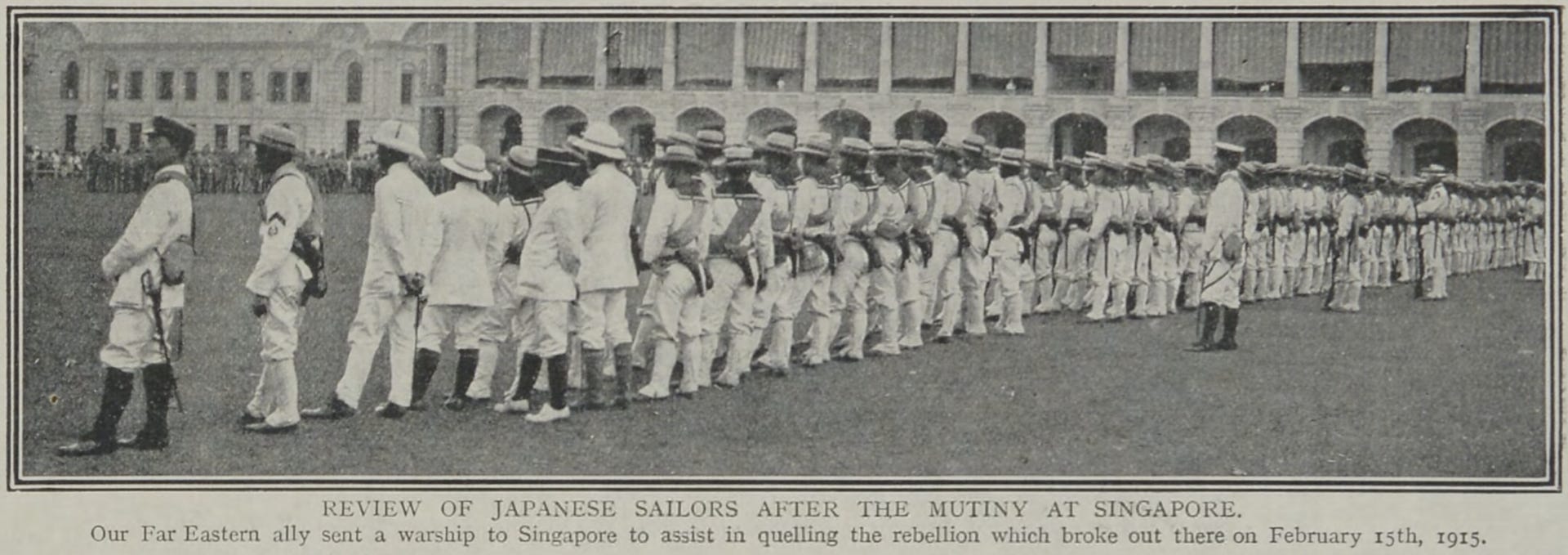
A single rifle shot, fired shortly after 3 p.m. on February 15, 1915, began the Singapore Mutiny. It rang out at Alexandra Barracks, in what was then a British colony. It was the last day of the Chinese New Year holiday, and most officers and men were on leave.
The shot came in the middle of World War I. The men who rose were sepoys, Indian soldiers serving under British officers. Half of the 5th Light Infantry regiment took part.
The regiment was Muslim and due to leave for Hong Kong. Rumors said it would be sent to fight Turkey, Germany's ally, and for these soldiers that meant fighting fellow Muslims. Propaganda had also reached the barracks from the Ghadar Party, an Indian independence movement based outside India.
Two men had fed the anger. Kassim Mansoor was a Muslim coffee-shop owner from Gujarat in western India, and he received sepoys at his bungalow and urged them on. The sepoys also guarded sailors captured from the German warship Emden, and Julius Lauterbach, an officer among those prisoners, encouraged them.
Once the shooting began, the mutineers freed the German prisoners at Tanglin Barracks and invited them to lead the revolt. Some of the Germans used the confusion to escape. Sailors from Japanese, French and Russian ships, all allies of Britain, landed to help the police and local volunteers.
The fighting and the hunt for the last mutineers lasted about ten days. They left more than 40 British soldiers and civilians dead, along with five local residents. Over 200 sepoys were then tried by court-martial, a military court.
The punishment was carried out in the open. Kassim Mansoor was hanged for treason on May 31, 1915, and 47 mutineers were executed, most of them outside Outram Prison. One of those executions drew a crowd of 15,000.
At a Glance
Who: Sepoys of the 5th Light Infantry, a Muslim regiment of the Indian Army
Date: February 15, 1915
Place: Alexandra Barracks, Singapore
Cause: Rumors of being sent to fight Muslim Turkey, and independence propaganda
Ending: 47 mutineers executed, and Kassim Mansoor hanged on May 31, 1915
11. HMS Hermione (1797)
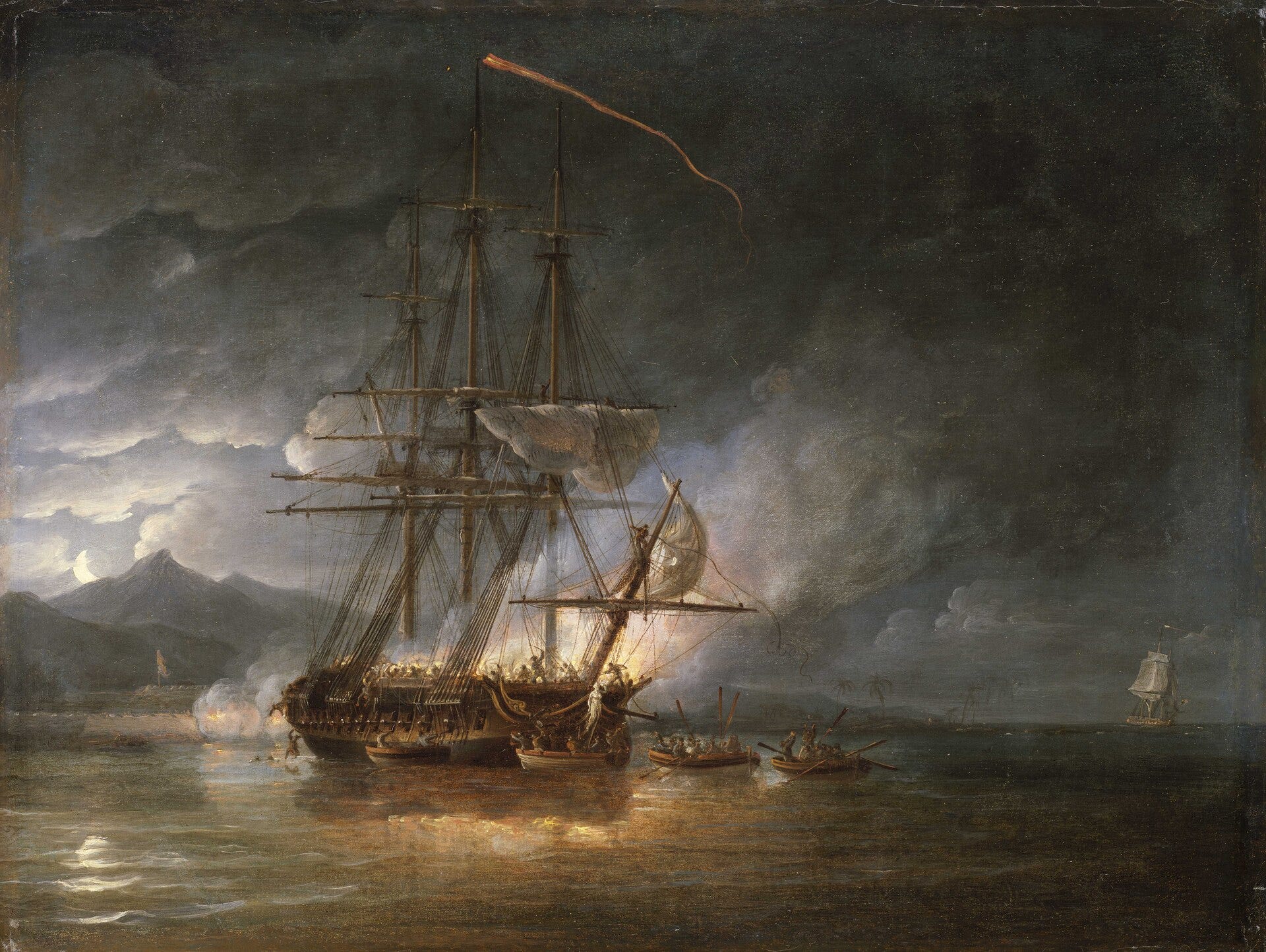
On the night of September 21, 1797, in the Caribbean, the crew of the British frigate HMS Hermione killed their captain. They handed the ship to Spain, then Britain's enemy, took 25 pounds a man from the Spanish authorities, and scattered. Could the Royal Navy ever recover its frigate, or punish the men who had taken it?