
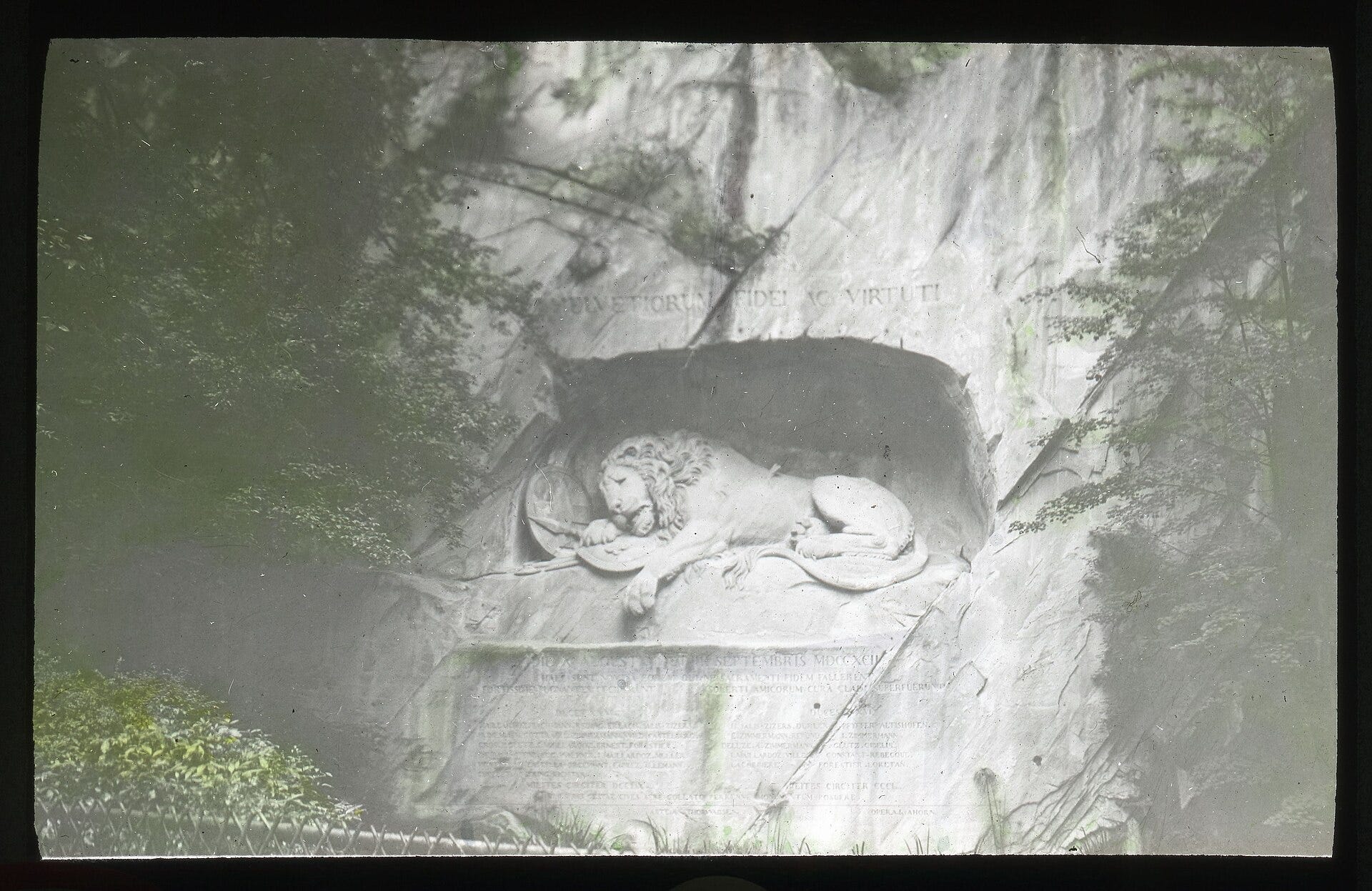
Carved into the rock face of an old quarry in Switzerland, a monument to soldiers who died defending a king gives their death toll as 760. Recent studies put it closer to 300. Of twelve of the most famous, only one finished with its defenders still holding their ground at dawn.
Cool Stories About History is a newsletter to learn history the fun way.
Join free and get:
6 new stories a month, straight to your inbox
The full archive of stories
Comment, ask questions, and chat with other readers
How These Were Chosen
A last stand is a fight in which a group could not get away, or would not, and kept fighting instead of giving up.
Winning was not required. Neither was a huge gap in numbers, which is often impossible to check because no reliable count of one side or the other survives.
The twelve fights run from AD 73 or 74 to 1897, on four continents. They climb from the one an American reader is least likely to know to the most famous in the United States.
12. Saragarhi (1897)
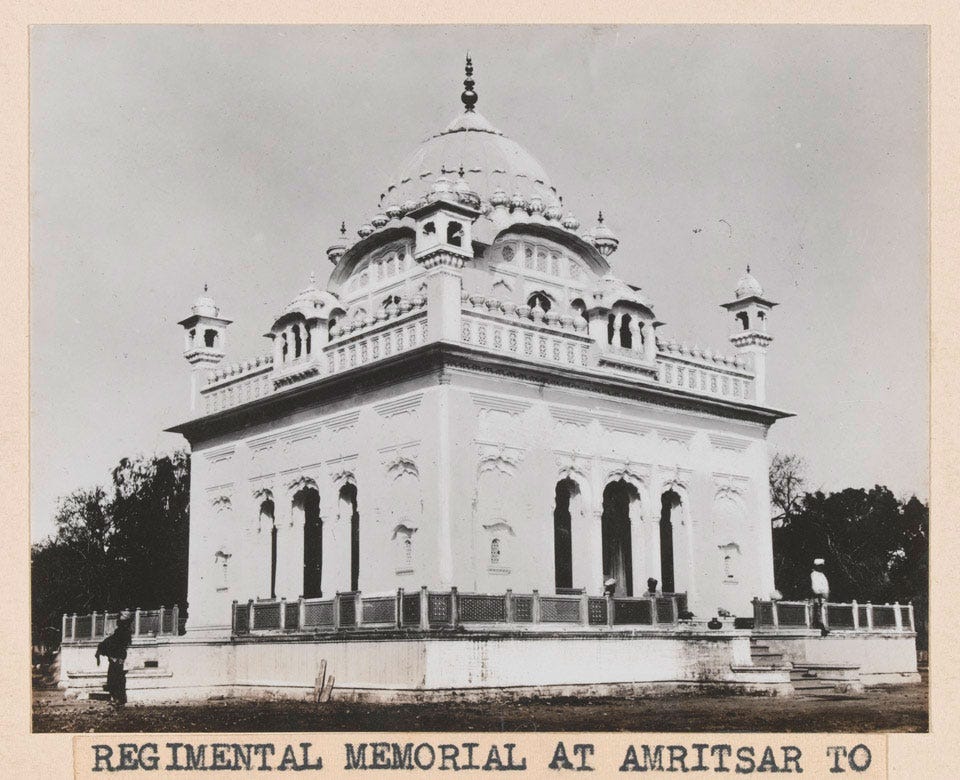
For about six and a half hours on September 12, 1897, the soldiers at Saragarhi reported their own last fight by flashing sunlight off a mirror.
Saragarhi was a small signal post on the Samana Ridge, in the North-West Frontier of British India. The British held a line of forts there to control the Pashtun tribes of the surrounding hills.
The post had one job. It stood between Fort Lockhart and Fort Gulistan, which could not see each other, and passed messages between them by heliograph, a mirror on a tripod that flashed Morse code.
Early in September, men of two Pashtun tribes, the Orakzai and the Afridi, attacked Fort Gulistan twice. A column from Fort Lockhart drove them off and left men at Saragarhi on its way back. That brought the post to 21 soldiers of the 36th Sikhs. Their commander was Havildar Ishar Singh, who held a noncommissioned rank.
On September 12 the tribesmen came back in force, with estimates running from about 1,000 to more than 10,000 men. All day, the signaler Gurmukh Singh flashed news of the fight to Lieutenant Colonel John Haughton at Fort Lockhart.
Near the end, as the attackers broke in, Gurmukh Singh asked whether to keep signaling or take up a rifle. Haughton let him fight. The attackers then set the post on fire.
A relief column reached Saragarhi two days later and found the bodies of all 21 soldiers, who received the Indian Order of Merit after their deaths. The usual count leaves out a 22nd man, Daad, a civilian servant who died with them.
At a Glance
Who: 21 soldiers of the 36th Sikhs under Havildar Ishar Singh, and a civilian servant, Daad
Date: September 12, 1897
Place: Saragarhi signal post, Samana Ridge, North-West Frontier of British India
Ending: The post burned and every defender killed, the bodies found by a relief column two days later
Honors: Indian Order of Merit for all 21 soldiers, awarded after their deaths
11. The Battle of Maldon (991)
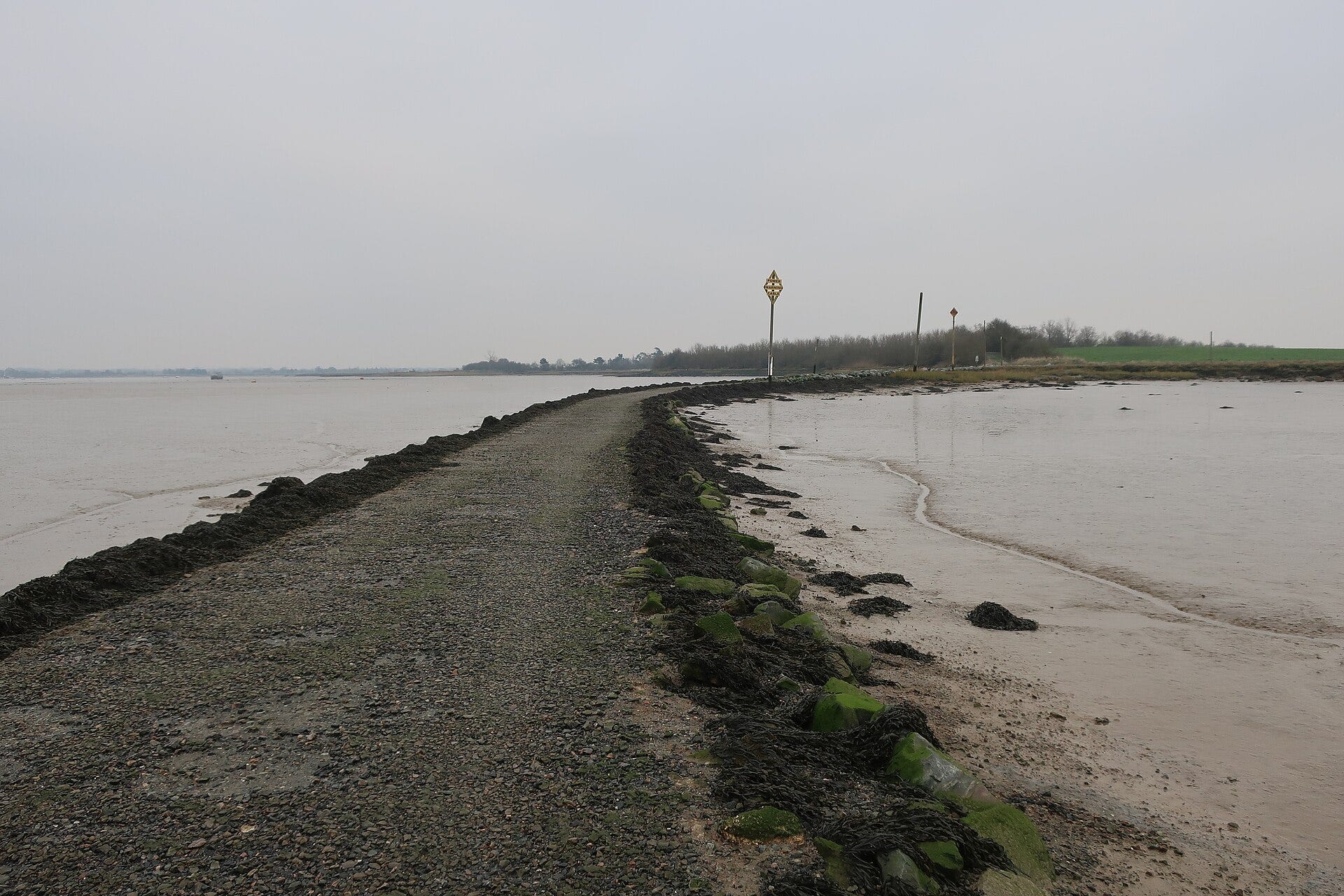
In August 991, a Viking army was camped on Northey Island, near the town of Maldon in eastern England. As ealdorman of Essex, Byrhtnoth governed the county for the English king, and he had the Vikings trapped. The only way off was a causeway that the high tide covered, and his men held its end. So why did he let the Vikings cross and fight him on the mainland?