
In 1950, the FBI called a robbery in Boston "the crime of the century." Seven masked men had walked out of an armored car company with more than $1.2 million in cash, and nobody was charged for six years. Twelve famous heists, from a royal treasure in London in 1303 to a bank vault in Nice in 1976, are each followed from the target to what happened next.

Cool Stories About History is a newsletter to learn history the fun way.
Join free and get:
6 new stories a month, straight to your inbox
The full archive of stories
Comment, ask questions, and chat with other readers
How These Were Chosen
Each of the twelve thefts went after a target its owners believed was safe. The targets range from a king's treasure and crown jewels to bank vaults and shipments of gold or cash, while thefts of paintings and sculptures are left out.
The twelve took place in Europe, Asia, Australia and North America between 1303 and 1976. Two were meant to pay for a revolution, and two others brought the thieves next to nothing.
They climb from the least known in America, at number 12, to the most famous, at number 1.
12. The Kakori Train Robbery (1925)
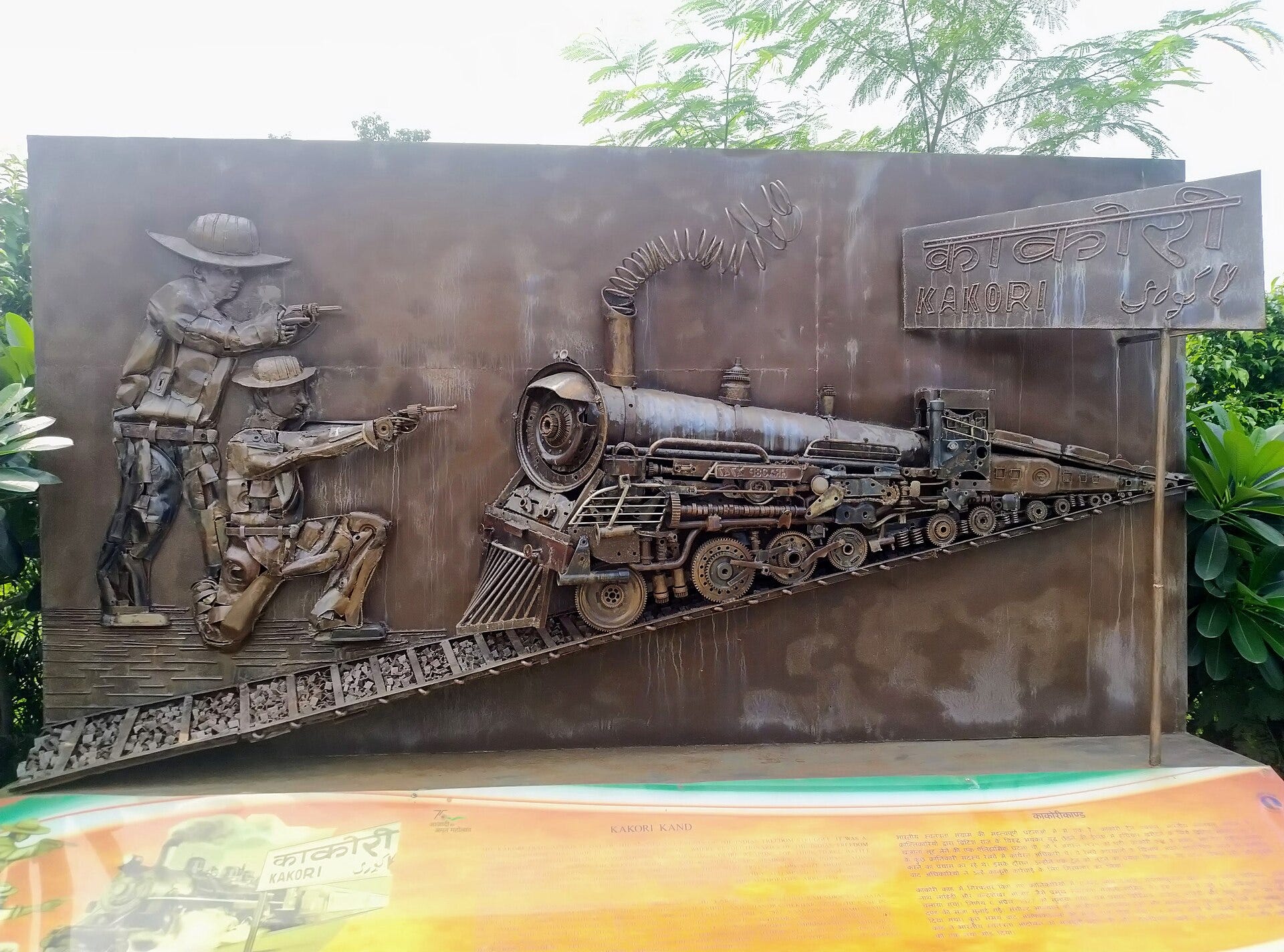
On the evening of August 9, 1925, armed men on a passenger train in northern India pulled the alarm chain, the cord that passengers pull in an emergency. The train came to a halt near Kakori, a town about 10 miles from the city of Lucknow.
The men were carrying out the Kakori train robbery. India was then ruled by Britain, and they belonged to the Hindustan Republican Association, a young group that wanted to end British rule by armed revolution. The group paid for its struggle with robberies, and this one was meant to buy weapons.
Their leader on the train was Ram Prasad Bismil, one of the founders of the association. He was after a safe in the guard's van, the car of the railway employee in charge of the train. It held the money collected at stations along the line.
Bismil's men held the guard and the passengers, forced the safe open and escaped with a few thousand rupees. During the holdup, one of them fired a shot by accident and killed a passenger.
The police moved fast. In the weeks that followed they arrested more than two dozen members of the association, and they caught Bismil on September 26. His comrade Ashfaqulla Khan stayed on the run for about a year.
Twenty-nine men went on trial in Lucknow, while two other members of the association testified for the prosecution. After a trial of nearly 18 months, four of the accused were sentenced to death. Bismil was a Hindu and Ashfaqulla Khan a Muslim, and both were hanged on December 19, 1927.
India now honors the four as fighters for its independence. The spot where the safe was broken open is a memorial, and in 2025 the state of Uttar Pradesh marked the 100th anniversary of the holdup.
At a Glance
Who: Ram Prasad Bismil and other members of the Hindustan Republican Association
When: Evening of August 9, 1925
Where: Near Kakori, about 10 miles from Lucknow, India
Taken: A few thousand rupees collected at stations along the line
How it ended: Four men sentenced to death, Bismil and Ashfaqulla Khan hanged on December 19, 1927
11. The Great Gold Robbery (1855)
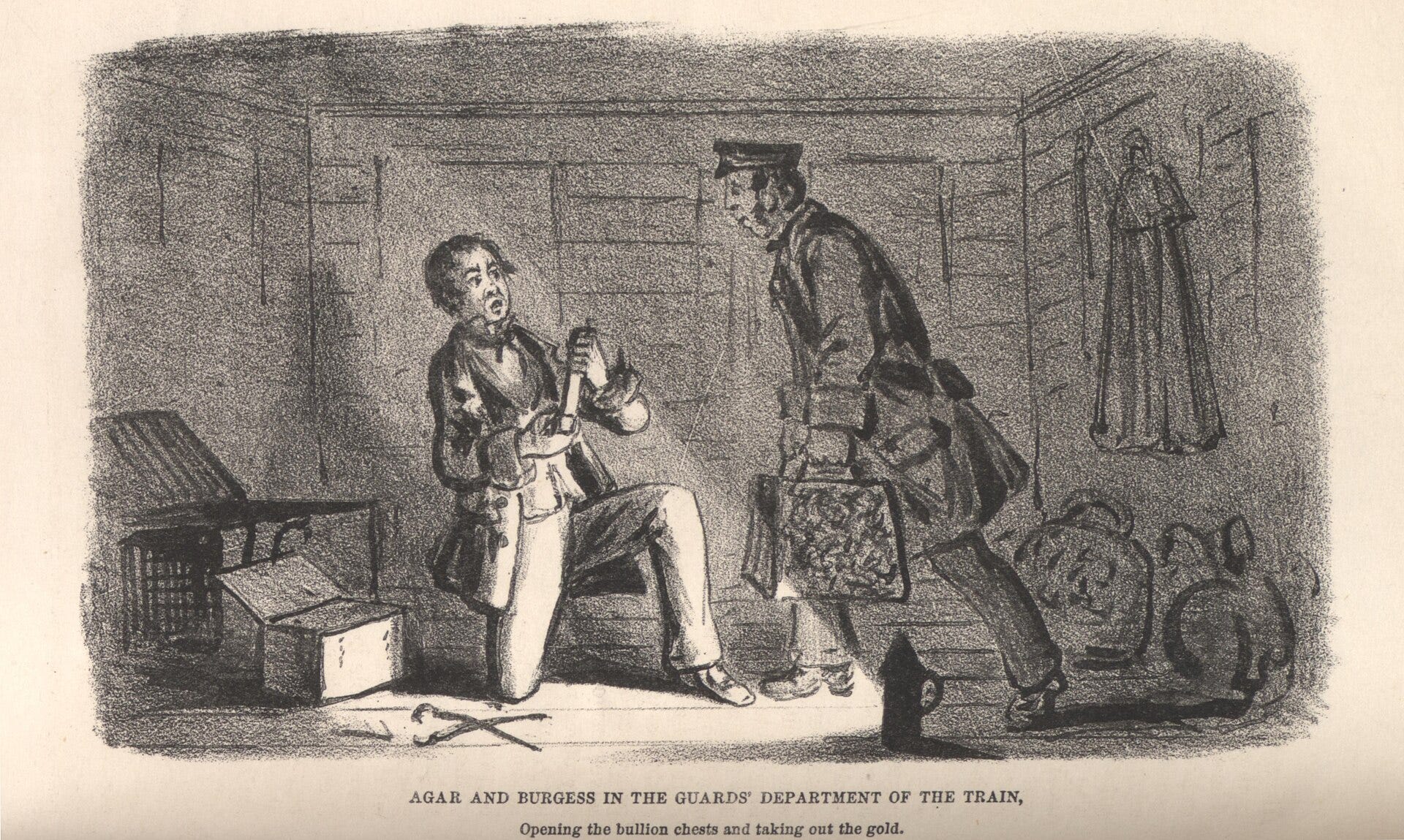
The Great Gold Robbery began as a routine shipment of gold from London to Paris in May 1855, in boxes weighed and sealed in London. When bank staff in Paris opened them, they found lead shot, the small pellets used in shotgun shells. Where along the way had the gold been taken, and by whom?