
Gladiator fights began at funerals. The first known show in Rome, in 264 BC, was held at the funeral of a man named Brutus, with three pairs of armed men. Two centuries later, in the time of Julius Caesar, shows had grown to 300 pairs. Only a few of the fighters left a name, and their stories rarely look like the movies.
Cool Stories About History is a newsletter to learn history the fun way.
Join free and get:
6 new stories a month, straight to your inbox
The full archive of stories
Comment, ask questions, and chat with other readers
How These Were Chosen
A gladiator was a professional fighter of the Roman arena. The name comes from the gladius, the short Roman sword, and most gladiators were prisoners of war or slaves sold to training schools.
Each story rests on a trace from Roman times: a gravestone, a carving, a clay beaker, a mosaic, a scrawl on a tomb, or the pages of a Roman writer. Most are about gladiators. Two are about beast hunters, and one is about an emperor who fought in the arena himself.
The order runs from names known mainly to specialists to the one Hollywood made famous.
12. Diodoros (About AD 200)
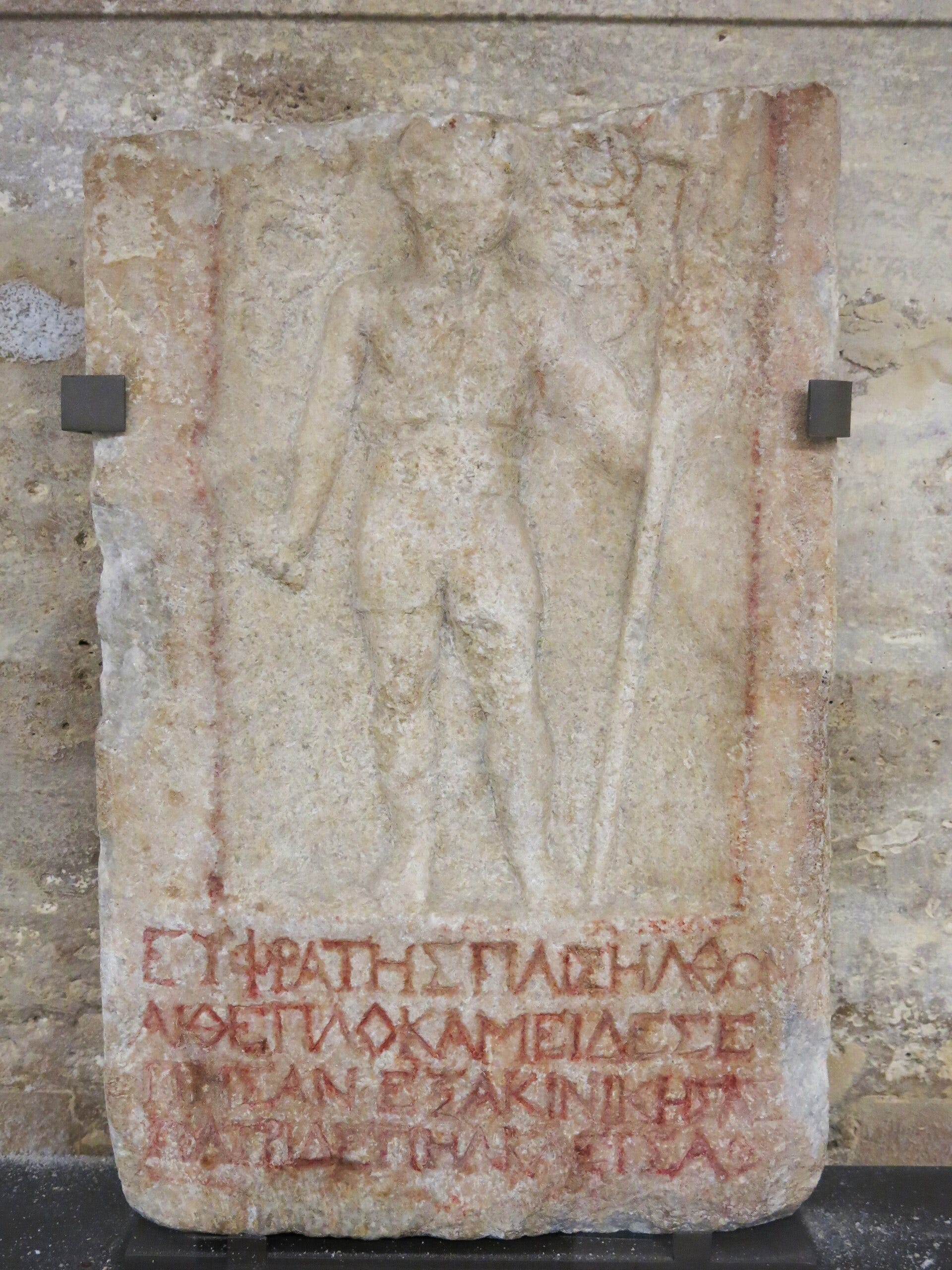
A gravestone found on the Black Sea coast of Turkey shows a gladiator with a sword in each hand. He stands over an opponent who sits on the ground and begs for mercy. The dead man is Diodoros, and the lines carved under the picture accuse the referee of his last fight.
Diodoros fought and died at Amisus, a Roman town on the site of modern Samsun, about AD 200. His epitaph is in Greek, the everyday language of Rome's eastern provinces, and it only makes sense once the rules of the arena are clear.
Those rules worked in three steps. A beaten gladiator surrendered by raising a finger, and the referee, called the summa rudis, then had to stop the fight. Next the editor decided whether the loser was spared. He was the man who paid for the games, and he often listened to the crowd.
The winner had no say. He struck the final blow only if the editor refused mercy, and until then he had to wait.
The stone speaks in Diodoros's own voice: "Here I lie victorious, Diodoros the wretched. After felling my opponent Demetrios, I did not kill him immediately. But murderous Fate and the cunning treachery of the summa rudis killed me."
Read with those rules in mind, the epitaph tells what went wrong. Demetrios went down and asked for mercy, and Diodoros held back to wait for the verdict. The referee seems to have judged the fall an accident and let Demetrios get up, take his weapons and fight on. Diodoros died in the bout that followed.
The carving shows the moment Diodoros believed he had won. The stone reached a museum in Brussels shortly before World War I, and its last line names a mourner: "a good friend buried me here."
At a Glance
Who: Diodoros, a gladiator of the Roman East
Date: About AD 200
Place: Amisus, today Samsun, on the Black Sea coast of Turkey
Known from: His gravestone, with a carved scene and a Greek epitaph
Where to see it today: Art and History Museum, Brussels
About This Story
Did gladiators fight to the death?
Not as a rule. A fight stopped when one man raised a finger to surrender, and the editor who paid for the games decided whether he lived. Editors could refuse mercy, and some shows were announced as fights without mercy, but nothing required one of the two men to die.
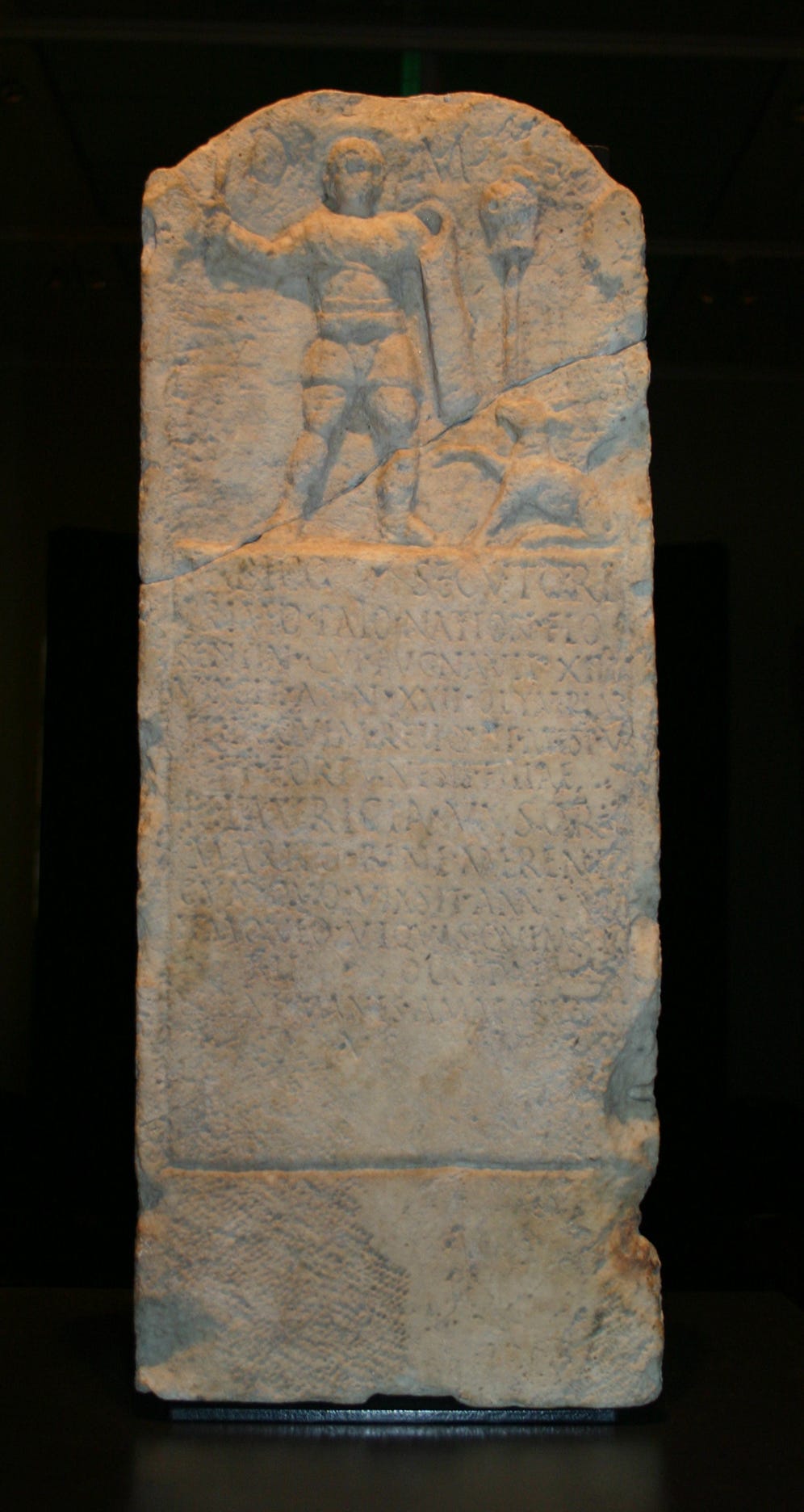
11. Urbicus of Milan (Late Second or Third Century AD)
In Milan, a 22-year-old gladiator named Urbicus was buried by his wife, Lauricia, who had lived with him for seven years, and by his family. The gravestone names his daughter Olympias, five months old, and carries a piece of advice to every gladiator: kill the man who is beaten. Why would a grieving family put that on a husband's grave?