
On June 14, 2003, more than 60 descendants of two Appalachian families signed a truce declaring "an official end to all hostilities." The last killings between their families were more than a century old. That is what makes a feud: a quarrel that outlives the insult behind it. Such quarrels have helped open an empire to foreign invaders and split a small German town into two camps for six decades.
Cool Stories About History is a newsletter to learn history the fun way.
Join free and get:
6 new stories a month, straight to your inbox
The full archive of stories
Comment, ask questions, and chat with other readers
How These Were Chosen
Every quarrel kept here set two named sides against each other, and both sides kept up the fight. None was settled in a single day. Each reached an end that can be dated, whether a death, a verdict, an act of Congress or a truce.
The rivals range from brothers and banking families to scientists, explorers and lawmen. Three of the feuds took place in China, Peru and Japan, and the rest in Europe and the United States.
The order climbs from quarrels little known in the United States to the most famous American feud of all.
12. Xiang Yu and Liu Bang (206 BC)
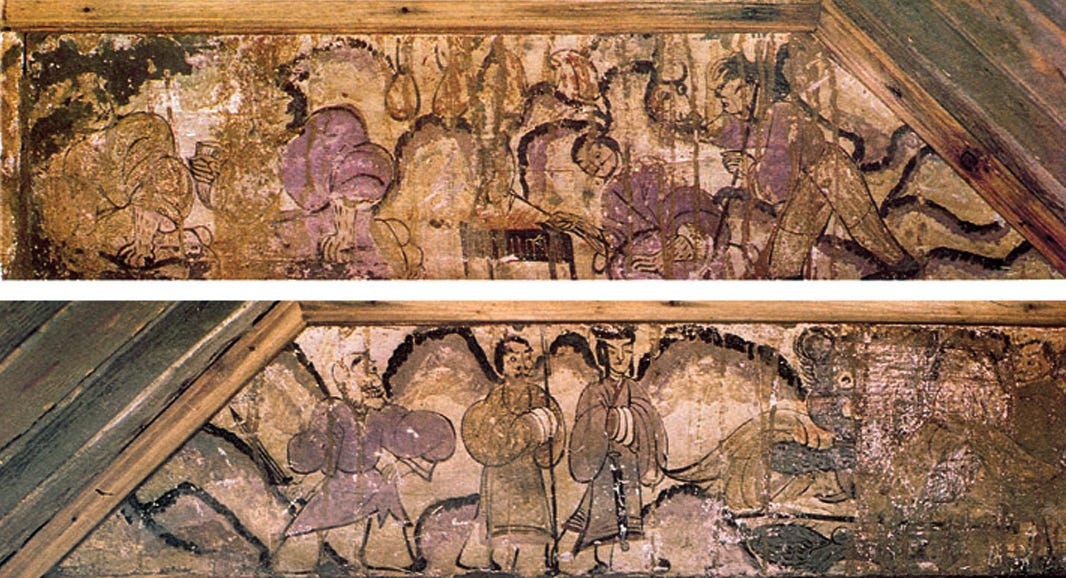
A sword dance was planned as cover for a murder at a feast near today's city of Xi'an, in China, in December 206 BC. The host was Xiang Yu, supreme commander of the rebel armies that had just overthrown China's rulers. The man meant to die was his guest, Liu Bang.
The two men had fought on the same side. Since 221 BC, China had been ruled by the Qin dynasty and its First Emperor, and after his death in 210 BC, rebel armies rose against his heirs.
Xiang Yu led the rebels. Liu Bang came from a peasant family and had started out as a police officer for the Qin, before he turned rebel himself.
At the feast, held at a place called Hongmen, Xiang Yu's adviser proposed the sword dance as a chance to kill Liu Bang during the meal. Xiang Yu could not make up his mind, and Liu Bang got away alive. Xiang Yu then took the Qin capital and executed the last Qin ruler.
Victory split the allies. Xiang Yu brought back the old patchwork of kingdoms, and Liu Bang received one of them, Han, in western China. The two kings became rivals for the rule of all China.
The war between the two kings lasted four more years. When they agreed on a truce, Liu Bang broke it soon after, and in 202 BC Xiang Yu's army was trapped at Gaixia, in eastern China.
According to the traditional account, enemy troops sang the songs of Xiang Yu's homeland at night, and his soldiers deserted, believing their homeland lost. Xiang Yu chose suicide rather than capture. The guest who escaped the sword dance became Emperor Gaozu, and the Han dynasty he founded ruled China until AD 220.
At a Glance
Who: Xiang Yu, commander of the rebel armies, and Liu Bang, king of Han
Date: December 206 BC to 202 BC
Place: Hongmen, near Xi'an, then Gaixia, in eastern China
Cause: Who would rule China after the fall of the Qin dynasty
Cost: Xiang Yu's life, and China, which passed to the Han dynasty
11. Atahualpa and Huáscar (1532)
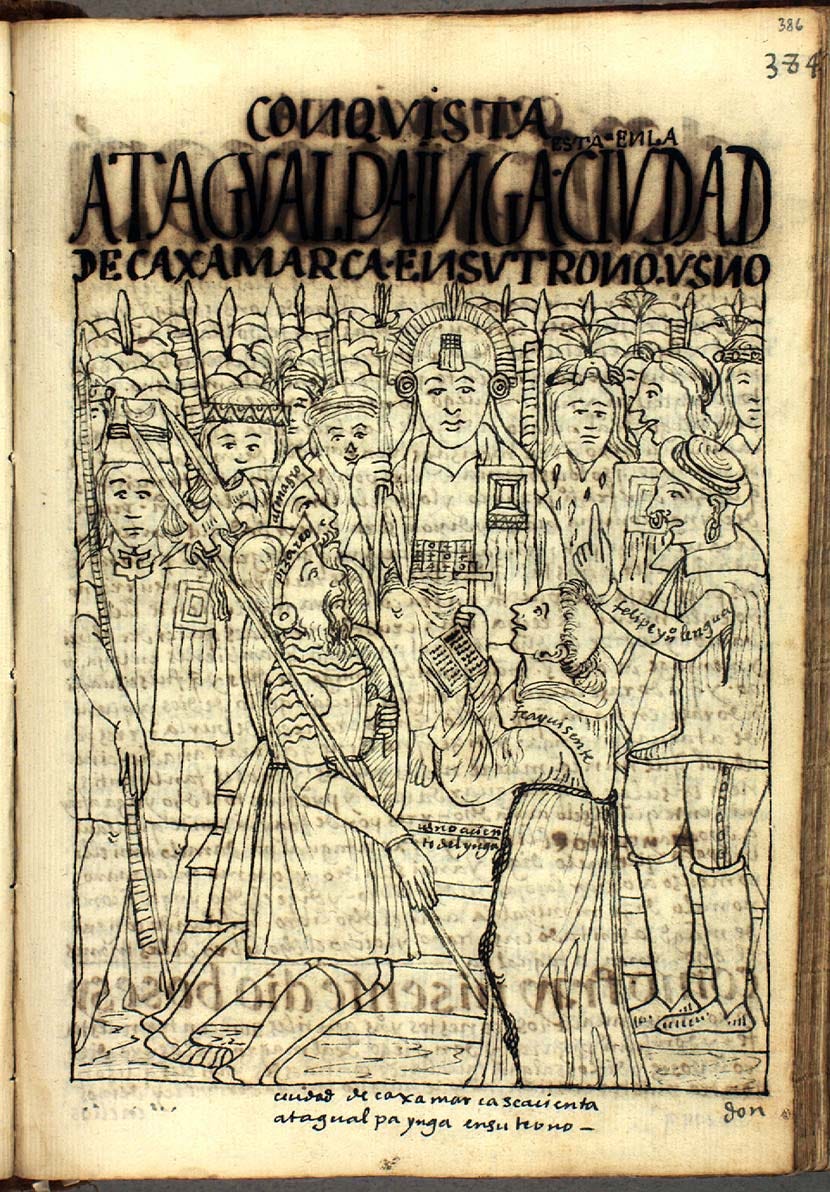
In November 1532, Atahualpa had just won a long civil war for the throne of the Inca Empire, and his half brother Huáscar was his prisoner. That month, a small troop of Spaniards asked to meet the victor in the town of Cajamarca, in what is now Peru. Within a year, both brothers were dead.