
Carl Linnaeus, the Swedish naturalist who sorted living things into species, made room in 1758 for a "wild man" he called Homo ferus. Ferus is Latin for wild, and it gave English the word feral. He described this wild man as four-footed, mute and hairy, and he had real children in mind. Once among people, some of those children learned to speak and read, and others never said more than a few words.
Cool Stories About History is a newsletter to learn history the fun way.
Join free and get:
6 new stories a month, straight to your inbox
The full archive of stories
Comment, ask questions, and chat with other readers
How These Were Chosen
Every child here grew up almost cut off from human company. Most were lost or abandoned in forests and hills, and one said he had been kept in a dark cell. The cases run from 17th-century Lithuania to Spain in 1965.
Stories that animals raised them rest on thin evidence, and no case here proves one. Recent cases of children abused at home are left out. Marcos Rodríguez Pantoja, who died in 2026, stays because he lived alone in the mountains, not locked in a house.
12. Memmie Le Blanc (1731)
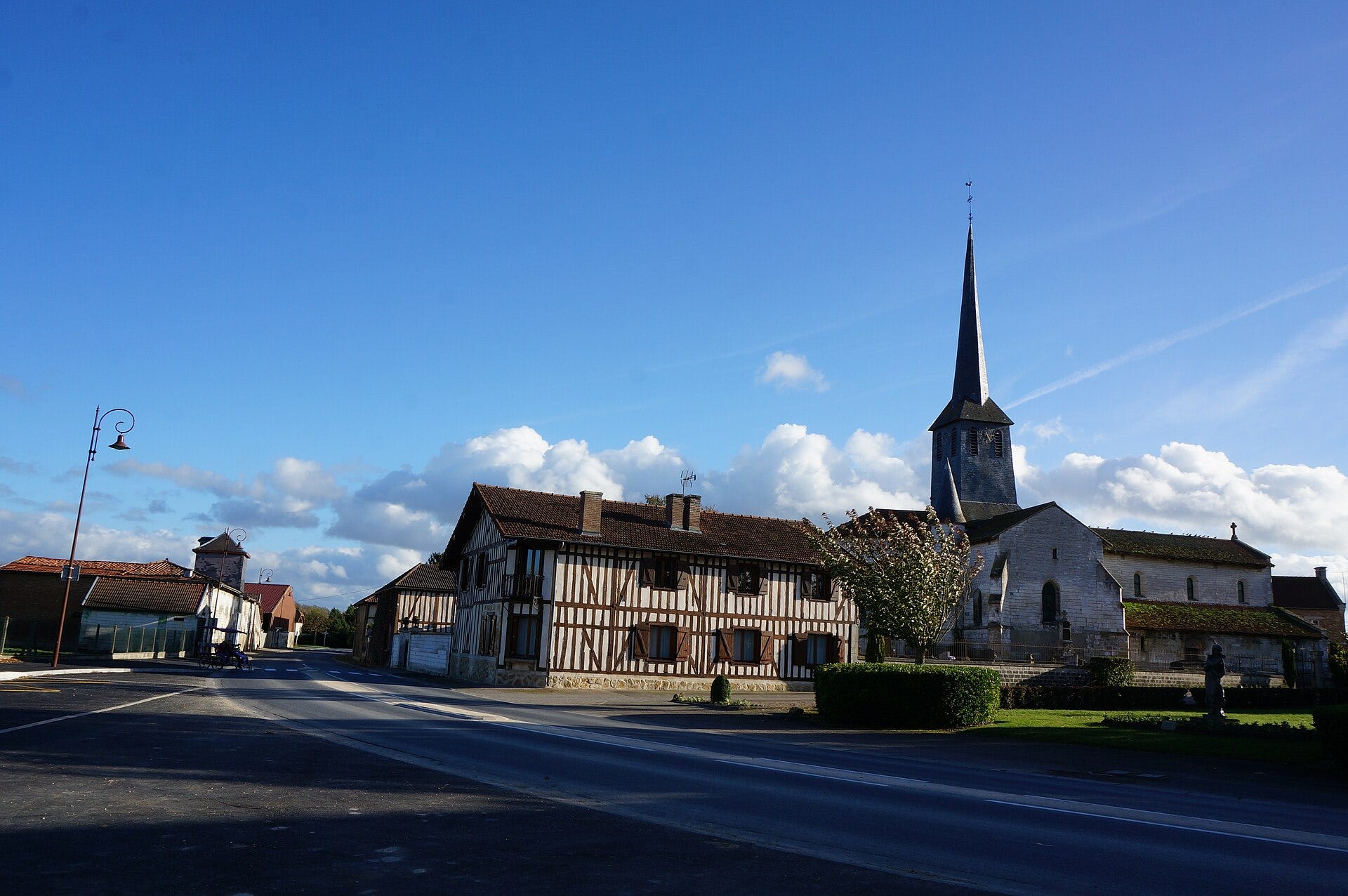
A girl of about ten walked into Songy, a village in the Champagne region of eastern France, one evening in September 1731, just as the light was failing. Her skin was black with paint or dirt, she wore animal skins, and a gourd sat on her head like a cap.
In her hand she carried a short club, heavy at one end. Someone set a mastiff in a spiked iron collar loose on her, and she struck it on the head, killed it and jumped over its body.
She climbed a tree and slept in its branches. The Viscount d'Épinoy, who owned the château at Songy, had ordered her caught, and the villagers set out to lure her down.
They left a bucket of water at the foot of the tree, and she came down to drink, then fled. The next try was food. A woman held out roots and two fish, and when the girl came down to take them, men hidden nearby seized her.
At first she spoke only in shrill cries formed in the throat, and she ate raw meat, roots and frogs. On October 30, 1731, she was taken into the general hospital of Saint-Maur, in the town of Châlons-en-Champagne.
She was baptized Marie-Angélique-Memmie on June 16, 1732, at about eleven, and she is remembered as Memmie Le Blanc. Le Blanc means "the white" in French, a strange name for a girl who had arrived with her skin blackened. She learned to speak, read and write French, but no one ever learned where she had come from.
Around 1737 the Queen of Poland, passing through Châlons, took her hunting, and the girl ran down hares and rabbits on foot. By the 1750s she was living in a convent in Paris, on a pension paid by a royal prince, the Duke of Orléans.
At a Glance
Who: Marie-Angélique-Memmie Le Blanc, a girl of about ten
Found: September 1731
Place: Songy, near Châlons-en-Champagne, France
Baptized: June 16, 1732
Later life: Learned to read and write French, lived in Paris on a pension from the Duke of Orléans
11. Lucas, the Baboon Boy (1903 to 1948)

Two policemen on patrol in the Koonap district of South Africa's Eastern Cape fired their revolvers at a troop of baboons in 1903. Running with the troop on all fours was a boy of about 12 to 14, later called Lucas, and the policemen caught him. He could only bark, and he understood no human language.