
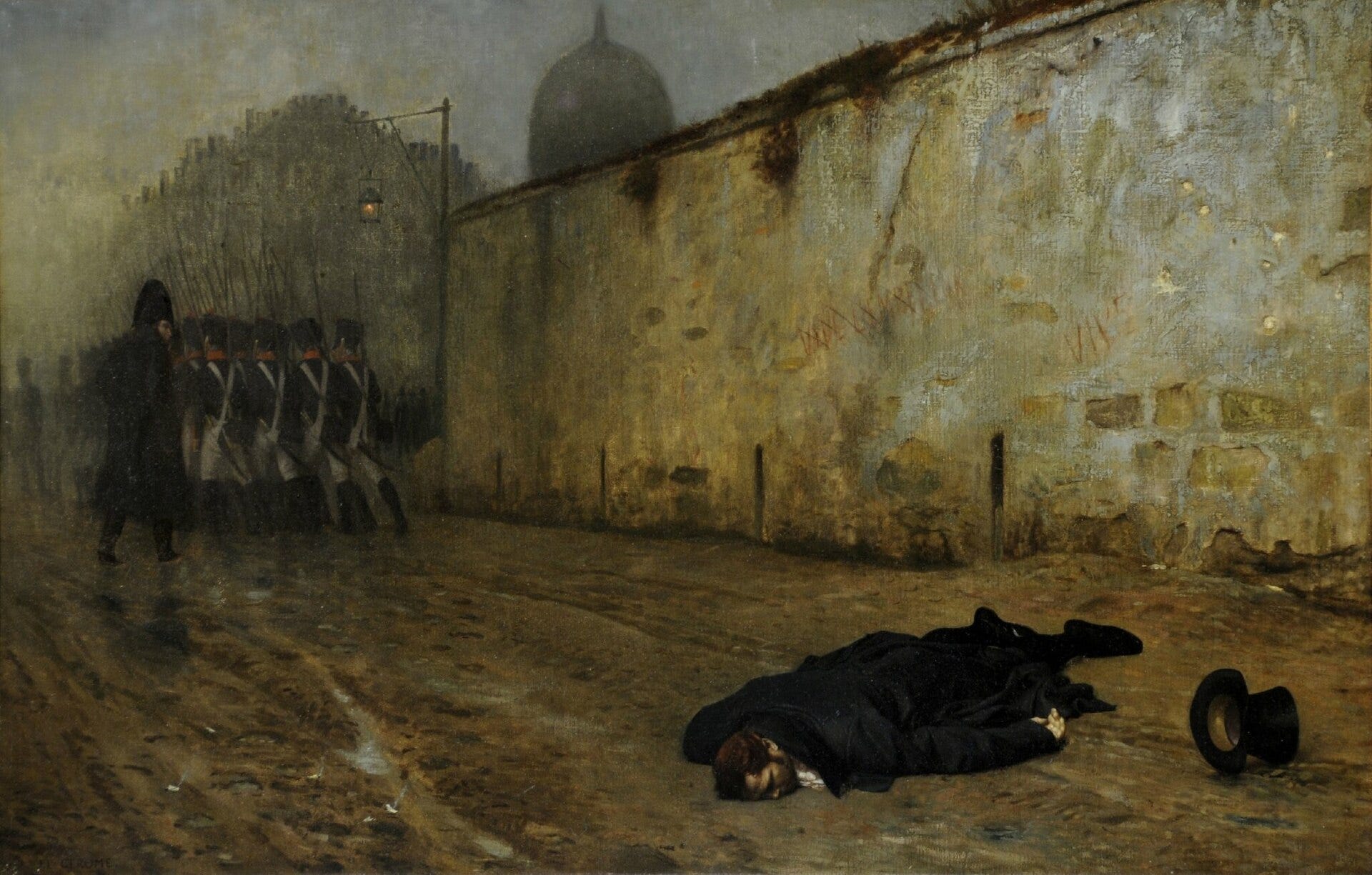
On January 30, 1649, in London, spectators pushed toward a scaffold to dip their handkerchiefs in the blood of a beheaded king. He had been condemned by a court that his enemies in Parliament set up to try him. Other death sentences came from a jury of ordinary citizens in ancient Athens or a court of churchmen in fifteenth-century France.
Cool Stories About History is a newsletter to learn history the fun way.
Join free and get:
6 new stories a month, straight to your inbox
The full archive of stories
Comment, ask questions, and chat with other readers
How These Were Chosen
Each of the twelve people was put to death, as a punishment, on the order of a state, a church court or an army. Eleven of them died after a sentence of some kind. The exception is a captain hanged in Manhattan in 1776, the day after his capture, with no trial.
The twelve cases are real and documented, from Athens in 399 BC to Munich in 1943, on five continents. They are ranked from the least known to an American reader today to the most famous.
12. Kimpa Vita (1706)
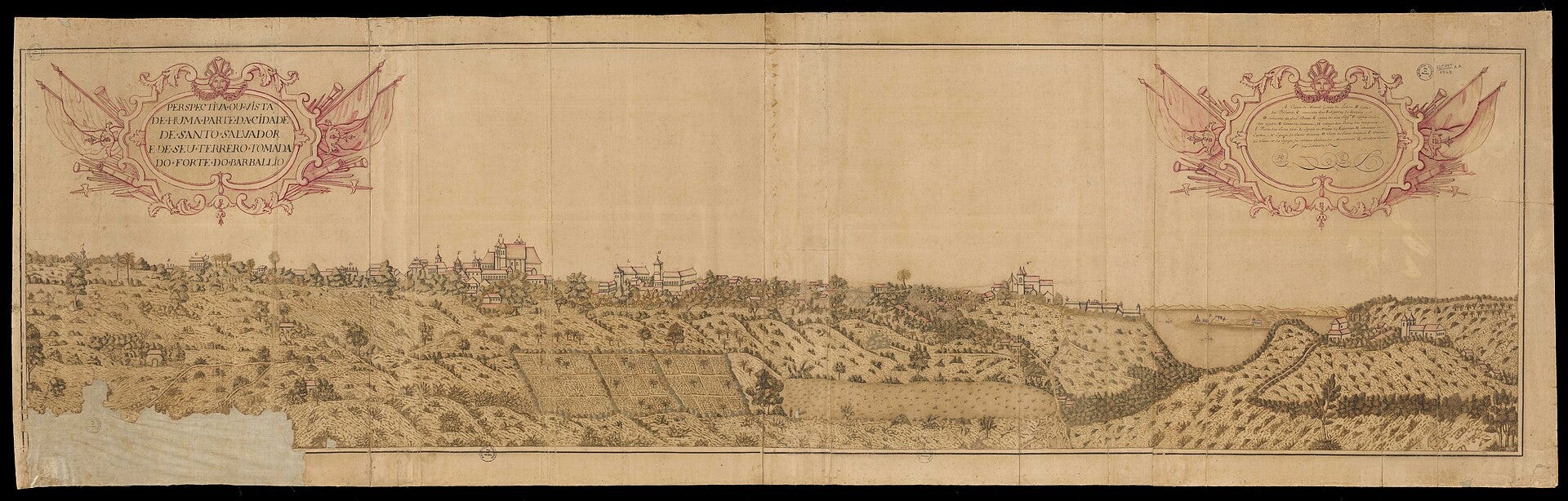
On Sunday, July 2, 1706, in the Kingdom of Kongo, in central Africa, a young woman was to be burned alive for heresy. That morning she confessed to a missionary priest named Father Lorenzo and told him that her death would be a penance for her sins. She is remembered as Kimpa Vita, her birth name, though she had been baptized Dona Beatriz.
Her kingdom covered what is now northern Angola and the western Congo. It was Catholic, with European missionaries, and it was coming apart. Three royal families were fighting over the throne, Portuguese troops had beaten the Kongolese army, and São Salvador, the old capital, lay in ruins.
Kimpa Vita said that the spirit of Saint Anthony of Padua, a Catholic saint, had taken possession of her body. She preached that São Salvador was the true Bethlehem and must be rebuilt, and that Jesus, Mary and the saints had been Kongolese. Peasants came to her by the thousand.
She also took sides in the war. Pedro IV was one of the men claiming the throne, and she named a rival of his as the rightful king. The European missionaries, Capuchin friars of a Catholic order, called her Kongolese Jesus a heresy against the teaching of the Church.
Kimpa Vita had said she was a virgin. When she had a baby with the man she lived with, the Capuchins took it as proof that she had lied, and they pressed Pedro IV to act. His men found the couple and their baby hiding on Mount Kimbangu, and a church court sentenced her to the stake.
Another woman who had preached beside her, Apollonia Mafuta, was brought to confession with her on the morning of July 2. Father Lorenzo judged her not of sound mind, and so not answerable for her preaching. She was spared the fire.
Kimpa Vita was burned alive that day. Her ideas lived on among Kongo's peasants for about two centuries, until a new prophet, Simon Kimbangu, began to preach.
At a Glance
Who: Kimpa Vita, Kongolese prophet (about 1684 to 1706)
Date: July 2, 1706
Place: Kingdom of Kongo, central Africa (the exact site of the fire is not recorded)
Charge: Heresy, before a church court
Method: Burned at the stake
11. Túpac Amaru II (1781)
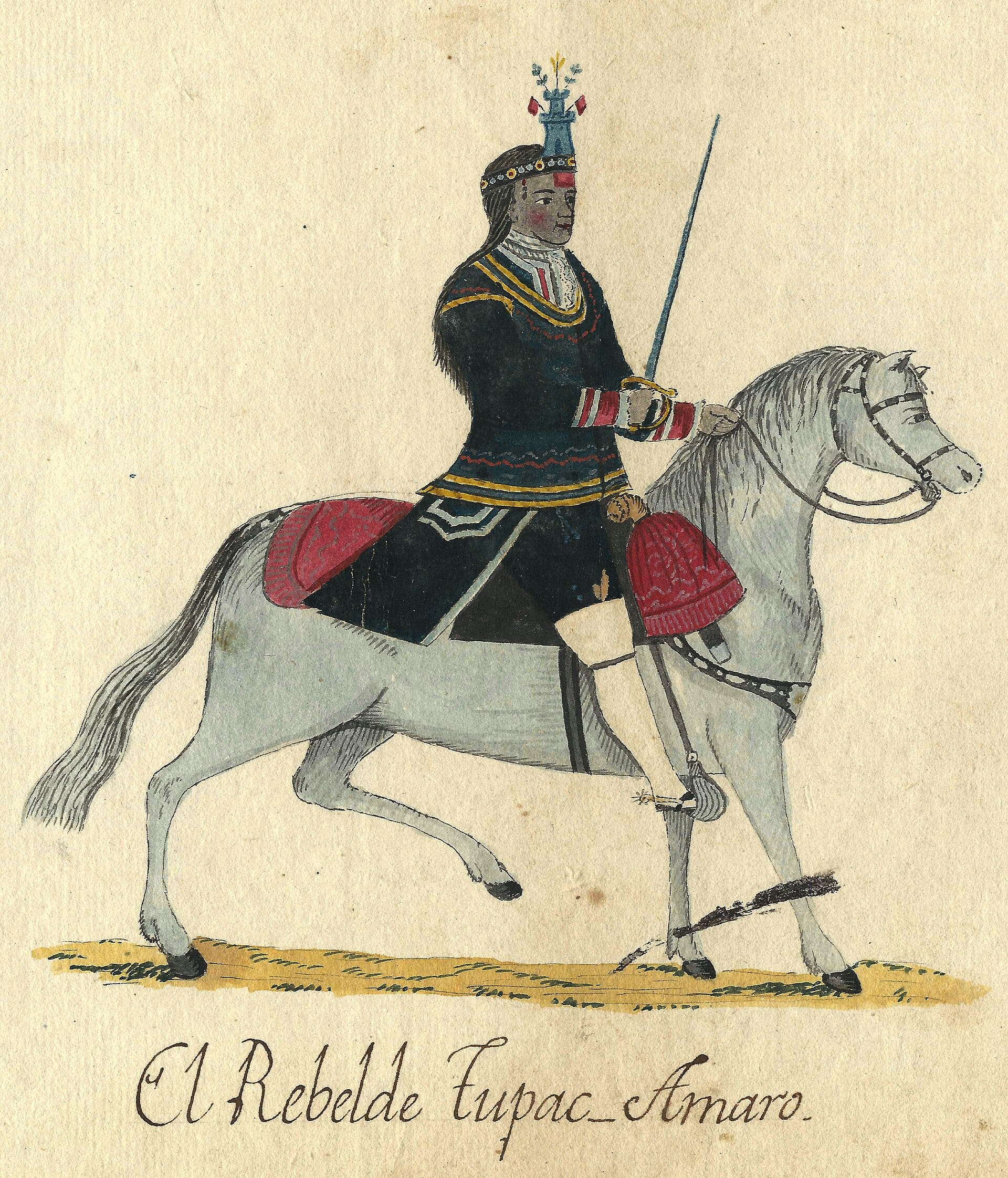
On May 18, 1781, Spain put a rebel to death in the main square of Cuzco, the old Inca capital in the Andes of Peru. He was Túpac Amaru II, and six months earlier he had started the largest uprising in the history of Spain's American colonies. Before the Spanish killed him, they had decided what he would be made to watch first.