
Old lists of the deadliest earthquakes counted 300,000 dead at Calcutta, India, in 1737. A cyclone most likely did the killing, and the U.S. Geological Survey, the American agency that tracks earthquakes, has struck the disaster from its list. The mistake is easy to make, because the shaking itself kills few people. Most die under falling walls, in the fires that break out, or in the waves that follow.
Cool Stories About History is a newsletter to learn history the fun way.
Join free and get:
6 new stories a month, straight to your inbox
The full archive of stories
Comment, ask questions, and chat with other readers
How These Were Chosen
The deadliest earthquake on record struck China in 1556, and the strongest ever measured struck Chile in 1960. Both made the cut. So did ten others that come down to us through people of their own time, in letters, government records, a gravestone or stories passed down.
For the older quakes, magnitude, the measure of a quake's size, is an estimate drawn from damage, records and the rocks. Those figures come with an "about."
The twelve run from 373 B.C. to 1960, and San Francisco, the one most Americans know, comes last.
12. Cascadia and the Orphan Tsunami (1700)
One winter night in 1700, the sea rose without warning at Kuwagasaki, a village near Miyako on the Pacific coast of northern Japan. The water flooded the fields and carried away 13 houses. A fire that broke out at the same moment burned 20 more.
Samurai magistrates, the officials who kept order for the local lord, wrote it all down with their scribes. Merchants and village headmen did the same in other towns along the coast, and at Tanabe the mayor listed the rice paddies lost to the sea.
None of them had felt the ground move. A wave like this one usually came with a warning, the shaking of a nearby earthquake, and this one had none. Scientists later called it the orphan tsunami.
Nearly three centuries passed before the answer turned up across the ocean, in the tidal marshes of southern Washington State. Dead trees stood there in salt water, in what came to be called ghost forests. The land had dropped suddenly in a great earthquake, and the tides had poured in and killed the trees.
The trees also kept the date. The tree-ring specialist David Yamaguchi matched the growth rings of drowned spruce and showed that they had died within a short window, and the Japanese wave fell inside it. The Japanese seismologist Kenji Satake then tied the wave to the American evidence and worked out the size of the earthquake.
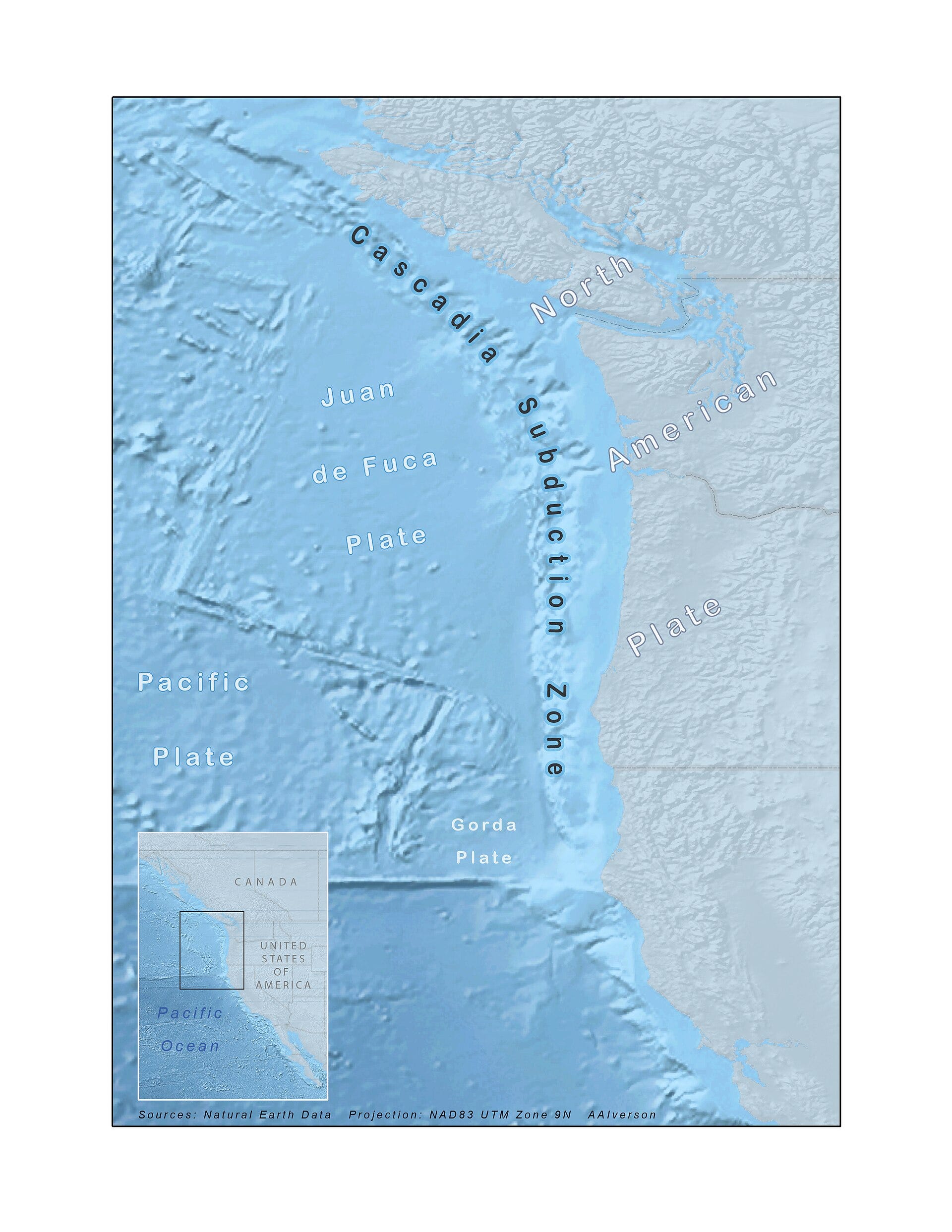
It had come from the Cascadia fault, which runs under the sea off the coast of North America. At about 9 p.m. on January 26, 1700, the fault tore open from Vancouver Island to northern California, in an earthquake of about magnitude 9. The hour came from the time the Japanese recorded the wave.
Nobody on the American side wrote anything down, but the peoples of the coast remembered. The shaking collapsed houses of the Cowichan people on Vancouver Island, and the wave destroyed the winter village of the Pachena Bay people, leaving no survivors. The same coast has had 13 great earthquakes in the last 6,000 years, hundreds of years apart.
At a Glance
What: The Cascadia earthquake, about magnitude 9, and the orphan tsunami in Japan
Date: January 26, 1700, about 9 p.m.
Place: From Vancouver Island to northern California, and the Pacific coast of Japan
Who wrote it down: Samurai magistrates, scribes, merchants and village headmen in Japan
Damage at Kuwagasaki: 13 houses carried away, 20 burned
11. Helike (373 B.C.)
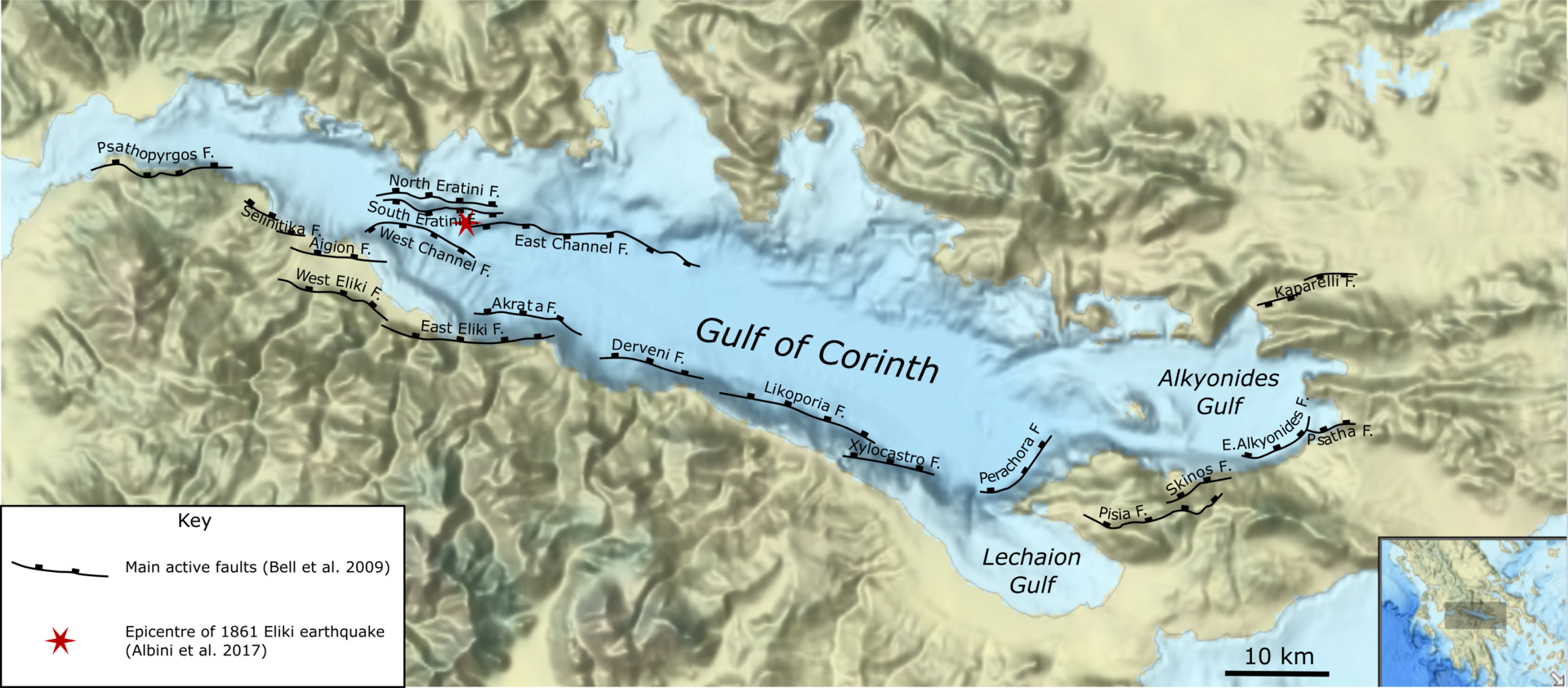
The Greek city of Helike stood on the Gulf of Corinth, with a famous temple to the sea god Poseidon, until the sea swallowed it one winter night. Long after that night in 373 B.C., ferrymen told the visiting scholar Eratosthenes of a bronze Poseidon standing upright under the water, where it caught the nets of fishermen. So where had the city gone?