
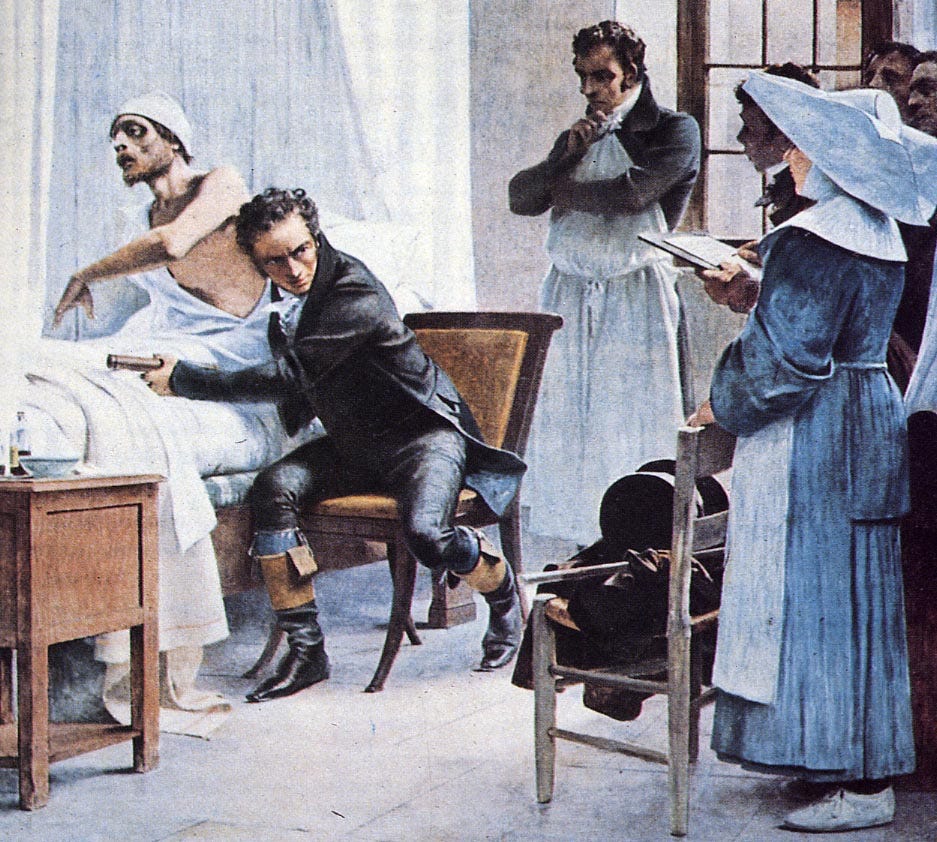
Before the 1860s, infection killed about half of all surgery patients in many hospitals. Medicine moved forward when a doctor stopped trusting what his teachers had said and tested it on a real patient or a real body. Several of the doctors who turned out to be right were not believed at first, and a few paid dearly for it.
Cool Stories About History is a newsletter to learn history the fun way.
Join free and get:
6 new stories a month, straight to your inbox
The full archive of stories
Comment, ask questions, and chat with other readers
How These Were Chosen
The twelve physicians and surgeons range from the Greek island of Cos in the fifth century BC to an operating room in Cape Town in 1967.
Most are caught at a single moment of work: an operation, an experiment, an examination or a book that broke with the teachers before it. Several of their patients are known by name, and so is what became of them.
The order rises toward the most famous names in medicine.
12. Ignaz Semmelweis (1847)
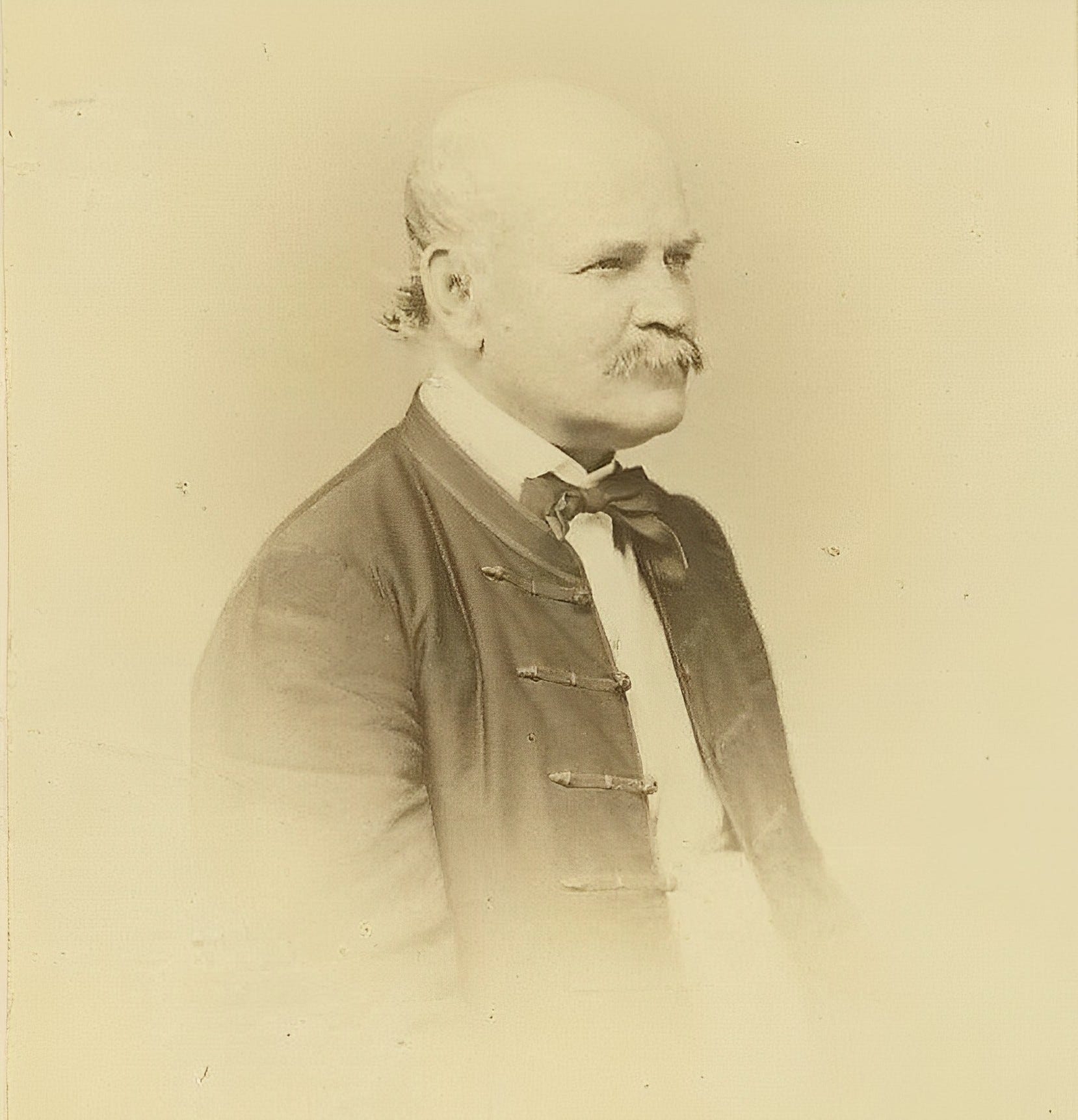
Vienna's General Hospital had two maternity divisions in the 1840s. Medical students trained in the first, and midwives in the second. In the first, childbed fever killed two or three times as many mothers.
Childbed fever is an infection that strikes women after they give birth. Ignaz Semmelweis was a young Hungarian doctor in the first division, and he wanted to know why his ward was so much deadlier.
The answer came in 1847 with the death of his colleague Jakob Kolletschka. Kolletschka had cut himself while examining the body of a woman killed by the fever, and he died of the infection that followed. The damage found in his body matched the damage found in the dead mothers.
So the deadly matter could pass from a corpse into a living person. The students went straight from the dissecting room to the women in labor, and Semmelweis concluded that they carried it on their hands.
In May 1847 he ordered every student to wash his hands in chlorinated lime before each examination. This chlorine powder was used as a disinfectant. In his division, deaths fell from 18.27 percent to 1.27 percent.
His idea also meant that doctors themselves were bringing the fever to the women. His chief had accepted that the disease could not be prevented, and at a medical conference most speakers rejected the new doctrine. In 1850 Semmelweis went home to Pest, now part of Budapest, and his rate at Saint Rochus Hospital there averaged 0.85 percent.
From 1861 he sank into depression and wrote angry letters to his critics. In 1865 colleagues lured him to an asylum near Vienna, where guards beat him and locked him up. He died about two weeks later, on August 13, of an infection in his right hand, possibly caught during the beating.
At a Glance
Who: Ignaz Semmelweis, a young Hungarian doctor
Place: The first maternity division of the Vienna General Hospital
Date: May 1847
Measure: Hand washing in chlorinated lime before each examination
Result: Deaths fell from 18.27 percent to 1.27 percent
11. Ibn al-Nafis (13th Century)
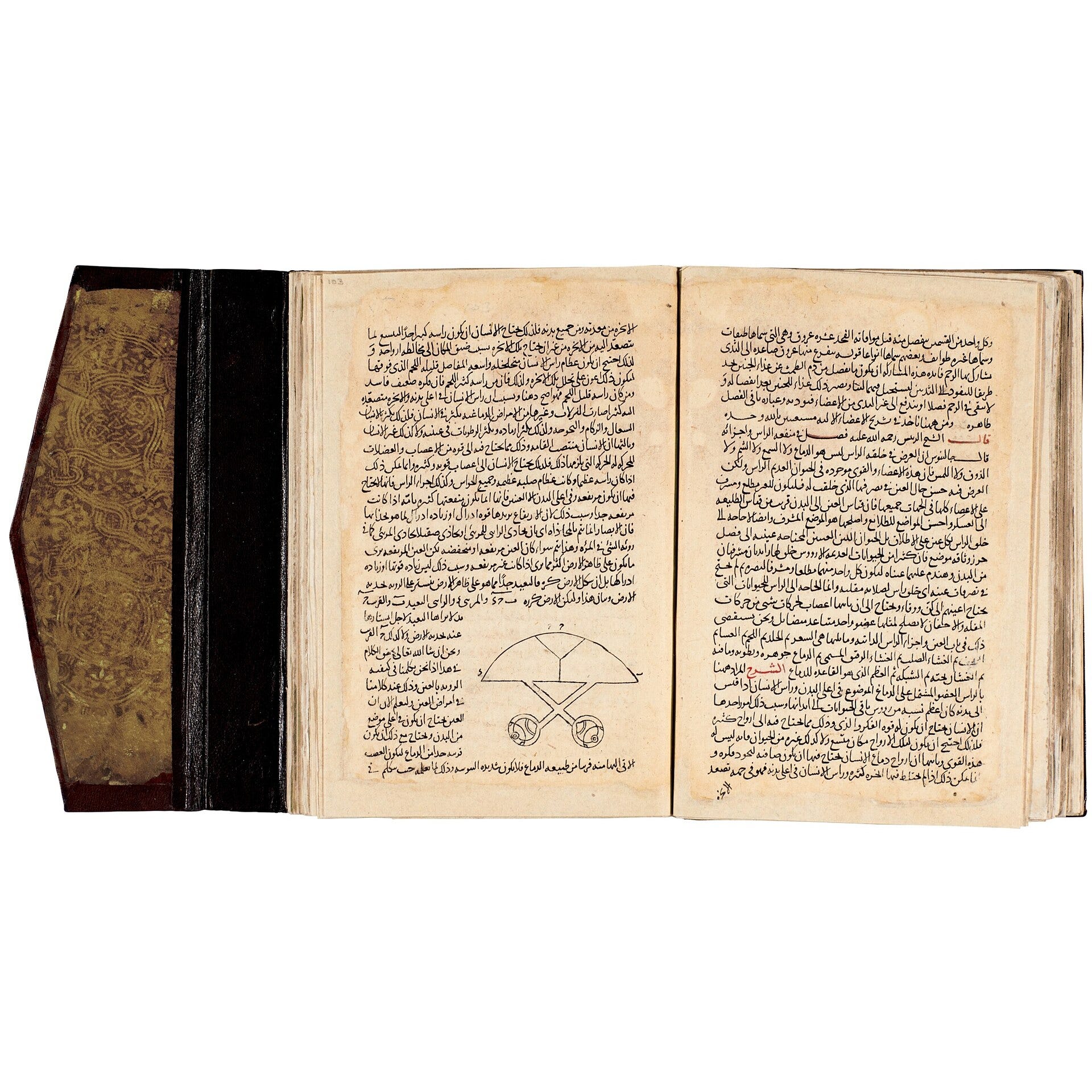
In 1924, an Egyptian doctor writing his thesis in Freiburg, Germany, found an old Arabic manuscript in the Prussian State Library in Berlin. It was written by Ibn al-Nafis, who had worked as a physician in Cairo more than six centuries earlier. What had this forgotten doctor understood about the heart that Europe would not grasp for more than two and a half centuries?