
In the summer of 1852, a London jeweler recut a famous Indian diamond, and the stone came out with nearly half its weight gone. A year earlier, crowds at a London exhibition had found it disappointing. For centuries a great diamond was wealth a ruler could carry, so it often changed hands through war and diplomacy. Twelve such stones can still be traced today.
Cool Stories About History is a newsletter to learn history the fun way.
Join free and get:
6 new stories a month, straight to your inbox
The full archive of stories
Comment, ask questions, and chat with other readers
How These Were Chosen
Every diamond here has a dated moment in its history, when it was found, given, bought, sold or seized. Each one can also be placed today, in a museum, in a state treasury or with its last known owner.
Weights are given in carats, the unit jewelers use for gems. A rough diamond is the stone as it comes out of the ground, before cutting grinds facets onto it.
The list climbs from stones few Americans have heard of to two that belong to the British Crown Jewels.
12. The Shah Diamond (Given to the Tsar in 1829)
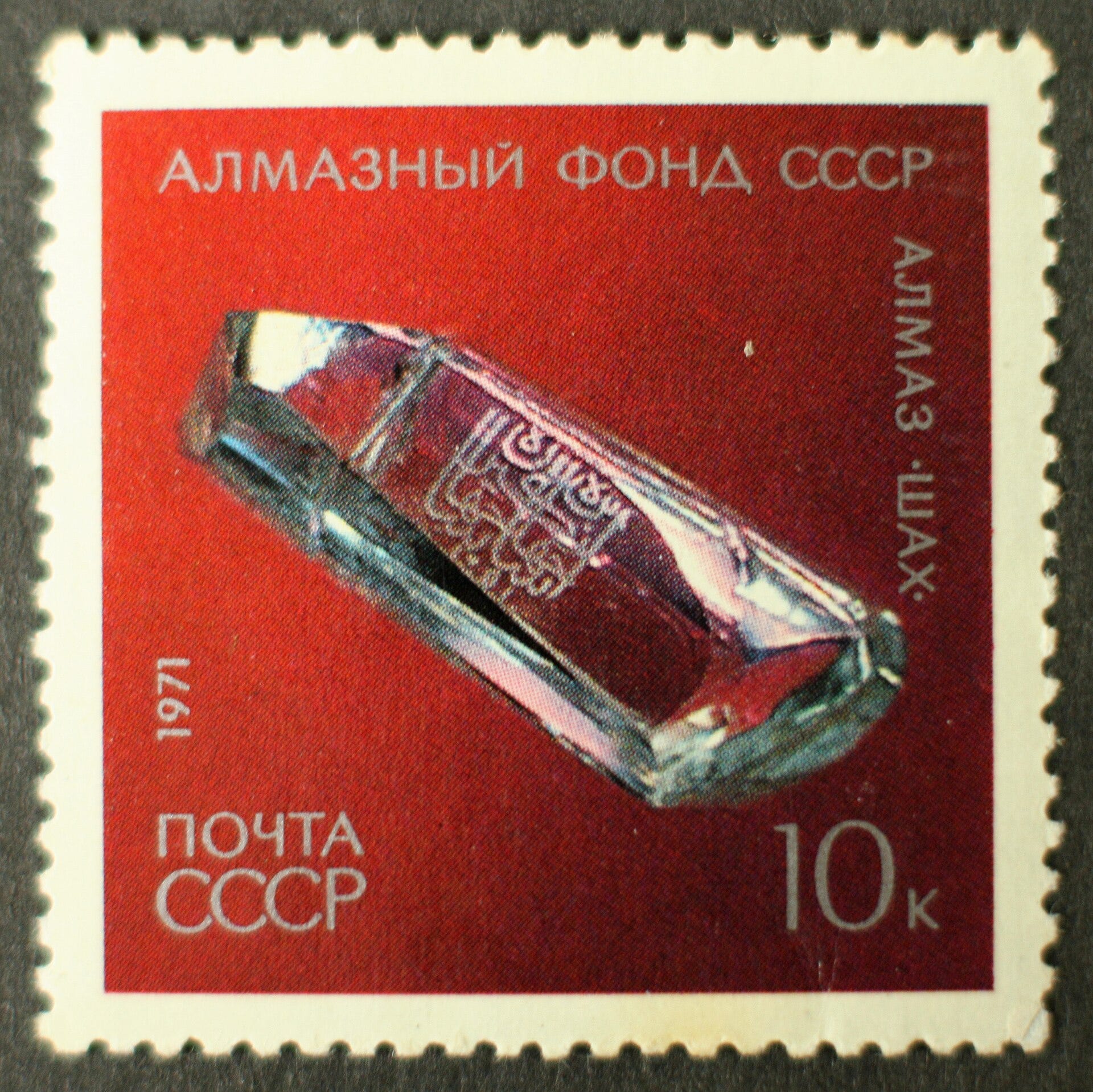
On August 22, 1829, a Persian prince named Khosrow Mirza stood before Tsar Nicholas I in the Winter Palace in St. Petersburg. He had come to apologize for a massacre, and among his gifts was a large diamond, the Shah.
Earlier that year, a mob in Tehran had killed the Russian envoy Alexander Griboyedov and most of his legation. Fath Ali Shah, the ruler of Persia, sent the prince to ask the tsar for pardon. The journey from the Persian city of Tabriz took nearly four months.
The other gifts included carpets, rare manuscripts and a pearl necklace. After the ceremony, Russia reduced the war indemnity that Persia still owed it.
The diamond itself is a yellow-tinged stone of about 89 carats, kept today in the Diamond Fund of the Moscow Kremlin. It was probably mined before 1591 at Golconda in southern India, the region that supplied the great diamonds of the past.
It came to Persia as war booty, carried back from India by Nader Shah, the Persian ruler who sacked Delhi in 1739.
Three Persian inscriptions are engraved on its surface, and each one names a ruler who owned it. The oldest, dated 1591, names the Indian ruler Nizam Shah Burhan II. The second, from 1641, names Shah Jahan, emperor of the Mughal dynasty that then ruled northern India.
The third names Fath Ali Shah himself, in 1826. Three years later he sent the stone to the Russian tsar as an apology, with his own name cut into it.
At a Glance
Weight: About 89 carats, yellow-tinged
Mined: Golconda, southern India, before 1591
Names engraved: Nizam Shah Burhan II (1591), Shah Jahan (1641), Fath Ali Shah (1826)
Given: To Tsar Nicholas I on August 22, 1829, after the killing of the envoy Alexander Griboyedov
Where it is now: The Diamond Fund, Moscow Kremlin
11. The Dresden Green (Spared in the 2019 Burglary)
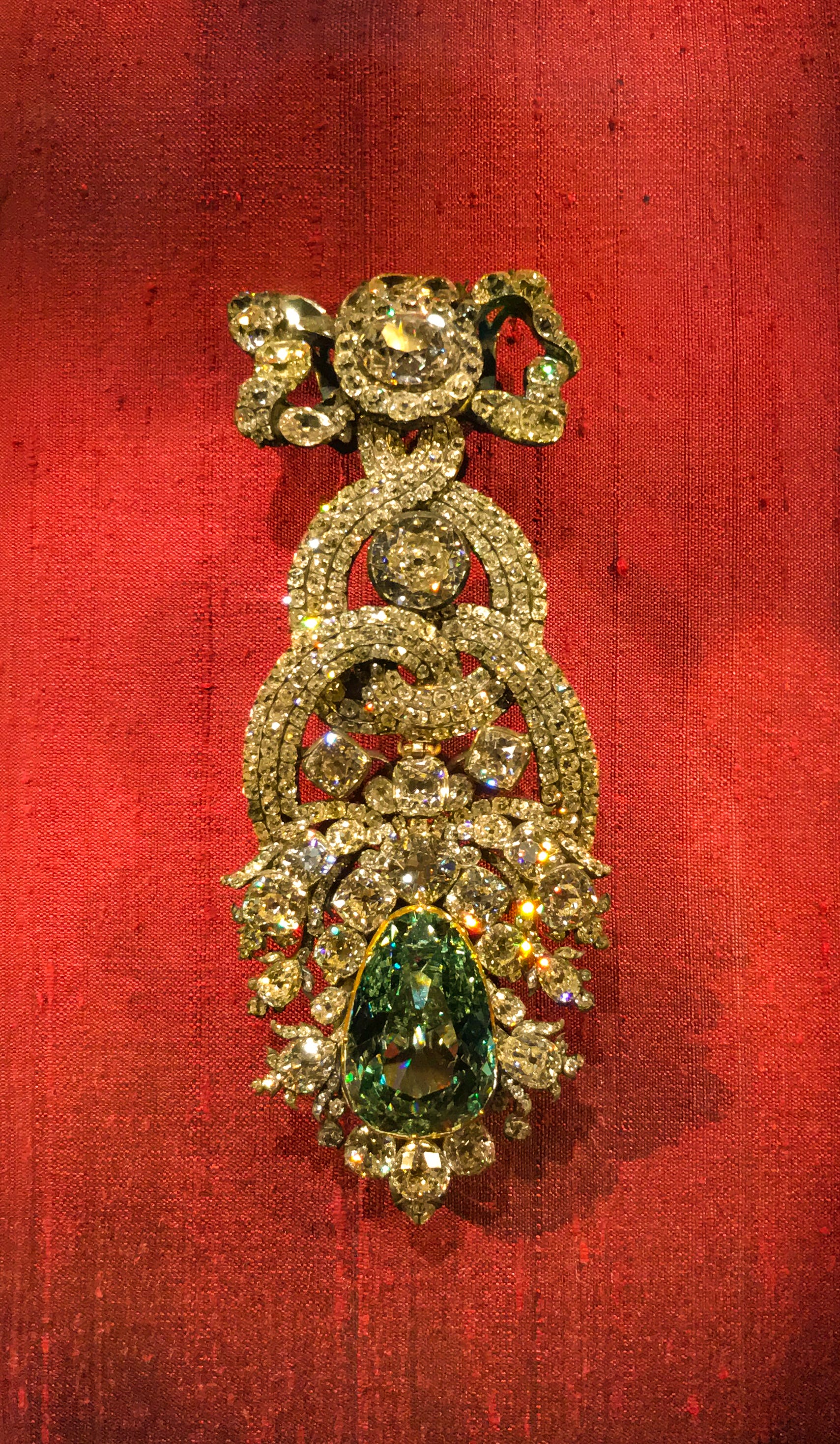
The Dresden Green weighs 41 carats, and green is among the rarest colors a diamond can have. Shortly before 5 a.m. on Monday, November 25, 2019, police were alerted to a break-in at the Green Vault, the old treasury of the rulers of Saxony in Dresden, Germany. Was its famous green diamond in its case that night?