
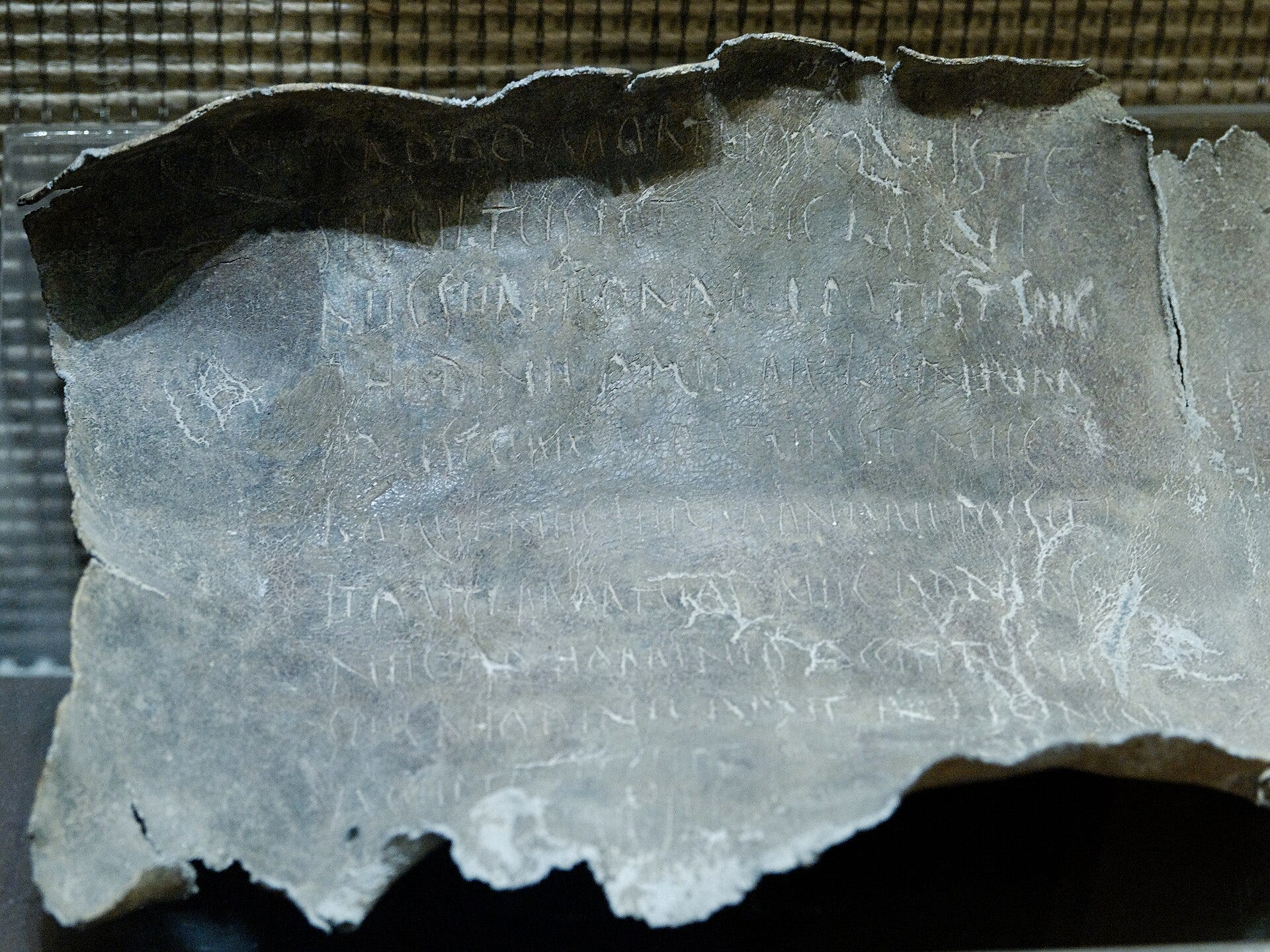
Romans who wanted a god to punish a thief or a rival scratched the request onto a small sheet of metal. More than 500 of these Latin curse tablets are known, and each was written by someone who wanted it to work. Many of the most famous curses began another way. They were stories told after a death or a defeat to explain it, and whoever first told them can often still be named.
Cool Stories About History is a newsletter to learn history the fun way.
Join free and get:
6 new stories a month, straight to your inbox
The full archive of stories
Comment, ask questions, and chat with other readers
How These Were Chosen
In the old sense, a curse is a wish for harm addressed to a god or another higher power. Only two of the twelve are of that kind. A Roman tablet from Bath was cut in metal to punish a thief, and the verse on Shakespeare's grave was cut in stone to guard a body.
One more began as a composer's fear about his own death. The other nine were told by other people, often long after the events they claim to explain. The best known of them all was born in the newspapers of 1923.
12. The Vilbia Curse Tablet, Bath (2nd to 4th century AD)
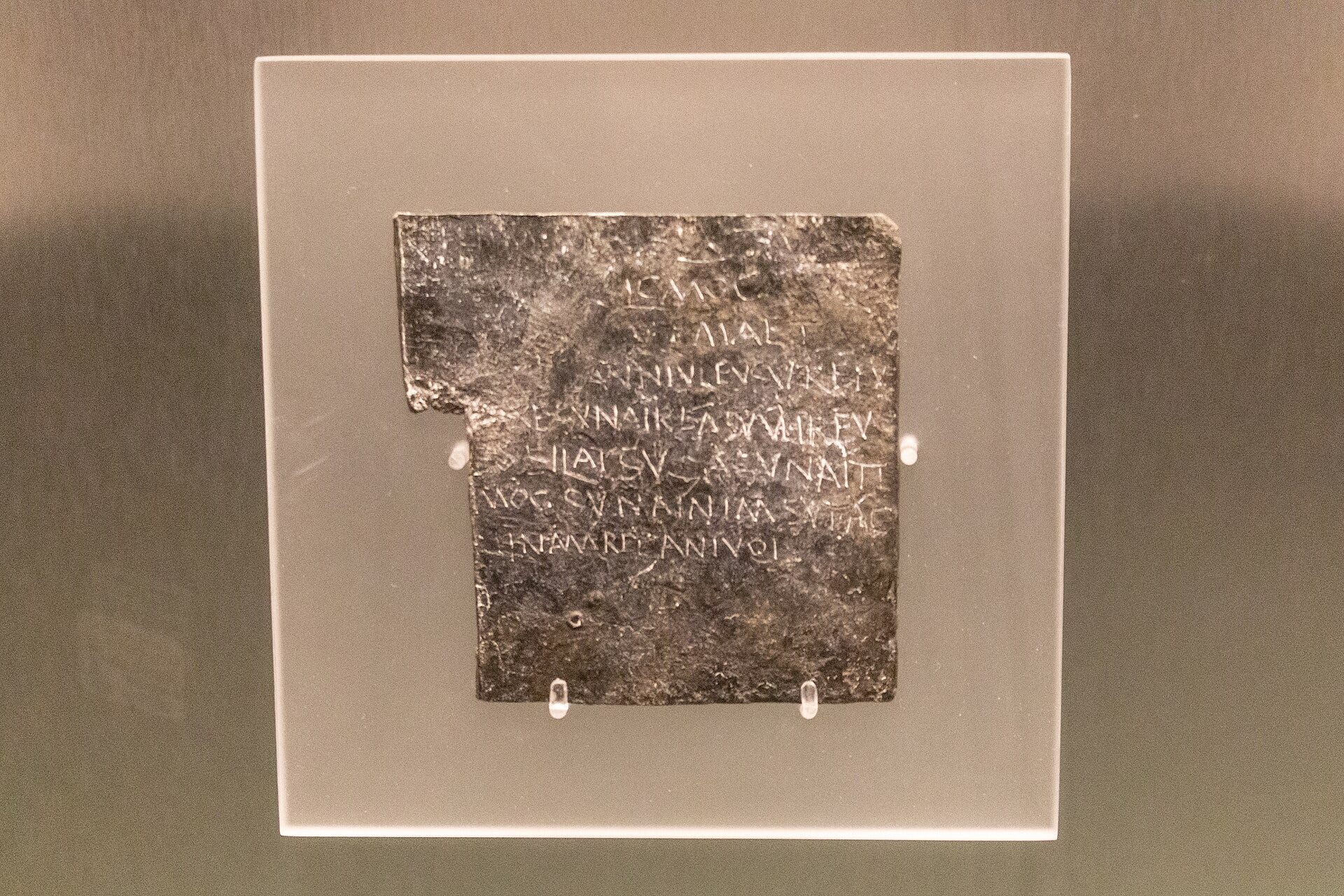
Between the second and fourth centuries AD, someone at Bath, in southwest England, was robbed of something, or someone, called Vilbia. The victim took a stylus and scratched a curse in capital letters onto a square of metal 2.7 inches on each side. Then the curse went into the hot spring of the town. That small plate is known today as the Vilbia curse tablet.
The Romans called the town Aquae Sulis, after the goddess of the spring. They identified Sulis with Minerva, their own goddess of wisdom, and since Rome had no police force, people robbed at the baths took their complaints to her.
More than 100 curses have come out of the spring, many of them about stolen clothes, jewelry or small sums of money. This one reads: "May he who has stolen Vilbia from me become as liquid as water." The thief, in other words, should melt away like the water that received the tablet.
Ten suspects follow by name, men and women alike, from Velvinna and Exsupereus to Germanilla and Jovina. The list was cut with a sharper point, perhaps by a second person.
The text also hides a trick found on no other curse tablet in Britain. The words stand in their normal order, but each one is spelled backward, letter by letter, which is hard to do.
The tablet came out of the Roman reservoir of the spring in 1880, the first curse ever found at Bath, and it is now in the Roman Baths Museum. Even its key word was once misread. A German expert who worked from a photograph took the stolen thing for a napkin, and only later was the name Vilbia read with certainty.
The spelling is settled, but what Vilbia was is not. Elsewhere in the Celtic world, Vilbia is a woman's name, which led to a reading of the crime as the theft of a girl. Later editors are less sure, and the word could just as well name an object.
At a Glance
The curse: May the thief of Vilbia "become as liquid as water"
Put into words by: The victim of the theft. The list of ten suspects may be in a second hand.
Written: Between the second and fourth centuries AD, at the hot spring of Bath
Found: In 1880, in the Roman reservoir of the spring, the first curse found at Bath
Where to see it today: Roman Baths Museum, Bath, England
11. Tamerlane's Tomb, Samarkand (1941)

Timur, known in English as Tamerlane, was a 14th-century conqueror who ruled a vast part of Asia and lies buried in Samarkand, in today's Uzbekistan. In June 1941, Soviet scientists opened his coffin, and two days later Germany invaded the Soviet Union. A famous legend says the tomb had warned that whoever disturbed it would unleash war, but who actually wrote that warning?