
The oldest record of court fools comes from ancient Egypt, where pygmies danced and clowned at the court of the pharaohs. More than four thousand years later, in the eighteenth century, European rulers still paid fools to make them laugh. That laughter bought a rare freedom, the right to tell a king what no adviser dared to say. Some fools used it to change a ruler's mind, and others went one joke too far.
Cool Stories About History is a newsletter to learn history the fun way.
Join free and get:
6 new stories a month, straight to your inbox
The full archive of stories
Comment, ask questions, and chat with other readers
How These Were Chosen
Some court fools were "natural fools," people who would be recognized today as having a learning disability. Others played the fool as a trade, and some were soldiers, poets or even princes who found themselves in the jester's role.
Every person kept here really lived and spent time close to a ruler. The courts run from England and France to Russia, China, Iraq and India, starting with names few Americans know.
Many of the best-known jester jokes were first written down long after the jester's death.
12. Jeffrey Hudson (1619 to About 1682)
The Duke and Duchess of Buckingham once gave a dinner for King Charles I of England and his French queen, Henrietta Maria. A cold baked pie was carried to the table. When the crust was opened, a small boy named Jeffrey Hudson climbed out and was presented to the queen as a gift.
Jeffrey had been born in 1619 in Oakham, in Rutland, England's smallest county. His father looked after the Duke of Buckingham's bulls. At nine, the boy stood no more than 18 inches tall, and his body was perfectly proportioned.
Court dwarfs belonged to the same world as court fools. Rulers kept them for amusement, and sometimes for luck, since a body like his was believed to ward off the evil eye.
The queen had a particular reason to want him. Her mother, Marie de Médicis, kept a collection of dwarfs, and Henrietta Maria was glad to have one of her own. Jeffrey went from near rags to silk and satin, with two tall servants to attend him, and he performed in the costumed shows of the court.
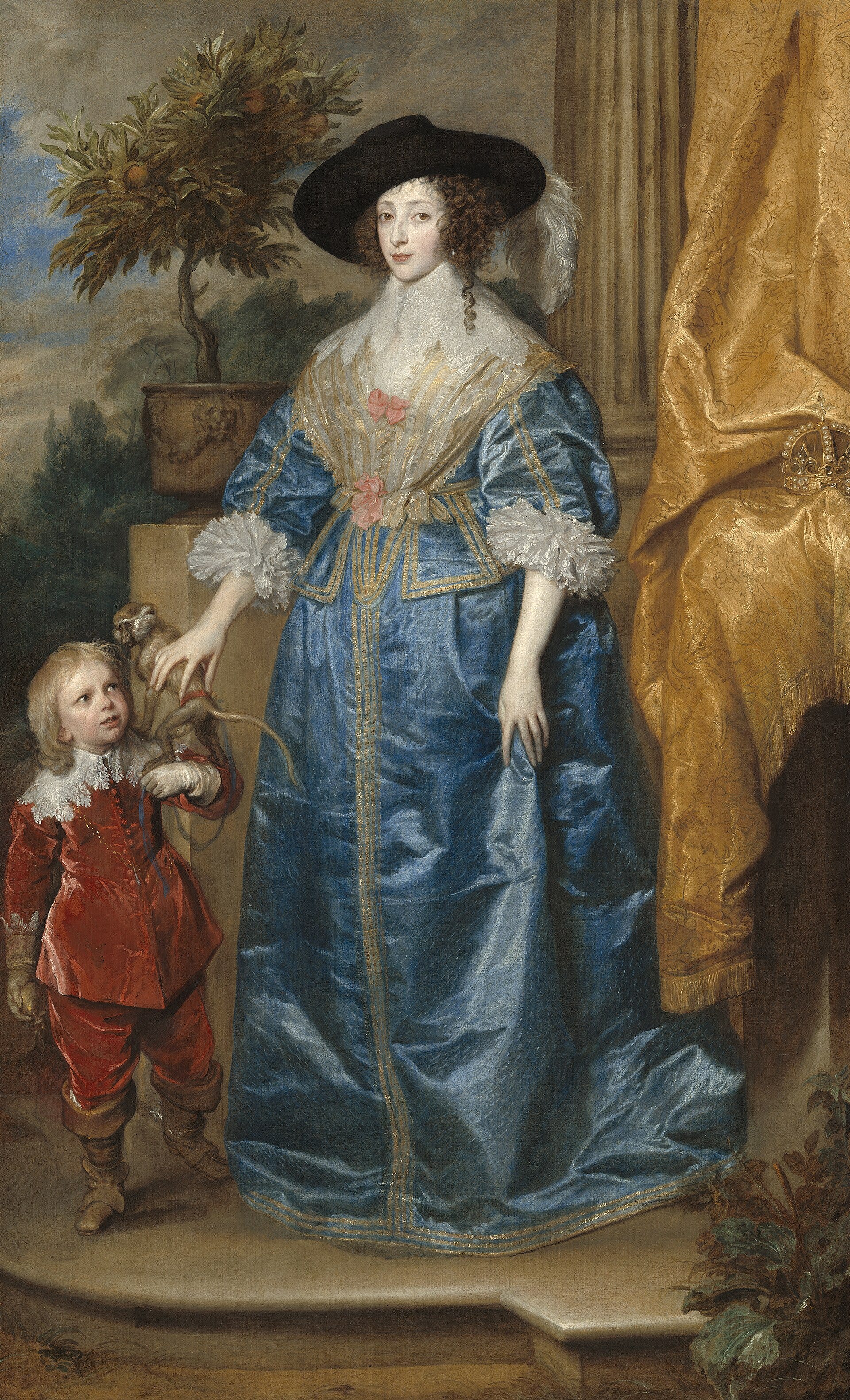
Far from a silent toy, Jeffrey was witty and became one of the queen's trusted advisers. In 1633, when he was about 14, Anthony van Dyck painted him beside her with a monkey named Pug. The canvas now hangs in the National Gallery of Art in Washington.
When civil war broke out in England, Jeffrey followed the queen into exile in France. In Paris in 1644, aged 25 and 3 feet 9 inches tall, he killed the brother of Lord Crofts in a duel, when dueling was a crime in France.
Later, pirates from North Africa captured him and held him as a slave for about 25 years, during which he said he grew to more than four feet. Back in England, he retired to a thatched house in Oakham. Accused during a panic over a supposed Catholic plot, he spent a short time in prison, died poor around 1682, and Oakham now has a blue plaque in his honor.
At a Glance
Who: Jeffrey Hudson, court dwarf of Queen Henrietta Maria
Born: 1619, Oakham, Rutland
Famous for: Served to the queen in a pie, as a boy
Painted: By Anthony van Dyck, 1633
Where to see it today: National Gallery of Art, Washington
11. Prince Golitsyn and the House of Ice (1740)
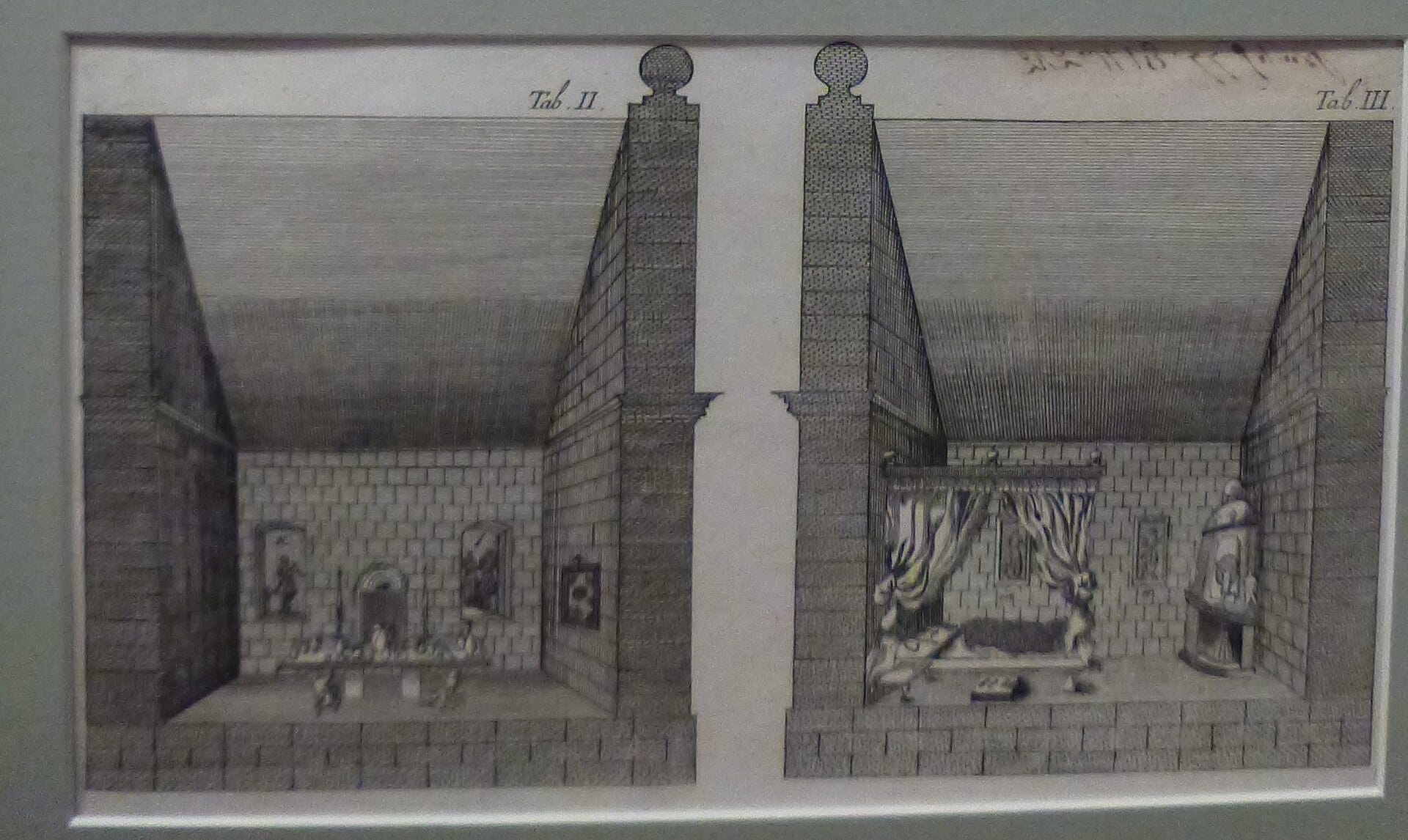
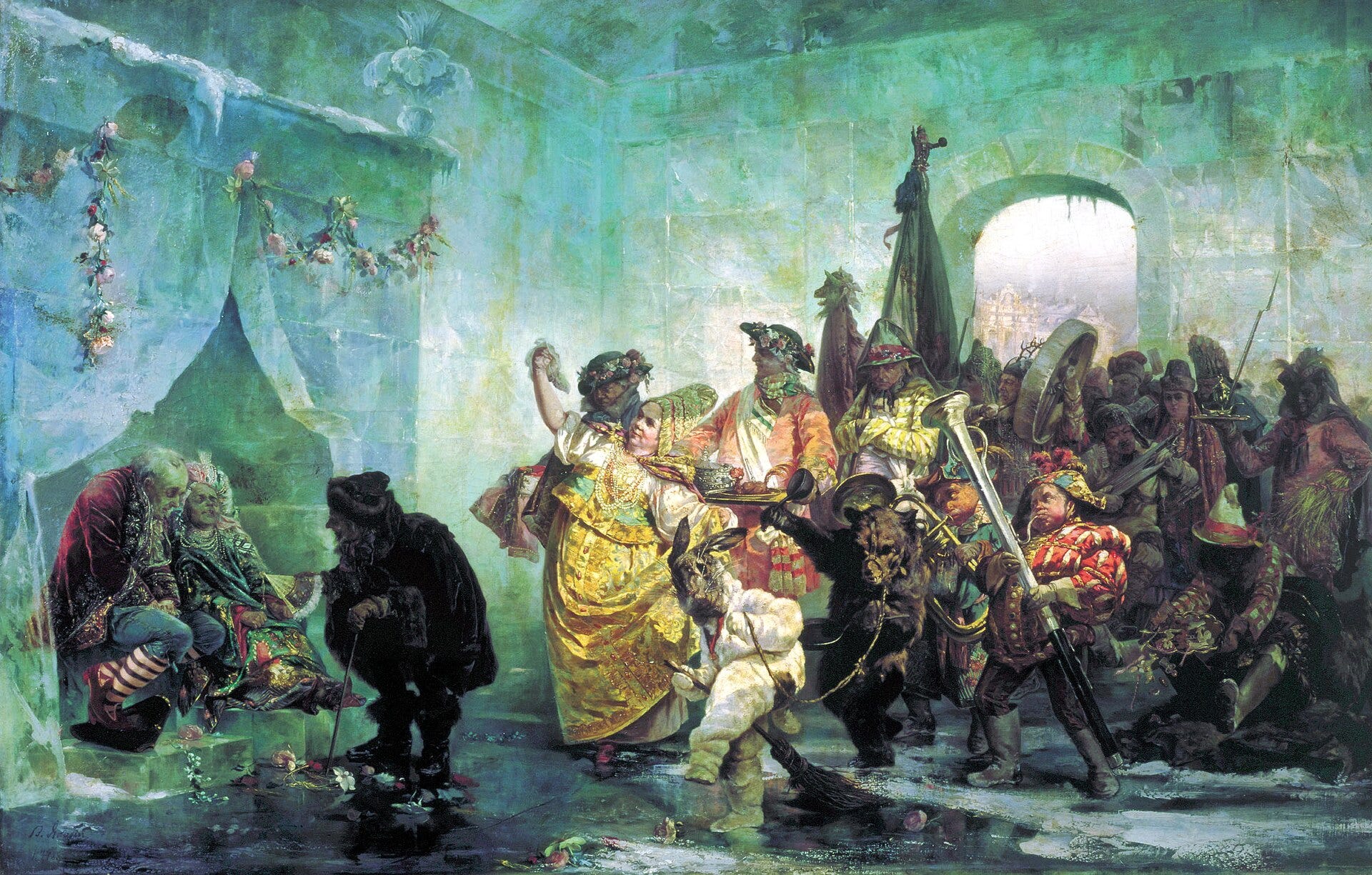
On February 6, 1740, a newly married couple in Saint Petersburg was locked inside a house built entirely of ice and left there until morning. The groom was Prince Mikhail Golitsyn, the bride was Avdotia Buzheninova, and the empress of Russia had planned every detail of their wedding. Why would an empress send a prince to spend his wedding night inside a block of ice?