
Lists of eerie parallels between Abraham Lincoln and John F. Kennedy have circulated since the 1960s, and most of their points are exaggerated or false. What holds up is ordinary: both presidents were shot on a Friday, and both were succeeded by a man named Johnson. The strangest coincidences in history lie elsewhere, in events that really happened and left a trace in the records of their time.
Cool Stories About History is a newsletter to learn history the fun way.
Join free and get:
6 new stories a month, straight to your inbox
The full archive of stories
Comment, ask questions, and chat with other readers
How These Were Chosen
Only coincidences that the evidence supports were kept. Nearly all rest on something that can still be read or seen, from letters, journals and court records to patents, gravestones and printed books.
Famous tales that no record backs up were left out, however often they are repeated. That rule removed several of the best-known stories on other lists, including most of the Lincoln and Kennedy parallels.
The list runs from a rescue on a train platform to a writer every American knows.
12. Edwin Booth and Robert Todd Lincoln (1863 or 1864)
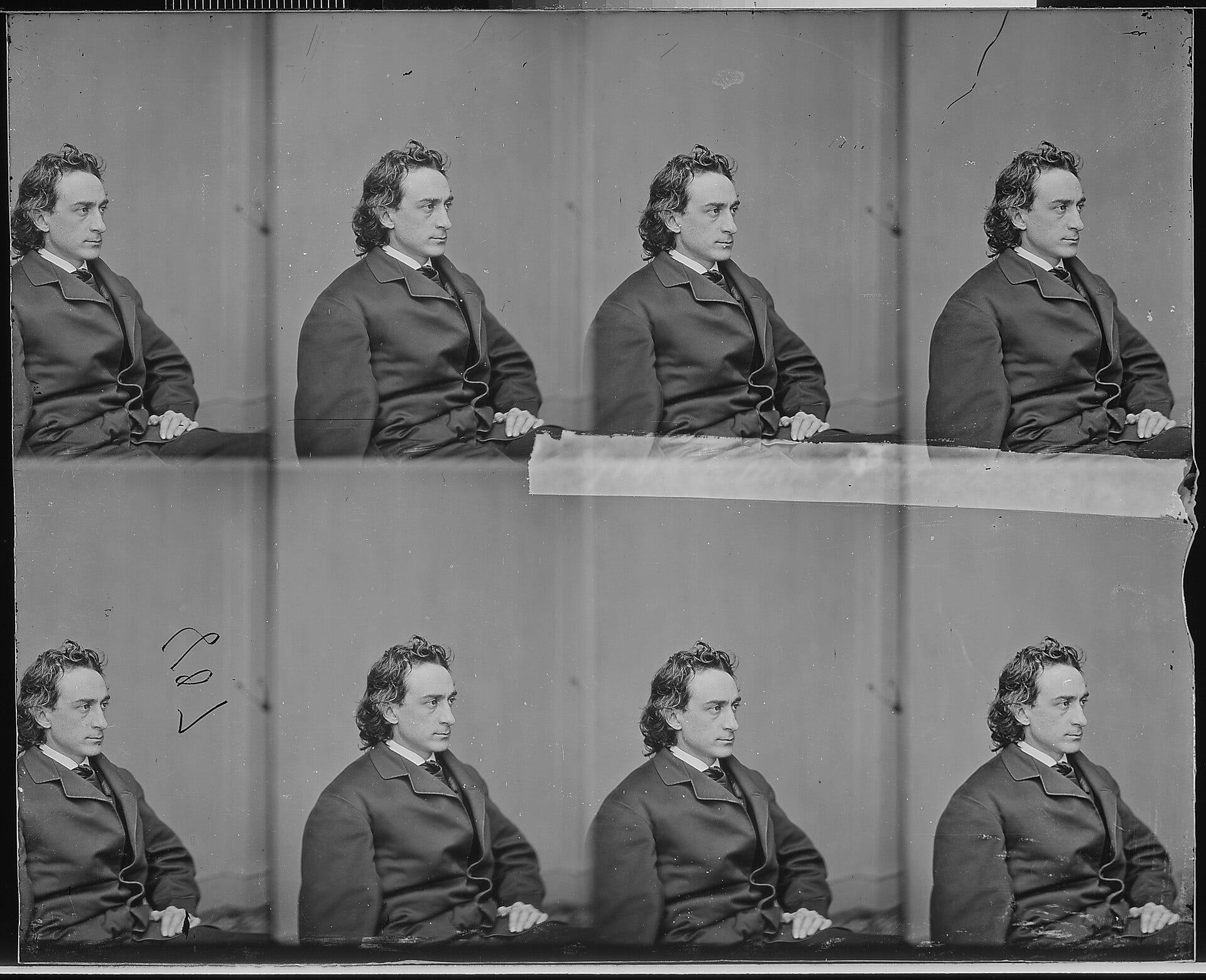
Late one night, at the railroad station in Jersey City, New Jersey, a crowd of passengers pushed forward to buy places in a sleeping car. Among them was Robert Todd Lincoln, the eldest son of President Abraham Lincoln. The year was 1863 or 1864, and the Harvard student was traveling from New York to Washington.
The crowd pressed him against the side of a car, and at that moment the train began to move. "By the motion I was twisted off my feet," Robert wrote, and he started to slide into the gap between the moving car and the platform.
Someone seized his coat collar and pulled him back up to safe footing. "Upon turning to thank my rescuer I saw it was Edwin Booth," Robert wrote in 1909, more than forty years later, in a letter to the editor of the Century Magazine.
Edwin Booth was one of the most famous actors in America, and his younger brother was John Wilkes Booth. On April 14, 1865, John Wilkes Booth shot President Lincoln at Ford's Theatre in Washington.
Robert had turned down his parents' invitation to the theater that evening, saying he planned to go to bed early. The next morning, he was in the house where his father died.
So the man who had saved Robert's life was the brother of the man who killed his father. Robert had told the story to Adam Badeau, an officer on General Grant's staff, and in 1865 Badeau wrote to Edwin Booth to congratulate him.
Robert later became secretary of war, and on July 2, 1881, he stood about forty feet from President Garfield when Garfield was shot. Twenty years later, his train pulled into Buffalo on the evening President McKinley was shot there.
At a Glance
Who: Robert Todd Lincoln, saved by the actor Edwin Booth
Date: 1863 or 1864, late at night
Place: The railroad station at Jersey City, New Jersey
The coincidence: The rescuer's brother killed the rescued man's father in 1865
Told by: Robert himself, in a letter of 1909 to the editor of the Century Magazine
11. J. G. and Patrick Tierney (December 20)
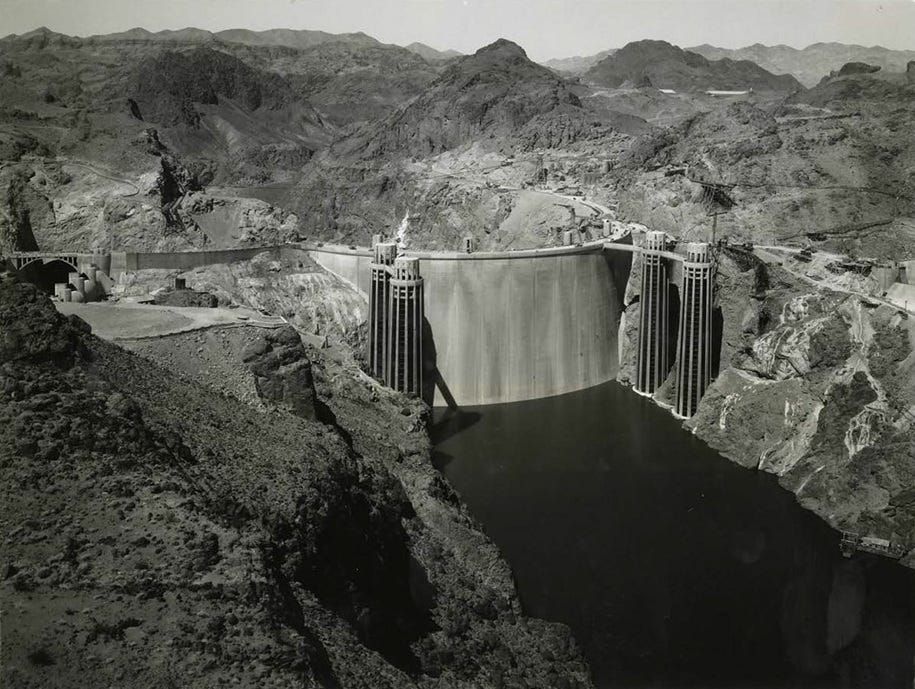
A 25-year-old electrician's helper named Patrick Tierney fell about 320 feet from one of the intake towers of Hoover Dam, on the Arizona side. It was December 20, 1935, and years earlier, on another December 20, the Colorado River had already taken a Tierney, before work on the dam had even begun. Who was the first Tierney to die there?