
A great bronze bell is cast in a single pour of molten metal, and a cracked one usually has to be melted down and cast again. That made a large bell a costly possession for any town or ruler, and something worth fighting over. History remembers a few bells for their size or their sound, and many more for what people did to them.
Cool Stories About History is a newsletter to learn history the fun way.
Join free and get:
6 new stories a month, straight to your inbox
The full archive of stories
Comment, ask questions, and chat with other readers
How These Were Chosen
A bell earned a place here when something happened to it that nobody had planned on the day it was cast. That turn also had to be one the records can date. Bells famous only for their size, their age or their beauty were left out.
All twelve still exist, or a bell cast to take their place does.
They are ranked by how familiar their names are in the United States, from a church bell in a small Russian town to the one in Philadelphia.
12. The Uglich Bell (1591)

In the 1590s the Uglich bell, a church bell in a small Russian town north of Moscow, stood trial for treason. It was found guilty and sentenced to 120 lashes.
The case began with a death. In 1591 Dmitry, the youngest son of Ivan the Terrible, died in Uglich, apparently murdered. His father had ruled Russia for decades, and his older half brother Tsar Fyodor now reigned in Moscow.
When the boy was found dead, the church bell rang the alarm over the town. The people who came running at its sound rose in a riot.
In Moscow, power lay with Boris Godunov, the regent who governed in Fyodor's name. He had the bell itself put on trial, since it was the bell that had called the crowd out.
The lashes were only the start of the sentence. A notch was broken in the bell's ear, the loop at the top from which it hung, and its clapper was torn out. The clapper is the metal tongue that swings inside a bell and strikes it, so the bell could no longer ring.
Last came exile for life. The bell was sent east to Tobolsk, a town in Siberia, and stayed there for about three centuries.
Then it returned to Uglich, where it is kept in the town's museum. The town's kremlin, the old walled fortress, holds the Church of Tsarevich Dmitry on the Blood, built on the spot where the boy died.
At a Glance
Bell: The alarm bell of Uglich, a church bell
Crime: Ringing the alarm after the death of Dmitry, son of Ivan the Terrible, in 1591
Sentence: 120 lashes, a notch broken in its ear, its clapper torn out, exile for life
Exile: Tobolsk, in Siberia, for about three centuries
Today: Back in Uglich, in the town's museum
11. The Hōkōji Bell (1614)
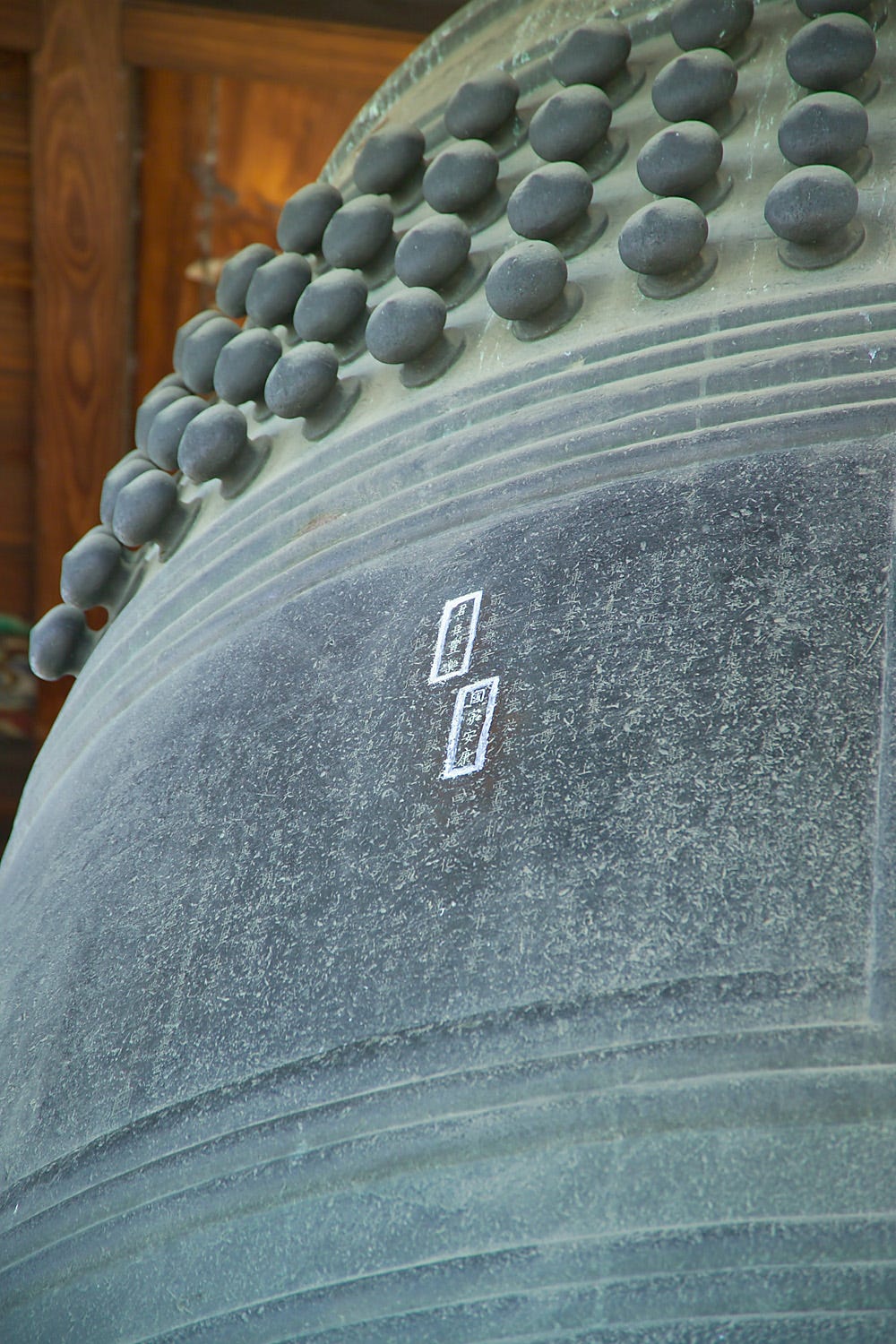
The Toyotomi family had unified Japan under a great warlord, and in 1614 his son hung a huge bronze bell at their temple of Hōkōji. Power now lay with their rival Tokugawa Ieyasu and his military government, and he read the prayer for peace cast into the bell: 国家安康. Its second and fourth characters, 家 and 康, spell his own name, and a third character between them cut them apart.