
For more than a thousand years, astronomers from Persia to Europe worked from one list of more than 1,000 stars, made in Alexandria by Ptolemy. They checked it by eye, with arcs and circles of metal or stone, until the telescope arrived in 1609. Before the telescope and after it, a few observers caught something no one had pinned down before. Some were paid for it, and some lost nearly everything.
Cool Stories About History is a newsletter to learn history the fun way.
Join free and get:
6 new stories a month, straight to your inbox
The full archive of stories
Comment, ask questions, and chat with other readers
How These Were Chosen
Most of these twelve were the first to see something in the sky, or to measure it more finely than anyone before them. They found a comet, a faint cloud, the length of the year, a rule hidden in a pulsing star. Others built observatories of stone, calculated the sky, taught it, or moved the Sun to the center. One crossed the world for a measurement a cloud took from him.
Galileo, Kepler and Newton stay out, because their stories are told everywhere. Five of the twelve were born and worked outside Europe and the United States, four were women, and the names grow more familiar toward the end.
12. Guillaume Le Gentil and the Transits of Venus (1761 to 1771)
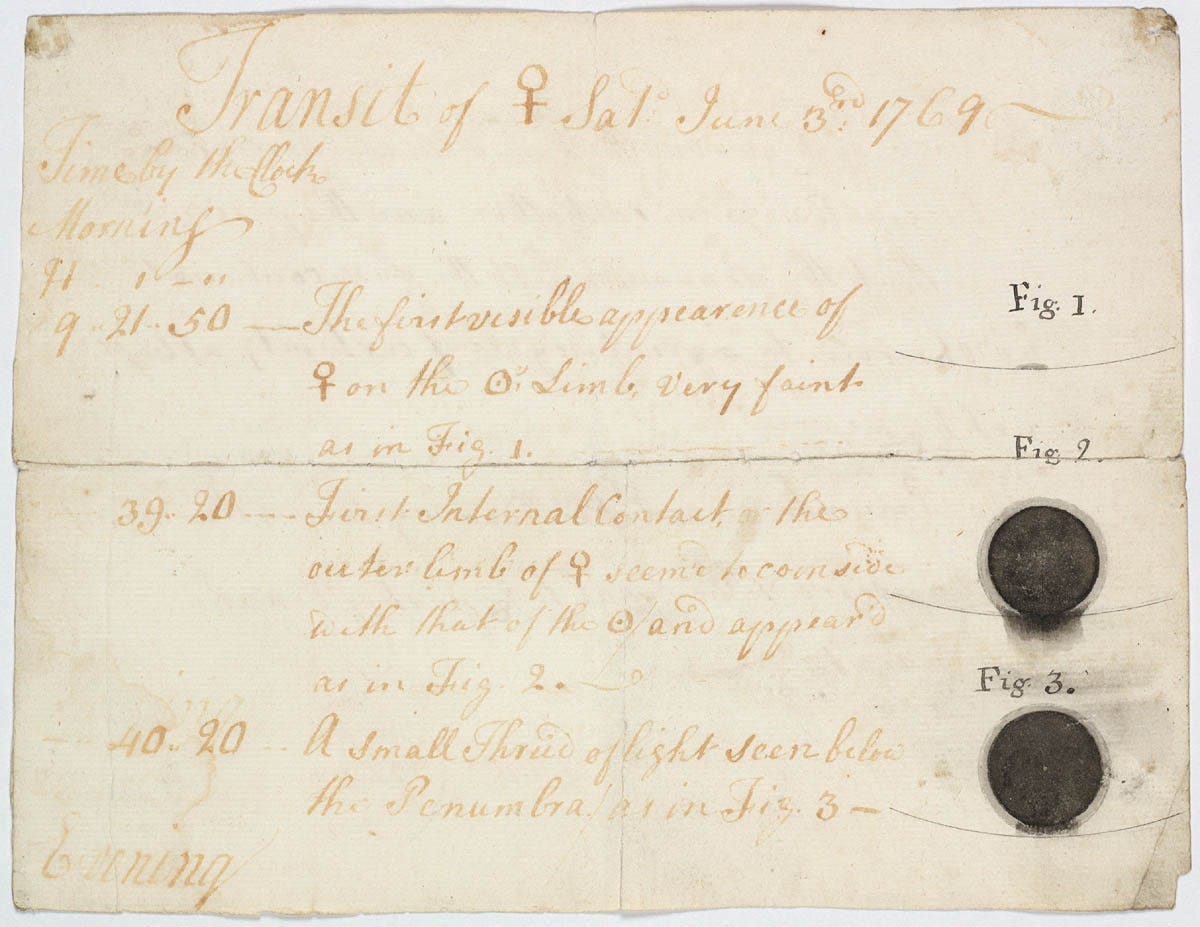
On the day a French astronomer had waited eight years to see, a single cloud covered the Sun over Pondicherry, a French trading post in India. His name was Guillaume Le Gentil, and he belonged to the Academy of Sciences in Paris.
He had come for a transit of Venus, the rare moment when the planet crosses the face of the Sun. Timed from places far apart on Earth, a transit could give the distance from the Earth to the Sun. That one number would set the scale of the whole solar system.
The Academy had first sent him to Pondicherry for the transit of 1761. France and Britain were at war, and the English captured the town just as he arrived. He had to watch the transit from the deck of a ship, which rolled too much for any useful measurement.
Rather than sail home, he stayed in the Indian Ocean for the next transit, eight years later. While he waited, he studied the plants, animals and rocks of Mauritius and Madagascar. His own calculations favored Manila, in the Philippines, but the Academy ordered him back to Pondicherry.
He arrived in March 1768, and for a month before the transit the skies stayed clear. Then, on June 3, 1769, a cloud hid the Sun during exactly the part of the transit he needed to time. In Manila, the sky was clear.
The trip home brought illness and a storm near the Cape of Good Hope that drove his ship back to Mauritius. He landed at Cadiz, in Spain, in 1771 and crossed the Pyrenees to Paris, after eleven and a half years away.
Paris had given him up. The Academy had dropped him from its active members, and his relatives, believing him dead, had begun dividing his estate. His lawsuits never won the money back and left him paying the court costs.
At a Glance
Who: Guillaume Le Gentil, French astronomer of the Academy of Sciences
What he went to see: The transits of Venus of 1761 and June 3, 1769
Where: Pondicherry, the French trading post in India
How long he was gone: Eleven and a half years, home in 1771
How it ended: A cloud hid the 1769 transit, and his relatives had begun dividing his estate
11. Ulugh Beg, the Astronomer Prince of Samarkand (1420 to 1449)
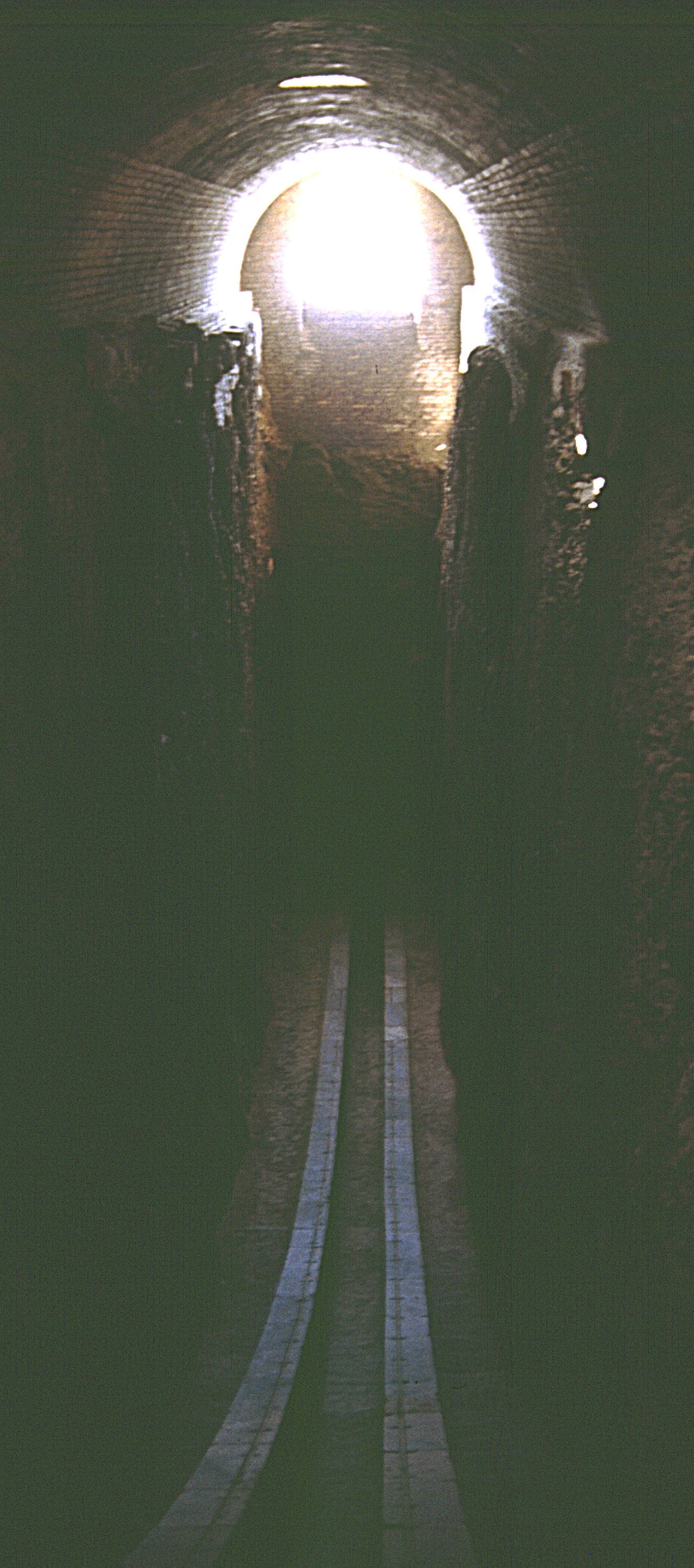
Ulugh Beg was the grandson of Tamerlane, the conqueror who built an empire across Central Asia. In 1420, as governor of Samarkand, he founded an observatory on a rocky hill outside the city, with a measuring arc partly sunk underground. Twenty-nine years later he was killed, on an order that came from inside his own family.