
In January 1936, Time magazine named an African emperor its Man of the Year, three months after Italy had invaded his country. He was one of many African rulers whose own words reached Europe, in letters to Lisbon, a speech in Geneva and a plea carried to London. The twelve kings and emperors gathered here ruled from the Mediterranean coast to the far south of the continent.
Cool Stories About History is a newsletter to learn history the fun way.
Join free and get:
6 new stories a month, straight to your inbox
The full archive of stories
Comment, ask questions, and chat with other readers
How These Were Chosen
Every ruler here governed a kingdom or an empire in Africa, outside the Egypt of the pharaohs. Their own languages gave them other titles, such as kabaka in Buganda or Asantehene in Asante, but each held the highest power in his land.
Four of them ruled empires: Sundiata of Mali, Askia Muhammad of Songhai, and Menelik II and Haile Selassie of Ethiopia. The oldest fought Rome more than 2,000 years ago, the most recent lost his throne in 1974, and the best known come last.
12. Khama III of Bechuanaland (1895)
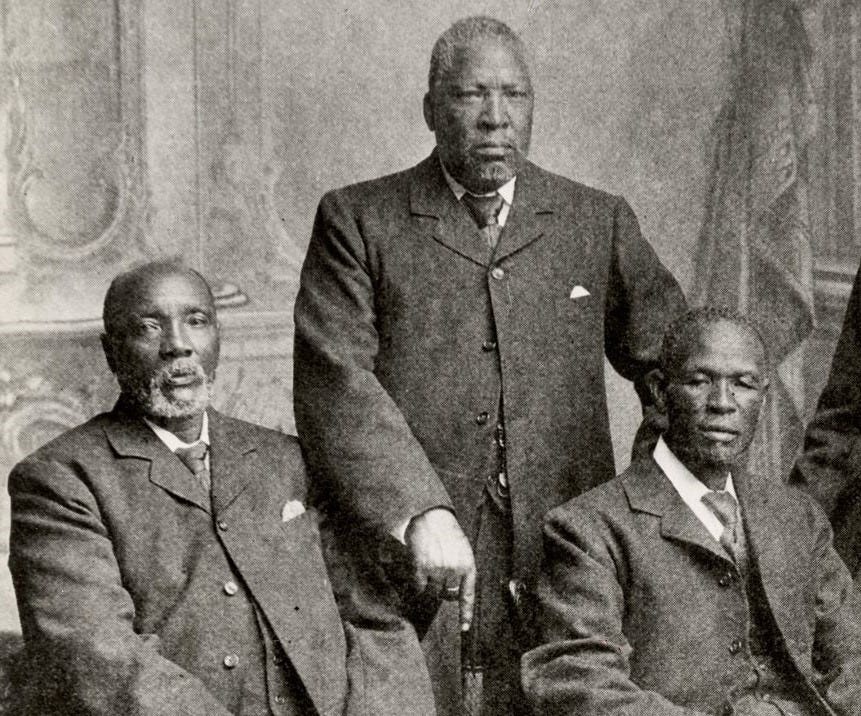
Journalists mobbed three African kings when they stepped off the train at Paddington station in London on September 6, 1895. The best known was Khama III, kgosi, or king, of the Ngwato. His country of Bechuanaland lay north of the British colony at the Cape of Good Hope, in what is now Botswana.
They had sailed for 16 days to save that land from a company. In 1885 Khama had welcomed British protection over Bechuanaland. But in November 1894 the businessman Cecil Rhodes asked London to hand the territory to his British South Africa Company.
In June 1895, newspapers at the Cape reported that the transfer would come soon. So Khama and two other Tswana kings, Sebele and Bathoen, went to plead in Britain itself. Missionaries backed them, and so did the campaigners against drink, because Khama was known as an enemy of alcohol.
For two months they toured the country, and on the Clifton bridge in Bristol, high over a gorge, they refused to go on. "We are afraid," they said. "We'll go back."
In Halifax, the Mechanics' Hall was so full that hundreds were turned away, and the crowd signed a petition to the colonial secretary, Joseph Chamberlain. Khama guarded every word he spoke. "Be sure now, and only write as I have spoken to you, nothing more than my words," he told a journalist.
On November 6, Chamberlain dictated a settlement, and five days later the three kings accepted it in a joint letter. Rhodes's company would not run their country.
On the afternoon of November 20, Queen Victoria received them at Windsor Castle. Each king went home with Christian scripture in Setswana, a signed portrait of the queen and a shawl for his wife. Khama ruled until his death in 1923, and in 1966 his grandson Seretse Khama became the first president of Botswana.
At a Glance
Who: Khama III, kgosi (king) of the Ngwato
Country: Bechuanaland, today Botswana
Journey: Britain, September 6 to November 20, 1895
Goal: Keep his land out of the hands of Cecil Rhodes's company
Legacy: His grandson Seretse Khama, first president of Botswana in 1966
11. Moshoeshoe I of the Basotho (1852)
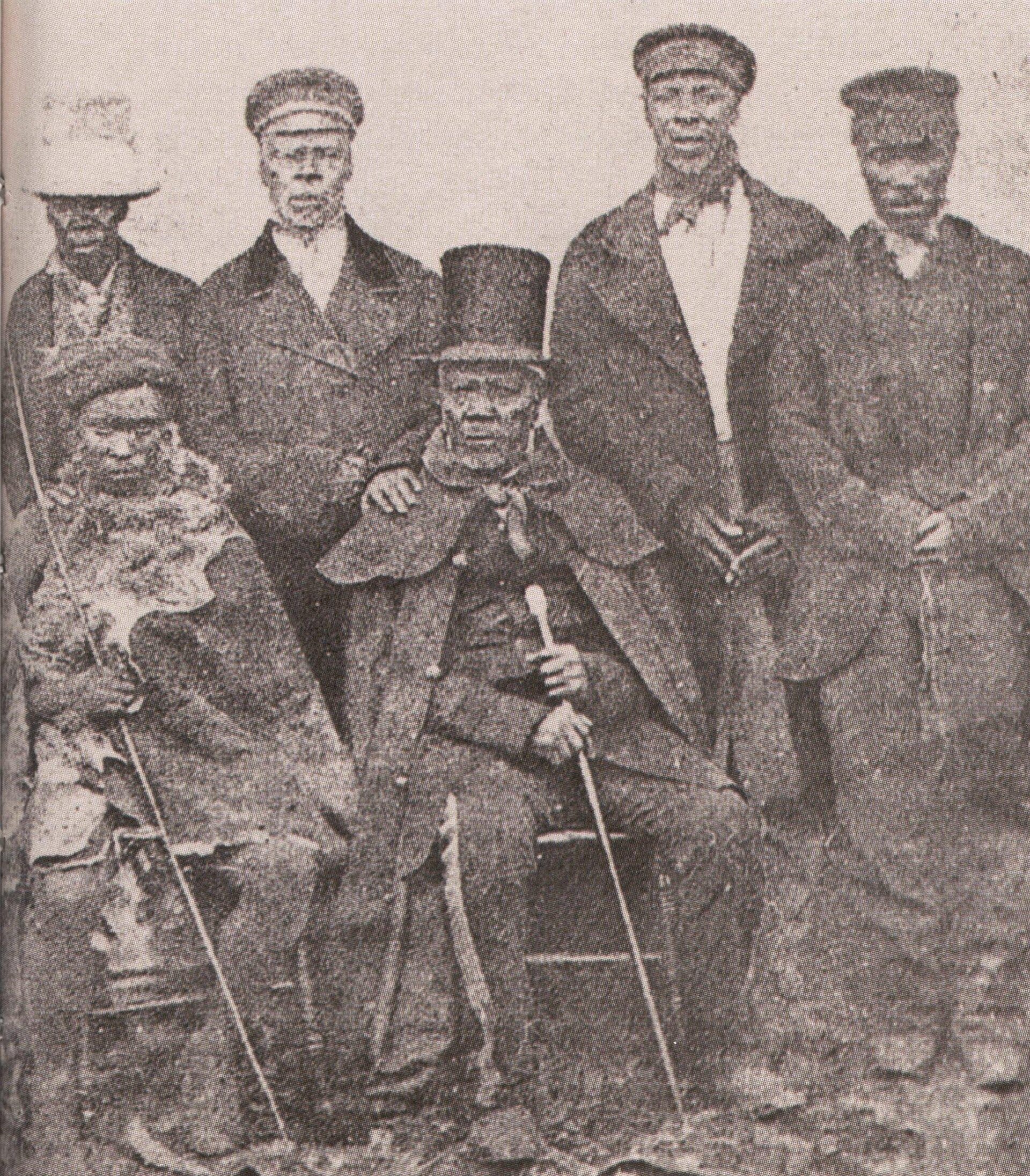
At midnight on December 20, 1852, Moshoeshoe, king of the Basotho, sat down to write to the British general his horsemen had fought since dawn. His people lived in the mountains along the Caledon River in southern Africa, in what is now Lesotho.