
People have been carving rooms beneath their feet for about 6,000 years, and some of those rooms could hold thousands of people at once. Most were dug to hide from an enemy or to bury the dead, and many were forgotten until someone broke through a wall. Not all of them are ancient. The youngest network, in Vietnam, was begun in the late 1940s.
Cool Stories About History is a newsletter to learn history the fun way.
Join free and get:
6 new stories a month, straight to your inbox
The full archive of stories
Comment, ask questions, and chat with other readers
How These Were Chosen
These are twelve places where people dug whole networks of rooms below ground, or took over old ones, to live, hide, work or bury their dead.
Only some are ancient. The chambers on Malta go back to about 4000 BC, and the refuges in Turkey and Iran are well over a thousand years old. Seattle's buried sidewalks date from 1889, and the Vietnamese tunnels from the late 1940s. The pit homes of Matmata have never been dated.
They run from a chalk tunnel in France to the most famous of all.
12. The Tunnels of Naours, France (1917)
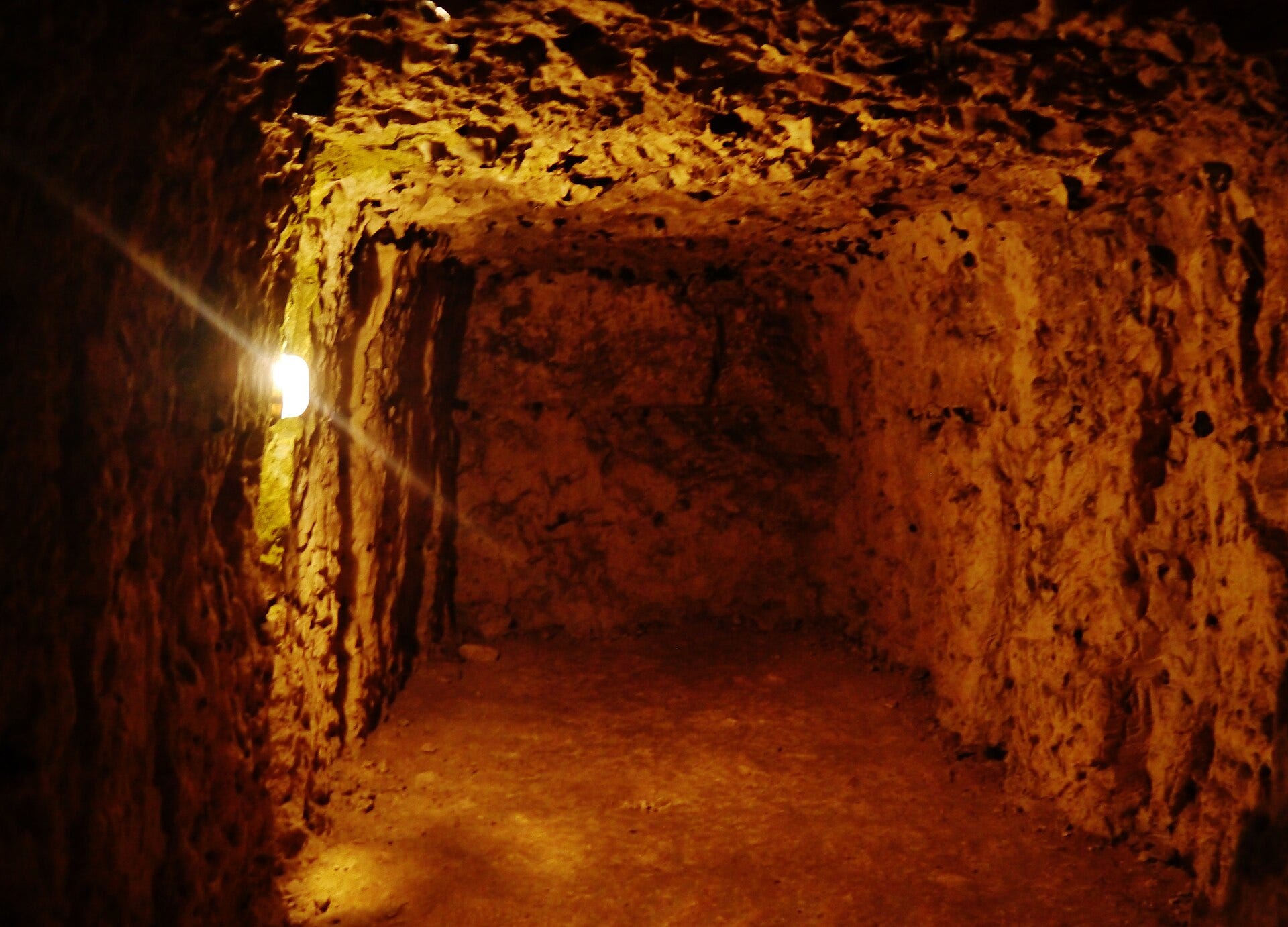
With the blade of a penknife, an Australian officer cut his name and his unit into the chalk wall of a tunnel in northern France. He was Lieutenant Leslie Blake, a geologist and mapmaker who had explored in the Antarctic, and the day was January 1, 1917.
The tunnel ran under Naours, a village in Picardy that lay a few miles behind the front of the First World War. About 2 miles of passages and some 300 rooms lie there, roughly 100 feet below the plateau.
Villagers had cut the chalk by hand as a quarry, and from the 1400s they turned the galleries into a refuge from war. Whole families went down with their livestock when soldiers came. About 3,000 people hid there during the Thirty Years' War of the 1600s, and their coins, pottery and musket bullets were later found in the rooms.
The refuge was then forgotten, until a priest, Father Danicourt, spent 18 years digging it out and opened it to visitors in 1888. When the war came, Allied soldiers stationed nearby paid a small fee to walk the passages with English-speaking guides. The first Australians arrived in July 1916.
Blake was one of thousands who left a name. More than 3,000 inscriptions from the war cover the walls, about 2,000 of them Australian. Blake was wounded several times in the fighting that followed, and he died on October 3, 1918, less than six weeks before the armistice.
His name then lay unnoticed for almost a century. In 2014 the French archaeologist Gilles Prilaux came across the soldiers' inscriptions while studying medieval objects in the tunnels. The letters Blake had cut and then traced over in pencil still looked fresh.
At a Glance
Signed by: Lieutenant Leslie Blake, Australian geologist and mapmaker, who died on October 3, 1918
Date: January 1, 1917
Place: Naours, Picardy, northern France
Dug for: A chalk quarry, then a village refuge from war from the 1400s
What survives: More than 3,000 First World War inscriptions, about 2,000 of them Australian
11. The Hal Saflieni Hypogeum, Malta (about 4000 BC)
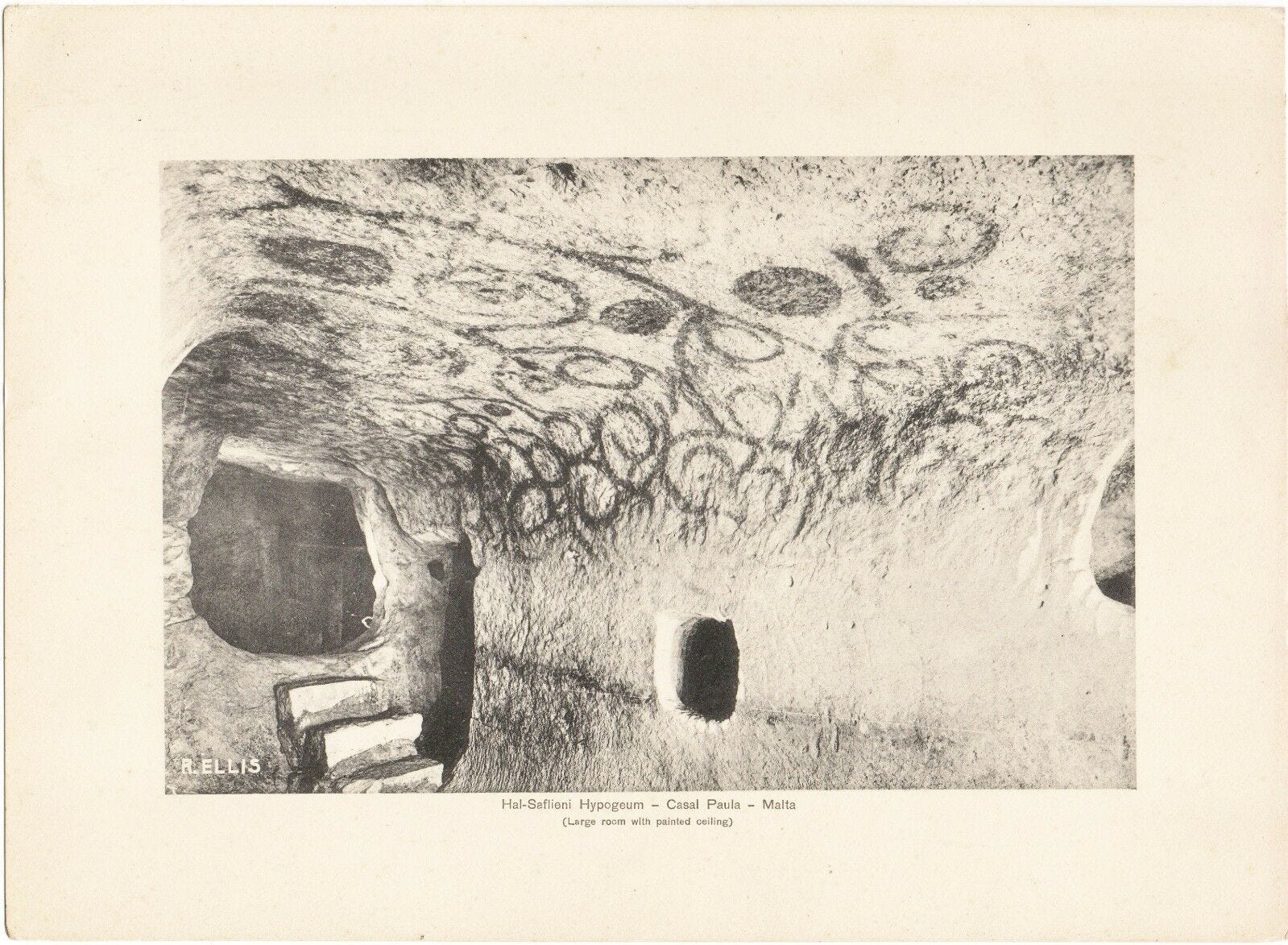
Deep under the Maltese town of Paola, a niche in a painted room throws back an echo when someone speaks into it. The room belongs to the Hal Saflieni Hypogeum, a set of chambers cut into the rock from about 4000 BC. What was it for?